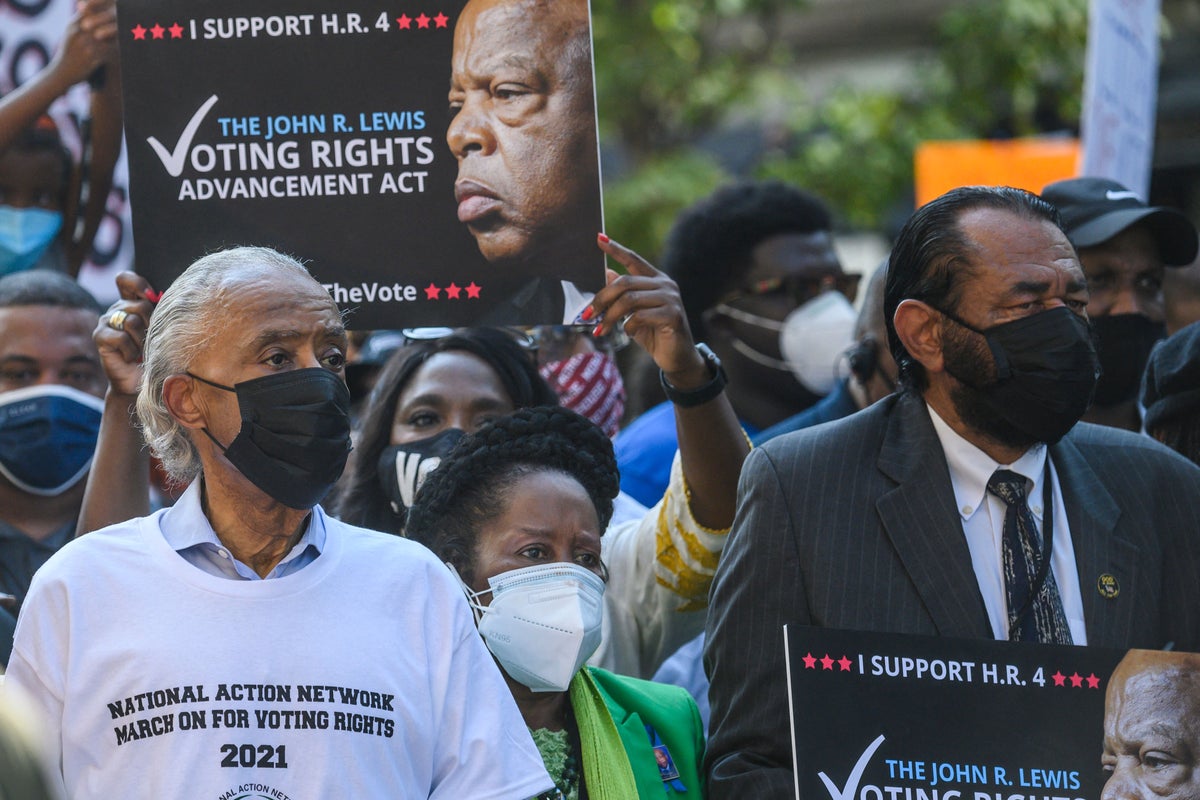
Civil rights leaders just announced another mass gathering at the nation's capital. On August 28, 2026, the Rev. Al Sharpton’s National Action Network, alongside Martin Luther King III and Arndrea Waters King, will lead the March on Washington 2026: Defend the Vote. It marks exactly 63 years since Dr. Martin Luther King Jr. delivered his "I Have a Dream" speech.
If you think this is just a symbolic anniversary photo-op, you are missing the point entirely.
This march isn't a nostalgic celebration of past victories. It’s an urgent, defensive reaction to a quiet legal earthquake that happened right under our feet. Civil rights organizations like the NAACP, the National Urban League, and the League of United Latin American Citizens aren't mobilizing thousands of people for a weekend walk just to remember history. They are doing it because the legal ground supporting minority voting power is actively sliding away.
The Quiet Gutting of Voting Protections
To understand why this march is happening right now, you have to look at what happened in the courts a few months ago. In April 2026, the conservative majority on the U.S. Supreme Court handed down a decision that severely weakened Section 2 of the Voting Rights Act.
Section 2 was always the heavy artillery for civil rights lawyers. It allowed advocates to challenge discriminatory voting laws and gerrymandered electoral maps that diluted the political power of Black and brown communities. The Court's April ruling essentially stated that mapmakers shouldn't rely heavily on racial demographics when drawing those lines.
The immediate casualty of that decision was a majority-Black congressional district in Louisiana, which was promptly struck down.
That ruling sent a clear signal to state legislatures across the country. It basically opened the floodgates for a massive wave of redistricting. States are already rewriting maps, and the direct consequence is a shrinking number of minority-represented districts. Al Sharpton didn't mince words about the decision, calling it a bullet in the heart of the voting rights movement.
When the crown jewel of the original Civil Rights Movement gets dismantled piece by piece, marching becomes more than a tradition. It becomes a megaphone.
History Doesn't Repeat But It Sure Rhymes
When Dr. King stood on the steps of the Lincoln Memorial in 1963, people remember the soaring rhetoric about the dream. They tend to forget the grim reality that forced 250,000 Americans to march there in the first place.
The original event was officially called the March on Washington for Jobs and Freedom. It focused on systemic economic inequality, police brutality, and systemic voter disenfranchisement. Back then, Black Americans faced literal poll taxes, literacy tests, and violent intimidation just for trying to register to vote.
Today, the tactics are cleaner, quieter, and wrapped in legalese.
Instead of physical intimidation, communities face closed polling places, shortened early voting windows, strict new identification rules, and gerrymandered maps that make certain votes entirely irrelevant. The goal remains identical to keep specific groups of people from exercising political power.
Martin Luther King III pointed out that sixty-three years after his father stood at that memorial, the country is facing a choice between active defense and regression. He noted that we are called to march again, not only in remembrance, but in action.
Why State Level Battles Dominate the Fight
The focus of civil rights advocacy has radically shifted over the last few years. While the federal government remains gridlocked on comprehensive voting rights legislation like the stalled John Lewis Voting Rights Advancement Act, local battles have turned into absolute trench warfare.
State capitals are where the real damage is done.
When a state legislature alters early voting hours, it directly impacts working-class people who can’t take a Tuesday morning off to stand in a four-hour line. When a state bans ballot drop boxes, it alters turnout numbers in dense urban areas compared to rural ones. These changes are intentional. They are mathematical.
Organizers behind the August march are trying to use the massive visibility of Washington to turn national outrage into state-level organizing. The plan isn't just to scream into the wind outside the Capitol buildings. The coalition is building infrastructure to pour resources back into local communities to fight the upcoming redistricting battles.
They are up against an incredibly organized, well-funded opposition that views race-conscious redistricting as unconstitutional. Proponents of these changes argue that drawing lines based on race is inherently unfair, regardless of historical context. This ideological divide means the fight will not end with a single march or even a single election cycle.
How Mobilization Actually Works in the Modern Era
Rallies like the one planned for Washington can feel performative if they don't have teeth. Experienced organizers know that the real work happens before the buses even arrive in D.C. and long after the stages are packed up.
A successful mass mobilization relies on a multi-pronged approach that turns energy into action.
First, it creates a massive fundraising and donor recruitment moment. National organizations use the media spotlight to fund legal defense funds that challenge new state maps in lower courts.
Second, it provides a networking hub for local organizers. A community advocate from Georgia can stand next to an organizer from Texas, swap strategies on how to run successful voter registration drives under restrictive state laws, and build coalitions that survive long after the event.
Third, it exerts immense pressure on corporate entities and political parties. Last year, civil rights groups organized a Wall Street demonstration protesting the corporate retreat from diversity initiatives. The upcoming march connects the dots between economic representation and ballot access, reminding corporate sponsors that they cannot separate the two.
Practical Steps to Protect Voting Power Right Now
If you care about ballot access, sitting back and watching the news coverage of the August 28 march isn't enough. You don't have to pack a bag for Washington to make a tangible impact on the system. The real battlefront is right down the street from where you live.
Check Your Registration Status Monthly
Don't assume you are registered just because you voted in the last major election. Voter rolls are purged regularly by state officials looking to clear inactive voters or outdated addresses. Sometimes, legitimate voters get swept up in these purges by mistake. Use official state portals or trusted platforms like Vote.org to verify your status. Do it months before your local registration deadlines.
Focus on Local School Board and County Elections
National elections get all the television coverage, but local officials decide how your elections are run. County commissioners, local judges, and school board members set voting boundaries, choose polling place locations, and allocate budgets for voting machines. Pay attention to who is running for county clerk or supervisor of elections in your community. These offices hold the keys to access.
Become a Poll Worker
One of the biggest reasons polling places close down or have massive lines is a severe shortage of workers. Most poll workers are elderly volunteers, and many have stepped back due to shifting political climates and burnout. Sign up with your local elections office to work the tables during early voting or on election day. You get paid for your time, and you ensure your neighbors have a smooth, fair experience.
Support Local Litigators
Organizations like the NAACP Legal Defense Fund, the Brennan Center for Justice, and local legal aid groups are the ones constantly filing lawsuits to block discriminatory maps. They are the actual frontline defense against the fallout from the Supreme Court's April ruling. Directing your financial support toward these groups gives them the resources to fight complex, multi-year court battles.
The upcoming march in Washington is an alarm bell. When the legal frameworks designed to protect the baseline of American democracy are dismantled, the only remaining asset is human mobilization. The marchers heading to the Lincoln Memorial on August 28 know that a right is only as strong as your willingness to defend it.