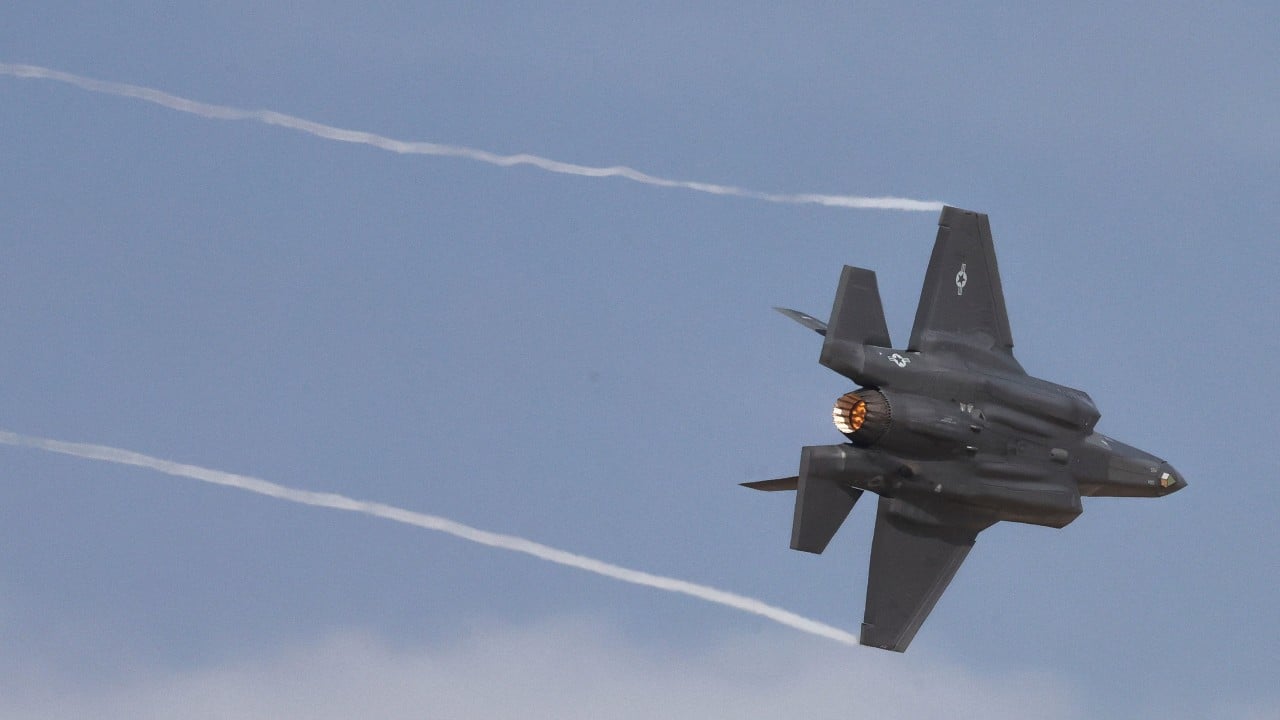
The United States just cleared a massive $24.3 billion sale of 48 Lockheed Martin F-35 fighter jets to Saudi Arabia. Washington wants to lock down its strategic partnership in the Gulf. Israel is watching closely, worried about losing its quantitative military edge in the region. Congress now has a 30-day window to review the transaction, and the debate is already heating up.
Let's look at what this actually means for the Middle East, the defense industry, and the complicated web of regional alliances.
The Core Details of the F-35 Package
This isn't just a handful of planes. The State Department's foreign military sales notification details a massive logistical setup. Riyadh requested 48 conventional takeoff and landing F-35A jets alongside 49 Pratt & Whitney F135-PW-100 engines.
The package includes:
- Secure communications and precision navigation equipment.
- Electronic warfare database support and software updates.
- Training simulators and technical documentation.
- Comprehensive spare parts and logistics support.
Lockheed Martin in Fort Worth, Texas, and Pratt & Whitney in East Hartford, Connecticut, will act as the principal contractors. If Congress lets the deal pass without blocking it, Saudi Arabia becomes the first Arab nation to operate the stealth fighter. That marks a historic shift in Gulf defense architecture.
The Israel Factor and Regional Balance
For decades, Washington has maintained a strict legal requirement to ensure Israel maintains a qualitative military edge over any neighboring coalition. Until now, Israel has stood alone in the Middle East as the sole operator of the F-35.
Israeli officials expressed quiet anxiety when rumors of the deal began circulating. They wanted the White House to tie the fighter jet transfer directly to formal normalization talks between Riyadh and Jerusalem. President Trump didn't make normalization a hard prerequisite for the approval, choosing instead to handle the arms deal on its own merits.
Even so, State Department officials insist the package won't alter the regional military balance. Riyadh already flies a fleet of Boeing F-15s and Eurofighter Typhoons. The Royal Saudi Air Force needs the F-35s to replace aging aircraft like its Panavia Tornado inventory and to bolster security against rising regional threats, including recent escalations involving the Houthis and Iran.
The China Security Dilemma
Lawmakers on Capitol Hill are focusing heavily on a different kind of risk: Beijing.
Saudi Arabia maintains deep economic ties with China and has even conducted joint military exercises with Chinese forces. Critics in Congress worry that advanced American military technology could find its way into Chinese hands through espionage or shared defense partnerships.
Think back to the stalled F-35 negotiations with the United Arab Emirates during the previous administration. Washington walked away from that deal because of concerns over Emirati telecommunications infrastructure and Chinese tech influence.
Critics argue the administration should establish strict guardrails regarding Riyadh's technical cooperation with Beijing before shipping the world's most advanced stealth jets. Right now, the administration trusts that standard security assessments and end-use monitoring will suffice. Lawmakers might disagree once they dig into the classified briefings.
What Happens Next
The ball is entirely in Congress's court. Lawmakers have 30 days to introduce resolutions of disapproval, though overturning a presidential arms sale requires a veto-proof majority.
If the deal survives the legislative gauntlet, manufacturing will take years. Riyadh won't see these jets rolling onto regional tarmacs tomorrow. Training pilots on fifth-generation stealth platforms requires extensive infrastructure, secure facilities, and years of preparation.
Keep an eye on congressional committees over the next few weeks. The real battle isn't about whether Saudi Arabia wants the jets—they displayed a full-scale mock-up at the World Defense Show in Riyadh to prove they do. The battle is whether Washington can manage the geopolitical fallout between its closest Middle Eastern partners without compromising sensitive military secrets.