When a public health emergency hits Central Africa, the headlines usually focus on the sheer terror of the virus. But right now, the real danger in the Democratic Republic of Congo isn't just the pathogen itself. It is the mismatch between the specific strain tearing through the region and the medical tools we spent decades building.
If you look past the standard panic-driven reporting, you will find a much more complex operational failure. We are dealing with an uphill battle against a tricky viral variant, localized conflict, and deeply entrenched cultural practices that traditional health campaigns keep failing to address.
The Bundibugyo Problem Nobody Is Talking About
Most people assume every Ebola outbreak is identical. They picture the Zaire strain, the one that terrified the world during past epidemics and for which scientists engineered reliable vaccines and monoclonal antibody treatments.
This time, things are different. The current epidemic across Ituri and neighboring provinces stems from the Bundibugyo virus.
That distinction changes everything. Existing treatments like Ervebo are certified for the Zaire species. They don't offer direct protection against the Bundibugyo strain. Public health officials are essentially fighting a modern fire with outdated buckets. While laboratory teams scramble to evaluate if current vaccines offer cross-protection, the ground reality remains grim: thousands of confirmed cases continue to mount without a silver-bullet vaccine ready for immediate mass deployment.
Why Transmission Rates Keep Climbing
You cannot understand the rapid escalation of this crisis without looking at the geography and the politics of eastern Congo.
Ituri is a massive commercial and migratory hub. People move constantly across borders for trade, mining, and family. When patient zero—reportedly a nurse who sought care in Bunia—brought the virus into the open, the response was bottlenecked by infrastructure failures.
Think about what it takes to manage an outbreak in a region four times the size of France, where paved roads are rare and telecommunications are spotty. Contact tracing becomes an absolute nightmare.
- Armed Conflict: Local and regional militia groups control lucrative mining zones. Their presence restricts humanitarian access and makes health workers prime targets for suspicion and violence.
- Delayed Isolation: People are still falling sick and dying at home because local clinics lack the beds and immediate transport to isolate suspected cases.
- Traditional Burials: Cultural rituals often require washing and touching the deceased. In a community grieving its dead, telling families they cannot touch their loved ones creates immediate friction with local customs.
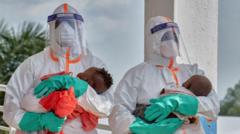
When health workers show up in protective gear enforcing safe burials, mistrust spikes. Rumors spread faster than the virus. Fixing this requires community engagement, not armed escorts.
What Real Containment Actually Requires
Throwing money or international statements at the border won't stop this outbreak. Past epidemics taught us that containment comes down to granular, boots-on-the-ground execution.
First, we need decentralized treatment centers. Forcing sick people to travel hours to provincial capitals guarantees the virus spreads along transit routes. Localized care units—even modest ones staffed with trained locals—save lives by providing immediate supportive rehydration and symptom management.
Second, humanitarian organizations must partner directly with community elders. If burial teams don't respect local grief while enforcing safety, communities will hide the sick.
Finally, global pharmaceutical logistics need an overhaul. We cannot afford to wait years to scale up targeted therapeutics every time a less-common strain like Bundibugyo triggers an international emergency.
The numbers will keep rising until local health teams get the exact tools designed for this specific virus. Stop treating every epidemic like a repeat of the last one.