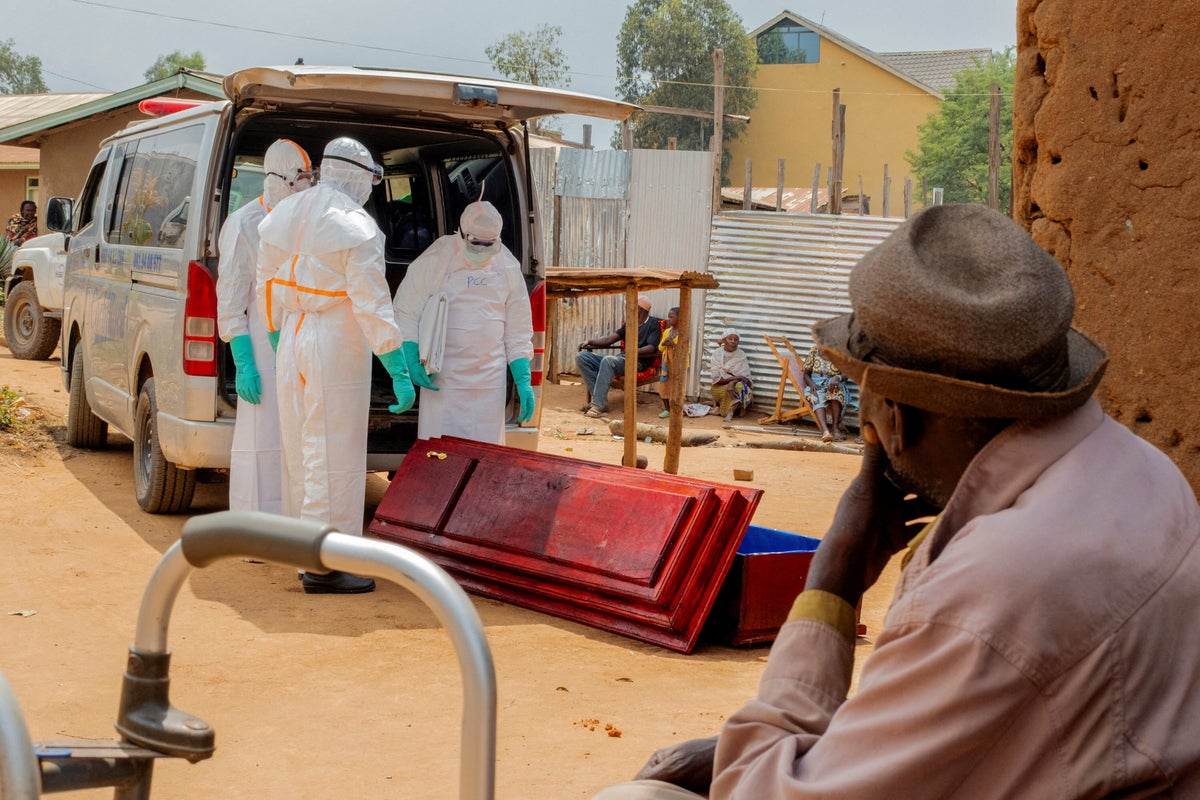
The numbers are terrifying. More than 1,700 people have died in eastern Congo from an Ebola surge that is shattering historical speed records. Government data confirms 3,802 total cases and 1,707 fatalities, making this the second-largest outbreak in history. Worse yet, health authorities admit they still haven't found patient zero.
When an epidemic outpaces traditional containment methods from day one, public health strategies have to pivot immediately. Right now, conventional contact tracing is failing on the ground.
The Core Problem Behind the Speed
Why is this spreading so fast? According to Africa CDC Director-General Jean Kaseya, roughly 80 percent of new infections stem directly from community spread rather than tracked contact chains.
Think about what that means. Traditional containment relies on building a net around known patients, finding everyone they interacted with, and isolating them before symptoms show. That net is broken.
- Patient zero remains completely unknown.
- Community transmission accounts for the vast majority of new cases.
- Contact tracing delays leave thousands of potential vectors wandering unmonitored.
When you combine missing origins with rampant community transmission, the virus wins every time. It outruns the paperwork.
Dealing With the Bundibugyo Strain
This crisis isn't driven by the Zaire strain that health workers are most accustomed to treating. It is linked to the rare Bundibugyo virus.
This distinction matters immensely. There are currently no approved vaccines or licensed treatments specifically for the Bundibugyo strain.
Clinicians are flying blind compared to previous epidemics where ready-to-use therapeutics blunted the mortality curve. While two clinical trials for post-exposure prophylaxis drugs and separate vaccine studies are underway in the UK, Canada, and Ituri province, they are racing against an active fire.
Conflict, Mistrust, and Medical Strikes
Viruses don't spread in a vacuum. They thrive where social structures collapse.
Eastern Congo's landscape is heavily fractured. Armed groups control pockets of territory, illegal mining creates constant population displacement, and local communities harbor deep-seated mistrust toward health authorities. You cannot effectively manage an epidemic when clinics face violent attacks and residents suspect outsiders.
The pressure on medical staff is breaking points, too. Healthcare workers in hard-hit towns like Mongbwalu and Bunia have staged strikes and issued ultimatums over unpaid wages and dangerous working conditions. Over 100 medical professionals have caught the virus themselves. If the people holding the line walk off the job because they aren't getting paid, the entire containment framework collapses.
Where the Response Goes From Here
The World Health Organization and regional agencies are scaling up testing capabilities rapidly, processing thousands of samples daily compared to the low baseline at the start. Leaders like WHO Director-General Tedros Adhanom Ghebreyesus and Africa CDC officials are descending on the epicenter to redirect resources.
Monitoring over 17,000 potential contacts daily is a massive logistical lift. Yet until community engagement replaces hostility and experimental treatments prove viable against the Bundibugyo strain, this record-breaking surge will continue to dictate terms. Watch the testing data and security corridors in Ituri province closely over the next two weeks; they will tell us whether containment is finally taking hold.