Commercial satellite imagery from Shanghai reveals a hull that doesn't fit standard naval classifications. At the Hudong-Zhonghua shipyard, an unidentified 205-metre vessel is taking shape. Analysts tracking naval modernization note its unique architectural traits. It features a stern wet well-deck and an enclosed hangar layout. This design points to an unprecedented function. It looks like the world's first purpose-built mothership for giant uncrewed underwater vehicles.
Beijing has not confirmed the vessel's official designation or intended mission. Yet, open-source intelligence suggests a massive shift in how underwater autonomous systems might operate far beyond protected home waters. If you look closely at naval strategy, transport is only half the battle. Launching and maintaining massive submarine drones at sea has always been the ultimate operational bottleneck.
Decoding the Shanghai Mystery Hull
The ship measures roughly 205 metres long and 27 metres wide. From above, it shares a silhouette with landing platform docks. Look closer at the stern, however, and traditional configurations disappear.
Reports indicate a wet well stretching about 55 metres long and 13 metres wide. An open bottom design enables a specialized cradle to descend directly into the water using vertical lifting arrangements. Just forward of this well sits an enclosed hangar estimated at 95 metres by 17 metres.
This configuration offers protected space for maintenance, battery recharging, payload preparation, and system servicing. Azimuth thruster pods near the stern provide precise low-speed station-keeping. Maintaining position matters when currents and sea states threaten delicate recovery operations for massive autonomous vehicles.
Solving the Deployment Dilemma
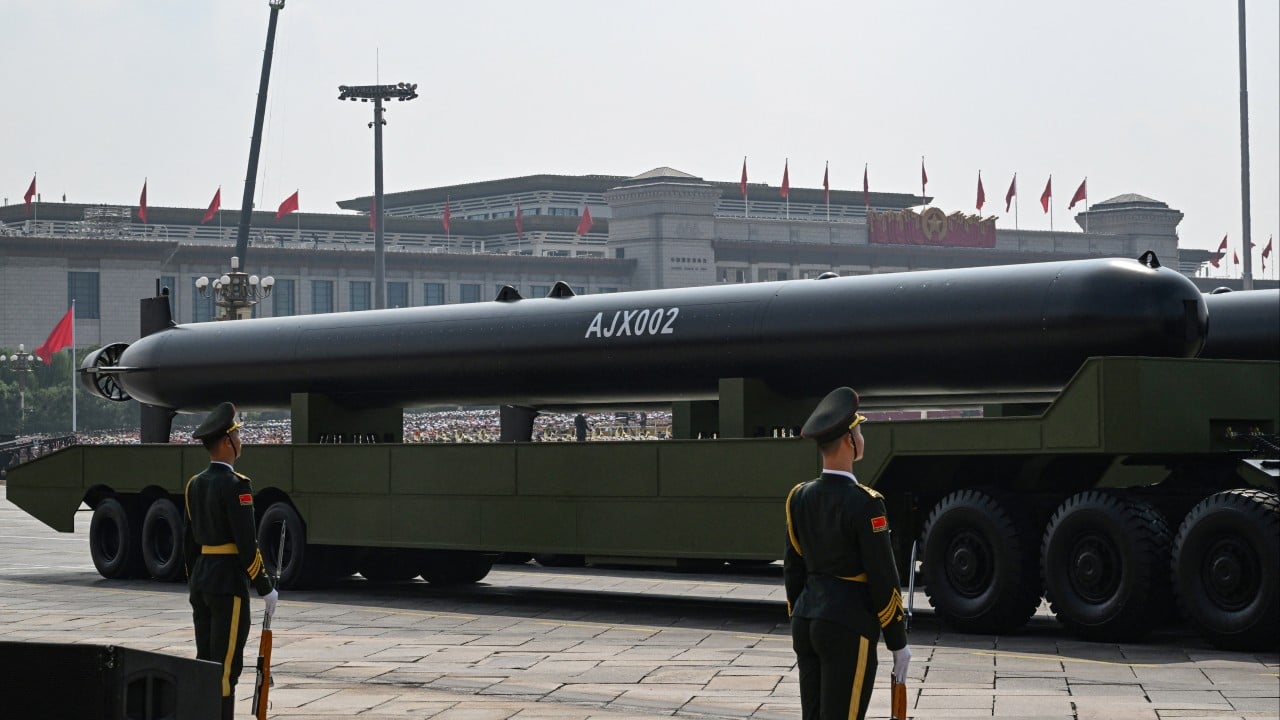
Testing large underwater craft usually requires fixed infrastructure. Previous sightings of Chinese extra-large uncrewed underwater vehicles relied on floating docks in places like Gangmen Harbour or Yinggezui. Fixed ports limit operational reach. They anchor high-end assets to predictable geographic locations.
A mobile support platform changes the equation completely. Retired Royal Australian Navy vice-admiral Peter Jones noted that a dedicated tender vessel functions much like a submarine repair ship. It supplies fuel, heavy batteries, armaments, and spare parts.
Without a mothership, these giant drones are tethered close to home. With a floating base, they can project presence thousands of miles away. It bridges the gap between experimental endurance and sustainable global reach.
Comparing Global Undersea Approaches
Naval powers approach autonomous submarines differently. The United States relies on systems like the Boeing Orca XLUUV. The Orca operates independently from piers or standard surface support, keeping footprints small and decentralized.
China appears to be taking a heavier, more centralized route. By building a 205-metre support ship, they are investing heavily in a dedicated logistical hub. Some open-source projections suggest the mothership could carry multiple smaller 18-to-20-metre systems or a mix of intelligence, surveillance, and reconnaissance payloads.
That modularity mirrors airpower dynamics. A single mobile platform supporting various autonomous effects complicates adversary planning. You never know if the embarked packages are configured for seabed mapping, mine laying, or anti-submarine patrols.
Unanswered Questions and Technical Hurdles
Despite clear visual evidence from shipyard satellites, major unknowns remain. No published imagery shows final hangar doors, internal rails, onboard sensors, or weapons systems.
Communication underwater remains a persistent engineering nightmare. Submerged vehicles struggle to receive updated orders or coordinate tactical maneuvers without exposing themselves. How these platforms maintain secure links under strict wartime constraints is entirely unclear.
Construction continues in Shanghai. Until sea trials begin and official details emerge, observers must rely on open-source clues. Watch the shipyard for final outfitting and equipment tests over the coming months.
Inside China's secret 'mothership' building monster mega-drones
This video provides an up-close look at the satellite imagery and structural analysis surrounding the mysterious Shanghai vessel.


