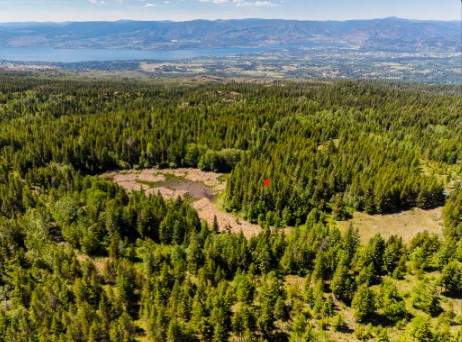
You hike into a protected provincial park, marvel at the ancient trees, track a deer through the bush, and assume everything around you is safe from bulldozers. It turns out you're probably wrong. Many of British Columbia's premier natural spaces are riddled with private landholdings. Conservationists call it the Swiss cheese effect, and it's currently threatening one of the most ecologically vital stretches of Kelowna’s backyard.
The BC Parks Foundation is running against a clock that runs out on August 14. They need to raise $800,000 from the public to buy a 32.4-hectare (80-acre) private island of land sitting smack in the middle of Myra-Bellevue Provincial Park. The total price tag is $1.6 million, but a philanthropic group called the Wilson 5 Foundation promised to match every single dollar the public chips in. Meanwhile, you can read similar developments here: Why France Is Turning Its Back On The Whistleblower Who Exposed Russian Propaganda.
If the fundraiser succeeds, this chunk of wilderness gets absorbed into the permanent park. If it fails, the land stays on the private market, wide open for luxury estate development or commercial exploitation. In a world where remote properties are the ultimate status symbol, the threat isn't theoretical.
The Mirage of Protected Public Parks
When you look at a park map, the solid green border tricks you. You think the government owns and protects every square inch inside those lines. The reality is messy. When parks like Myra-Bellevue were established on the South Slopes back in 2001, existing private property deeds remained valid. Owners kept their rights to log, build roads, or erect massive private estates right inside the park boundary. To understand the complete picture, check out the recent report by The Washington Post.
This specific 32.4-hectare property is completely surrounded by public parkland. Think about the logistics of that. A private buyer could legally demand road access through the park, bring in heavy machinery, clear-cut mature timber, and sink a massive concrete foundation into a pristine valley.
The BC Parks Foundation managed to buy and protect a separate 64-hectare private holding inside the same park. That was a massive win, but it makes this current campaign even more urgent. If they can secure this piece, only one major private parcel will remain in the entire 8,000-hectare park. We are talking about completing a giant ecological jigsaw puzzle before someone throws away the pieces.
What Developers See vs. What Nature Needs
To a luxury real estate developer, this property is a goldmine. It offers total isolation, sweeping Okanagan valley views, and a private creek running right through the center. It’s the ultimate off-grid playground for a multi-millionaire.
To conservationists and the wildlife that actually live there, the property is a literal lifesaver. This acreage completely escaped the devastating 2003 Okanagan Mountain Park wildfire. While that historic blaze scorched thousands of hectares of the surrounding forest, this specific valley stayed green. It is an intact, mature forest refuge in an ecosystem that is still actively clawing its way back from fire damage.
Priest Creek cuts right through the center of this parcel. Water draws life. Because of that water source and the thick canopy cover, this land serves as a major bottleneck for the Okanagan Mountain to Kalamalka ecosystem corridor. It is the last functioning low-elevation wildlife corridor left in the entire region.
- Large Mammals: Elk, moose, mule deer, and black bears rely on this exact patch of land to move safely through the valley without stumbling into suburban backyards.
- Apex Predators: Cougars and lynx use the thick, unburned cover to hunt and raise their young.
- Endangered Species: The American badger, which is clinging to survival in BC with only a few hundred individuals left in the province, uses these specific sandy South Slope soils.
If you drop a modern house, a security fence, a paved driveway, and bright night lighting into the middle of that corridor, you don't just lose 32 hectares. You choke off the entire highway that animals use to migrate, hunt, and survive. Scott Boswell from the Okanagan Collaborative Conservation Program points out that species must be able to move between big protected spaces to adapt to seasonal shifts and climate changes. Cut the corridor, and you isolate the populations, leading to localized extinctions.
Grassroots Grunt Work Over Corporate Greenwashing
This isn't a top-down government initiative. The province isn't stepping in with a blank check to save the day. The push to save the South Slopes has always been driven by normal people who spend their weekends maintaining trails and picking up garbage.
Groups like the Friends of the South Slopes have been fighting for this exact landscape for decades. They were early donors to this crowdfunding campaign because they know how fast these opportunities vanish. Land prices in Kelowna are skyrocketing, and once an international buyer snatches up an inholding, it never goes back to nature.
How to Help Lock Down the South Slopes
We have a short window to act. The hard deadline to secure the matching funds from the Wilson 5 Foundation is August 14. If the community doesn't reach that $800,000 threshold, the deal falls apart.
You can make a direct, tax-deductible donation through the official BC Parks Foundation website. Because of the matching grant, a $50 donation instantly turns into $100 worth of protected wilderness. Share the campaign with local hiking clubs, cycling groups, and anyone who actually uses the Myra-Bellevue trail networks. If you use the park, it's time to help pay for the dirt under your feet.