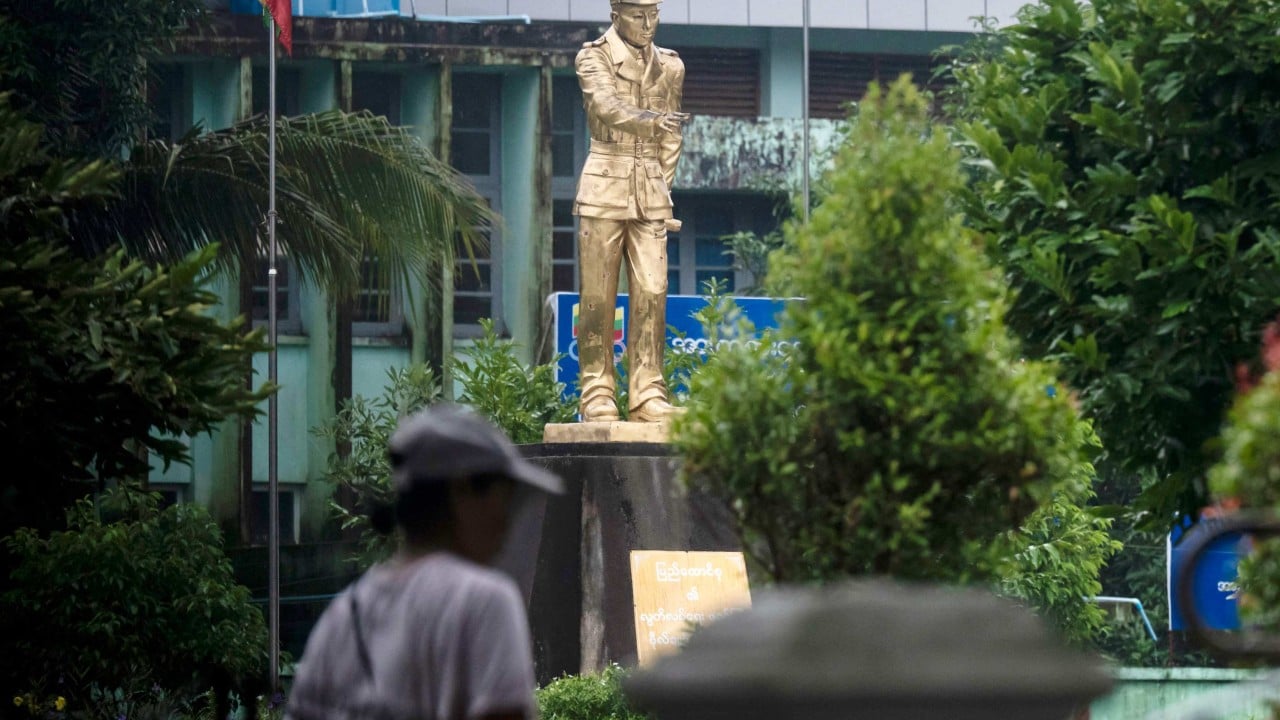
Statues don't just stand there. They anchor legitimacy. When a regime starts hauling down monuments of a nation's founding father, you know it's panicking. That is precisely what is happening in Myanmar right now, where the military junta is waging a calculated war on memory itself.
By chipping away at the legacy of General Aung San, the generals aren't just rewriting history text books. They are trying to sever the psychological umbilical cord connecting modern democratic resistance to the country's founding anti-colonial struggles.
The Battle Over National Memory
General Aung San remains a towering, untouchable figure across Myanmar. He fought the British, negotiated independence, and founded the modern military before his assassination in 1947. For decades, successive juntas tried to co-opt his image, wrapping themselves in his nationalist cloak.
That playbook stopped working. Why? Because his daughter, Aung San Suu Kyi, inherited that symbolic capital. Her entire political clout rests on being the direct bloodline and spiritual heir to the country's liberation hero.
Stripping away or quietly sidelining Aung San's presence in public spaces is a backhanded way to diminish his daughter's enduring hold on the public imagination. If you dilute the father's mythos, you dilute the daughter's mandate. It is petty, cynical, and transparently political.
Why Rewriting History Fails
Authoritarian regimes love erasing the past. They think that if they tear down bronze statues, rename streets, or edit school curricula, people will simply forget. History doesn't work that way.
When you scrub a hero from public view, you don't destroy their memory. You weaponize it. Ordinary citizens notice the empty plinths. They talk about the missing monuments over dinner tables and across encrypted messaging apps. The suppression becomes a constant, glaring reminder of why the regime is illegitimate in the first place.
The Broader Crackdown on Public Identity
This war on memory goes far beyond statues of Aung San. Since the 2021 coup, the military has systematically targeted any symbol of civilian pride and democratic autonomy. Neighborhood names change overnight. Cultural centers face closures. Local festivals run under heavy armed surveillance or face outright bans.
The strategy relies on forced fatigue. The generals want citizens so exhausted by daily survival, internet shutdowns, and economic collapse that keeping historical truths alive feels like a luxury nobody can afford.
Yet, resistance persists. Underground history projects thrive. Digital archives preserve what physical parks lose. People pass down stories through informal networks.
You can haul down bronze. You cannot bulldoze a collective memory that refuses to die.
Keep an eye on how local communities respond to these erasures. Support independent journalists and digital archivists documenting the suppression. History belongs to the people who live it, not the generals who try to rewrite it.