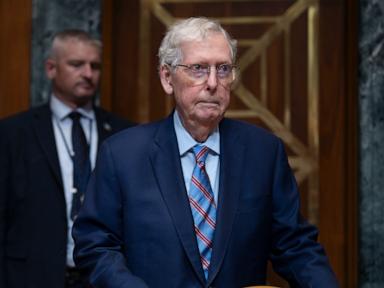
Mitch McConnell hasn't been seen in public for nearly a month. He hasn't cast a vote in the Senate since June 11. For a man who controlled the rhythms of American lawmaking for nearly two decades, this sudden and prolonged vanishing act is jarring.
The official line from his team is a masterclass in political minimalism. They say he is improving. They tell us he is receiving excellent care. But when an 84-year-old senator spends more than three weeks in a hospital room with zero public appearances and a near-total information blackout, people notice. The vacuum has exploded with rumors.
This isn't just about the health of one aging politician from Kentucky. This is a math problem that threatens to freeze the United States Senate at a moment when it can least afford a standstill.
The Silence and the EMS Tapes
Let's look at what we actually know. McConnell entered the hospital on the morning of June 14. His office called it a routine recovery process, but the local emergency logs paint a much grimmer picture.
Dispatch audio from that Saturday morning reveals that emergency medical personnel rushed to McConnell’s home address. The call went out at 8:36 a.m. for an unconscious person. Six minutes later, medics radioed that CPR was actively in progress. By 8:43 a.m., the dispatcher officially flagged the emergency as a cardiac arrest.
His staff won't confirm if the recording details McConnell’s personal emergency. They don't want to talk about it. Instead, they point to a series of phone calls.
On Monday, Senate Majority Leader John Thune spoke with McConnell by phone. The conversation was described as lengthy and covered national security. On Tuesday, Senator John Barrasso spoke with him for twenty minutes. Barrasso’s team claims McConnell was fully engaged and eager to get back to work. Longtime adviser Scott Jennings also jumped on social media to announce he had a twenty-minute chat with the senator about foreign policy, Ukraine, and Senate history.
Phone calls are nice. They prove a heartbeat. They don't show us a senator ready to walk back onto the Senate floor and cast high-stakes votes. The public has heard absolutely nothing directly from McConnell himself. Right-wing influencers have rushed to fill this communication void, claiming without evidence that the senator is permanently incapacitated. The secrecy from McConnell’s camp is feeding the fire.
Why the Senate Math Breaks Down Without Him
You might wonder why a single rank-and-file senator’s hospital stay matters so much. After all, McConnell stepped down from his leadership position last year. John Thune is running the show now. McConnell is just serving out his final term before his planned retirement in January.
The problem is the brutal arithmetic of the chamber. Republicans hold a narrow 53-47 majority. That sounds comfortable until you look at how committees operate and how fast a majority can erode when real life intervenes.
When McConnell is absent, that majority drops to 52. If another Republican misses a flight, gets sick, or attends a family event, the floor control gets shaky. The real disaster is happening behind closed doors in the committee rooms.
The Appropriations Gridlock
The Senate Appropriations Committee is completely stuck. Right now, the committee is supposed to be marking up and advancing spending bills for the 2027 fiscal year. Because of partisan disagreements over defense funding, things were already running behind schedule.
Without McConnell, the math on the Appropriations Committee splits evenly between Democrats and Republicans. A tie vote means a bill cannot advance. The committee already had to scrap plans to move forward on spending bills during the final weeks of June.
- Spending bills are frozen in committee.
- The 2027 fiscal budget is drifting into dangerous territory.
- Neither side can break the tie without McConnell’s physical presence.
We are looking at a government funding deadline that will hit right before the midterm elections. If McConnell can't return to cast committee votes, the entire federal appropriations process grinds to a halt. You can't run a country when your primary funding committee is paralyzed by a missing vote.
[Image of US Senate chamber]
A Pattern of Fragility
This hospital stay isn't an isolated incident. It is the latest chapter in a multi-year timeline of severe physical setbacks that have visibly taken a toll on the Kentucky veteran.
We can look back at the track record to see how we got here. McConnell survived polio as a child, which left him with a lifelong limp and difficulty with stairs. In recent years, that vulnerability has escalated into serious injuries.
In March 2023, he fell at a Washington hotel and suffered a severe concussion, missing weeks of legislative action. That summer, he suffered two terrifying episodes where he completely froze at the podium during press conferences, staring blankly into space while his colleagues had to step in and guide him away.
In late 2024, he fell again outside a Senate Republican lunch and sprained his wrist. Earlier this year, he spent over a week hospitalized for what his team described as flu-like symptoms. In the weeks leading up to this latest June collapse, he was frequently seen using a wheelchair to move through the long corridors of the Capitol.
The Cost of Political Transparency
The strategic choice to withhold McConnell’s exact medical status is a classic old-school Washington tactic. Control the narrative by saying nothing. Keep your opponents guessing. Protect the image of power at all costs.
But that strategy doesn't work in the modern media environment. When you hide basic facts about a public servant's ability to do their job, you don't project strength. You project panic.
Voters have a right to know if a senator representing an entire state is medically capable of making decisions. Kentucky lacks a voice on the floor right now. The nation lacks a tie-breaking vote on crucial committees. Pretending everything is fine because a few close political allies had a quick phone call doesn't cut it anymore.
What Needs to Happen Next
The Senate is currently finishing up a two-week recess. Lawmakers will return to Washington next week. That is the hard deadline for answers.
If you want to track where this story goes, ignore the vague statements from press secretaries. Watch the Senate roll call. Look at the committee schedules for the Appropriations team. If McConnell’s name isn't called, or if those committee meetings keep getting postponed, the crisis is deepening.
The next steps are clear for leadership. Thune and the rest of the Republican apparatus cannot afford to carry an empty seat through a brutal summer legislative session. If McConnell cannot return to the chamber physically by the time the recess ends, leadership will have to make a tough choice about how they manage vote counts, how they handle committee assignments, and whether they need to force a serious conversation about the immediate future of the Kentucky seat. Keep your eyes on the Senate floor next Monday. That is where reality will show its face.