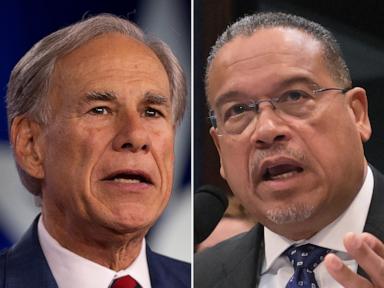
When a state decides to sue another state’s governor, you know things have gone off the rails. That’s exactly where we find ourselves today. Minnesota Attorney General Keith Ellison just filed a federal lawsuit against Texas Governor Greg Abbott. The goal? To force the extradition of Christian Castro, an Immigration and Customs Enforcement (ICE) agent facing serious criminal charges in Minneapolis.
This isn't just a political squabble. It’s a high-stakes standoff involving constitutional law, public safety, and a ticking clock. If Castro isn't moved to Minnesota by next week, he might walk free.
The core of the case
Christian Castro, 52, is currently sitting in a jail cell in Cameron County, Texas. He’s facing four counts of second-degree assault and one count of falsely reporting a crime. Back in January, during an ICE operation in Minneapolis, Castro allegedly fired his gun through the front door of a home he knew was occupied. He hit a man named Julio Cesar Sosa-Celis in the leg.
The kicker? Castro claimed Sosa-Celis and his roommate attacked him with a broom handle and a snow shovel. Surveillance footage later suggested that was a complete fabrication. A federal judge eventually tossed the initial charges against the residents, and a criminal investigation into the agents' conduct began. Now, Minnesota wants him to answer for his actions in a Minnesota courtroom.
Why Texas is holding up the process
Extradition is usually a routine, administrative dance between states. One state makes a request, the other verifies it, and the transfer happens. It’s almost never a headline-making event. But Texas is refusing to sign off.
Governor Abbott has linked the extradition to entirely unrelated investigations into government social service fraud in Minnesota—an issue frequently cited by the Trump administration to justify its aggressive immigration sweeps in the state. By holding Castro, the Texas governor is essentially using a criminal fugitive as a pawn in a broader federal-state power struggle.
Legal experts are already calling this strategy into question. A 1987 Supreme Court ruling, Puerto Rico v. Branstad, established that the duty to extradite is "ministerial" and "non-discretionary." In plain English: governors don't get to pick and choose who they hand over based on their political preferences or unrelated state grievances.
The flight risk is real
There’s a massive sense of urgency here. Texas law limits how long a person can be held on an out-of-state warrant while awaiting a governor’s signature. That limit is 90 days. For Castro, that deadline hits around August 26.
If he walks out of that jail, where does he go? The lawsuit points to some alarming evidence: Castro has been making phone calls from jail to someone in Mexico. He’s allegedly been discussing marriage and buying a house there. If he manages to slip across the border into Mexico, bringing him back for trial will go from a standard extradition process to a nightmare of international diplomacy. The odds of him ever seeing a Minneapolis courtroom after that would be slim to none.
Why this matters for the rule of law
We’re talking about an ICE agent—a federal law enforcement officer—who is accused of lying to cover up a shooting that injured a civilian. The integrity of our justice system relies on the idea that no one is above the law. If an officer can use the protection of a friendly governor’s office to avoid answering for alleged felonies, the foundation of that system cracks.
Minnesota’s leadership, including Attorney General Ellison and Hennepin County Attorney Mary Moriarty, have been vocal about the absurdity of this. They’ve noted that Texas has already extradited other suspects to Minnesota without a hitch. This specific case, however, has become a lightning rod.
Taking stock of the situation
If you’re wondering where this goes, keep an eye on the federal court in the Southern District of Texas. The lawsuit isn't just asking for the extradition; it’s asking for a temporary restraining order to keep the Cameron County Sheriff from releasing Castro while the legal battle plays out.
This is a textbook example of how political friction can paralyze the machinery of justice. Whether you lean left or right, the constitutional obligation to honor extradition requests exists for a reason: to keep the country’s legal process from collapsing into a fragmented, state-by-state mess.
If you’re interested in how this plays out, watch the court filings for any order blocking the sheriff from releasing Castro. If that order doesn't come before August 26, the entire situation could change overnight. The case is moving quickly, and it’s a situation that isn’t going to resolve itself without a federal judge stepping in to enforce the law.