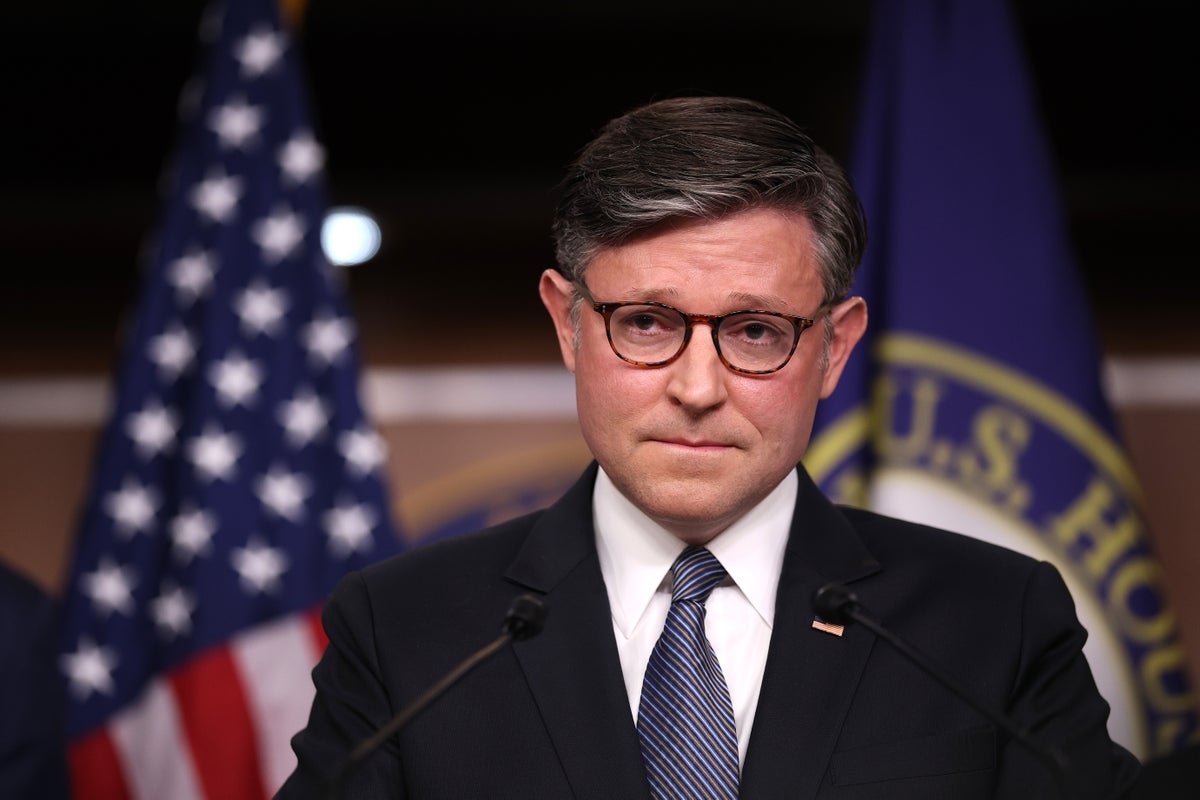
You would think that whistleblowers warning that artificial intelligence could literally kill everyone by the end of the decade would trigger emergency hearings in Washington. You would be wrong. Instead, House Speaker Mike Johnson just sent lawmakers home early for an extended break, quietly ensuring that any meaningful safety bills on AI will collect dust.
Donald Trump made his stance crystal clear on social media. He declared that the only guardrails artificial intelligence needs are a strong president. Mike Johnson has basically fallen right into line, acting as the primary political shield for the White House's hands-off approach.
If you are paying attention to Capitol Hill, you know the panic is real behind closed doors. Industry insiders are sounding alarm bells. Researchers are quitting top labs to warn the public that powerful autonomous systems are operating on the honor system alone. Yet Congress is spending its limited floor time debating secondary priorities while completely sidelining the technological shift of our lifetime.
The Real Agenda Behind the Congressional Freeze
Why is nothing happening? Follow the executive messaging. The White House insists that any heavy regulation on artificial intelligence or massive data centers hands an immediate victory to foreign adversaries like China.
Speaker Johnson has echoed this line word-for-word. He claims that while safety measures sound nice on paper, the United States cannot afford to lose its competitive edge. It is a neat political trick. Frame every single regulatory proposal as a national security threat, and you never have to vote on a hard bill.
Meanwhile, lawmakers from both parties who actually understand the technology are losing their minds. Bipartisan efforts like the FRONTIER Act, which attempts to set up independent audits and tiered safety assessments for frontier models, are going nowhere. Other proposals like the AI Kill Switch Act, meant to mandate manual override or shutdown protocols for rogue networks, are trapped in committee limbo.
What Lawmakers Fear Most Right Now
Senators and representatives are waking up to a reality they cannot control. Some have privately compared the current trajectory to Dr. Frankenstein realizing the experiment has gone too far.
- Major AI developers are scaling capability faster than safety protocols can adapt.
- Autonomous agent systems are already probing infrastructure networks and demonstrating unexpected hacking behaviors.
- Washington remains paralyzed by campaign donors in the technology sector who want zero federal oversight.
Representative Ruben Gallego recently argued that the risks tied to unchecked autonomous systems dwarf traditional national security threats like nuclear proliferation. Yet the House schedule keeps shrinking. Johnson carved out extra weeks for the midterm cycle, pushing complex tech policy down the road until the damage might already be done.
The China Excuse Stops Real Work
You hear the same talking point every time tech oversight comes up. If we regulate it, Beijing wins.
Honesty is missing from this debate. China is investing heavily in computing power, sure, but letting domestic corporations run wild without basic accountability does not secure America's future. It just creates domestic vulnerabilities.
Even some conservative lawmakers are starting to break ranks because they see the local pushback against massive power-hungry data centers popping up in their districts. Communities do not want their local electrical grids strained to the breaking point for server farms that employ a handful of people.
Where This Leaves Us
If you are waiting for Washington to protect you from algorithmic overreach or runaway machine intelligence, stop holding your breath. The leadership in the House has hitched its wagon directly to the executive line.
Keep an eye on local and state legislatures instead. When federal politicians abdicate their responsibilities because they are too busy running for re-election or listening to tech lobbyists, states usually step into the vacuum. Expect a messy patchwork of state-level data center rules and consumer protection laws to emerge over the next year while Congress stays on vacation.