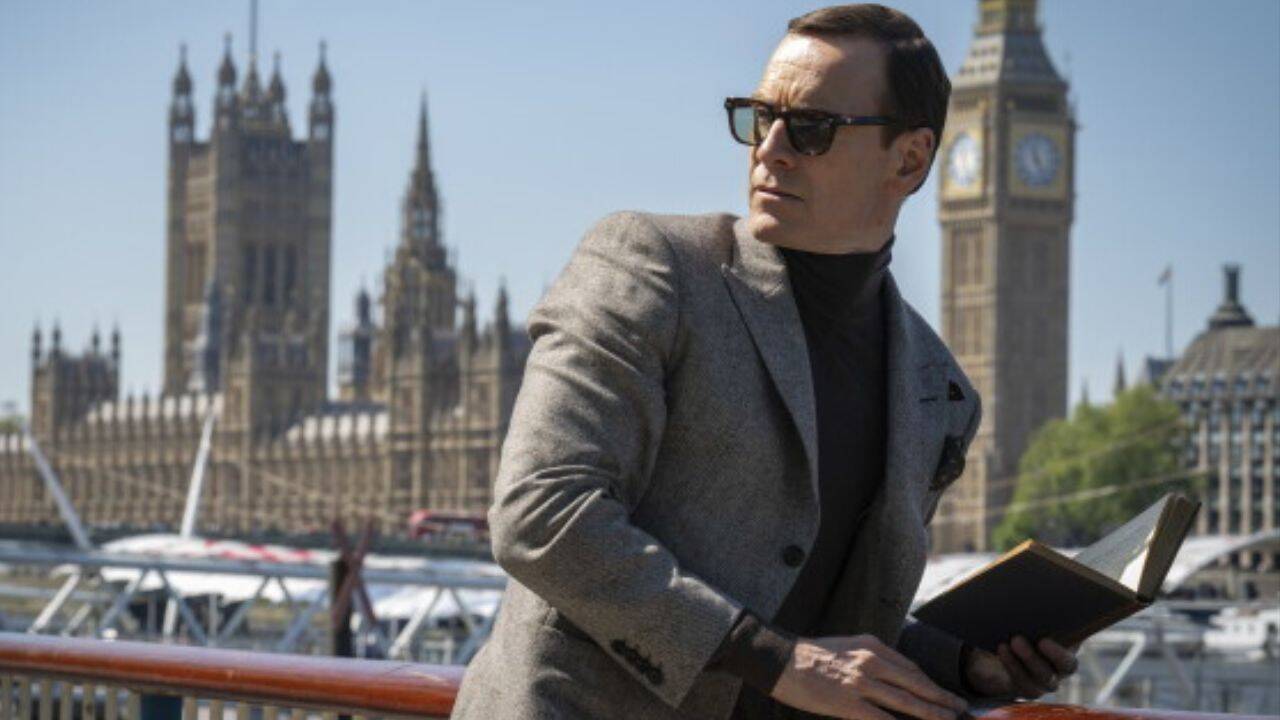
We love telling kids that life works like a conveyor belt. You finish school, slide into a university lecture hall, pick up a neatly printed diploma, and walk straight into a corner office. Except it rarely works that way in the real world. Michael Fassbender figured this out early. Long before leading Hollywood blockbusters, he realized that lecture halls weren't built for how his mind operated.
As he bluntly put it, "I've always been more inclined to go out to work than carry on with academic studies." For another perspective, consider: this related article.
That single sentence exposes a massive blind spot in how modern society views ambition. We treat formal education as the only legitimate tollbooth on the highway of achievement. If you don't park your desk in an academic institution for twenty years, people act like you're driving blind. But true competence isn't always something you can memorize for a Friday morning exam. Sometimes, it's something you bleed for on a cold stage or learn while fumbling through your very first real-world job.
The Brutal Reality Behind the Glamour
It’s easy to look at an acclaimed actor and assume things came easy. They didn't. Fassbender's transition from wanting to act to actually making a living at it was messy. Similar reporting on this matter has been shared by BBC.
Early on, he packed his bags for Los Angeles to chase television auditions. It didn't go according to plan. He messed up majorly in casting rooms, felt entirely out of his depth, and slinked back to London with his ego bruised. Between the ages of 23 and 27, his resume looked like a patchwork quilt of sporadic British television gigs. Work was inconsistent. Paychecks were unpredictable.
Most people hit a patch like that and fold. They assume the universe is sending a neon sign telling them to go back to school, grab a safe corporate cubicle, and abandon their crazy ideas. Fassbender didn't do that. Instead, he manufactured a psychological anchor. His baseline ambition wasn't about winning awards or becoming a tabloid fixture. He just wanted acting to pay his rent.
His daily self-talk was simple: I'm good enough. That mantra carried him through years of total obscurity.
Why Classrooms Can't Teach Everything
Schools excel at teaching you how to pass tests under controlled conditions. They give you a syllabus, a rubric, and a clear set of parameters. Life outside that bubble doesn't care about your rubric.
Real-world grit forces you to learn entirely different survival skills:
- Adaptability under pressure: A script supervisor shouting changes five minutes before rolling cameras teaches you how to think on your feet faster than any semester-long seminar.
- Emotional resilience: Rejection in a creative field stings differently than a bad grade. You can't appeal a casting director's silence to the dean.
- Self-directed momentum: Nobody checks your attendance when you're grinding through years of patchy employment. If you don't push yourself forward, you simply stop existing professionally.
Fassbender chose the hard laboratory of lived experience over the predictable safety of more schooling. That choice required a rare kind of self-awareness. He knew his strengths didn't lie in writing term papers or sitting through endless lectures. He needed friction. He needed to do the actual job, fail at it publicly, and figure out how to fix it on the fly.
The Danger of the Single Blueprint
Society pushes a one-size-fits-all template because it feels neat and orderly. Guidance counselors love clean trajectories. But forcing everyone through an identical academic meat grinder ignores human variation.
Some minds thrive on theory. Other minds—like Fassbender's—need immediate kinetic feedback. They need to touch the machinery, feel the weight of failure, and build their competence brick by messy brick. When we shame people for stepping off the standard academic assembly line, we risk crushing the exact independent thinkers who drive culture and industry forward.
Stepping away from traditional studies isn't an excuse to stop learning. Fassbender didn't quit growing; he just changed textbooks. Analyzing complex human behavior, breaking down character psychology, and mastering physical presence on screen require intense, lifelong study. The classroom just moved from a brick building to the soundstage.
What You Should Do Next
Stop treating your career like a graded assignment. If you've been sitting on the fence between doubling down on traditional credentials and actually jumping into the arena, look at what's holding you back. Is it genuine necessity, or is it just fear of breaking the script that society handed you?
Identify one practical domain where you want to grow this month. Ditch the tutorial loops, put down the theoretical textbooks, and go build something real. Fail at it. Mess it up. Go back to London if you have to. Just make sure you're actually doing the work instead of waiting for permission to start.