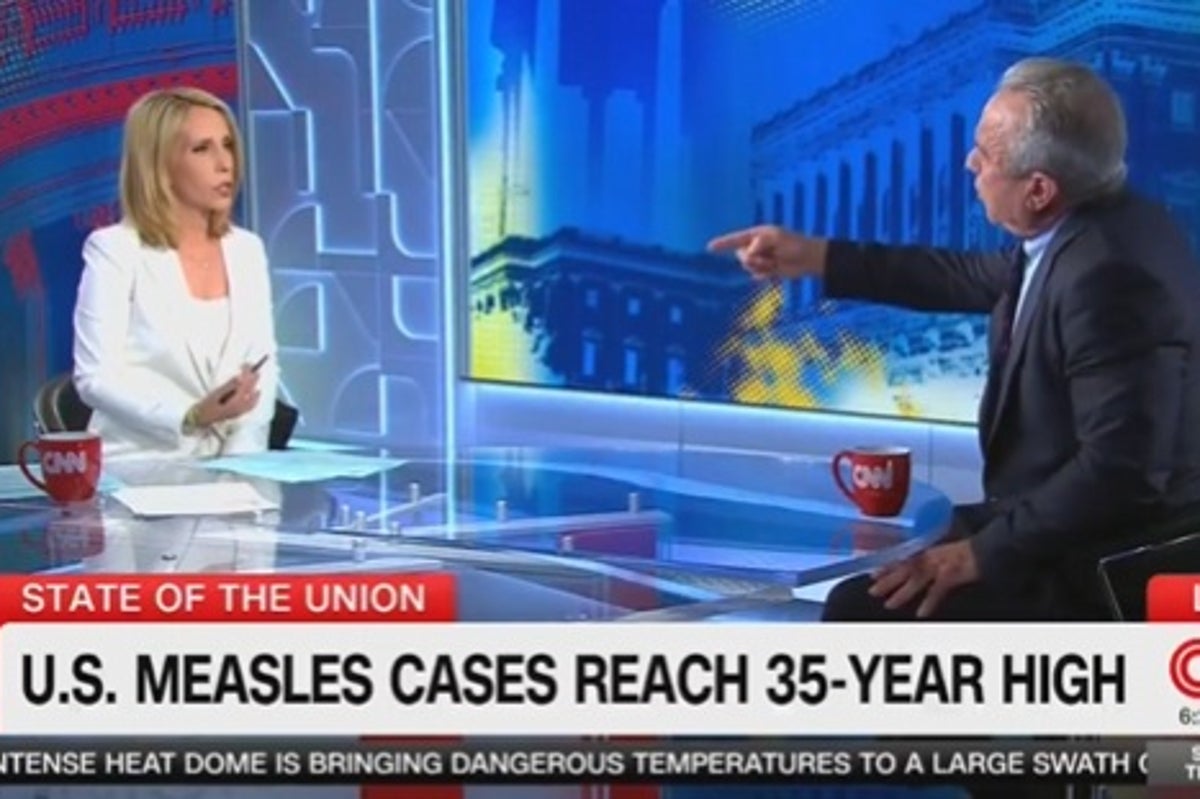
Whenever Robert F. Kennedy Jr. steps in front of a camera to talk about public health, media outlets scramble for the same predictable headline. They love framing it as an angry confrontation. They want a shouting match over measles, Covid-19, and immunization science. But focusing purely on the raised voices misses the real mechanism at play in modern political interviews.
Let's look past the theatrical tension. When anchors grill the Health and Human Services secretary about vaccine skepticism, they are fighting an ideological war on live television. Critics argue that giving a prominent platform to past anti-vaccine statements normalizes dangerous rhetoric. Meanwhile, defenders point out that public figures should be pressed hard on official health policies. The truth is messy. High-stakes political interviews rarely change anyone's mind. They only reinforce what viewers already believe.
The Anatomy of a High-Stakes Cable News Clash
Cable networks thrive on friction. You don't get viral clips by nodding politely and agreeing on data points. You get them when an anchor interrupts a talking point or plays archival footage of past statements.
Consider how these segments usually run:
- The anchor introduces the guest with a list of controversial past quotes.
- The guest pushes back against the premise, calling the question an unfair attack.
- Both sides talk over each other until the commercial break arrives to save the control room.
It's political theater disguised as accountability journalism. When anchors demand straight answers about complex medical data, they often treat nuance as an enemy. At the same time, officials navigating these interviews frequently lean on populist grievances rather than peer-reviewed consensus.
Why Measles and Covid Remain Flashpoints
Measles outbreaks and Covid-19 protocols aren't historical trivia. They are live issues dividing communities across the country. When immunization rates drop in local populations, public health officials sound alarms about losing elimination status. Yet, skepticism persists. That distrust didn't appear overnight. It grew out of shifting public health guidance, mixed messaging from federal agencies during the pandemic, and long-standing debates over personal choice versus mandate.
If you want to understand why these clashes keep happening, look at the disconnect between institutional science and populist messaging. Scientists speak in probabilities, herd immunity thresholds, and statistical risk profiles. Politicians and public advocates speak in absolutes, personal stories, and appeals to autonomy. When those two languages collide on live television, a shouting match is basically guaranteed.
Stop expecting cable news confrontations to resolve systemic public health debates. They are built for ratings, not resolutions. Next time you watch a fiery interview, turn down the volume and watch the mechanics. You'll see two completely different realities talking right past each other.