How Medellin Used 880,000 Trees to Drop Urban Heat by 5 Degrees
Concrete jungle isn't just a metaphor. It's a heat trap.
For decades, urban expansion across Colombia’s Aburrá Valley meant ripping out natural vegetation to build high-rise apartments, paved roads, and sprawling concrete highways. By the mid-2010s, Medellín—famously known as the "City of Eternal Spring"—was facing a grim reality. Its year-round moderate climate was disappearing, replaced by sizzling asphalt, rising smog, and ambient city temperatures spiking well above normal.
Instead of throwing billions into energy-hungry cooling systems or massive civil engineering overhauls, the city government tried something deceptively simple: nature-based urban planning.
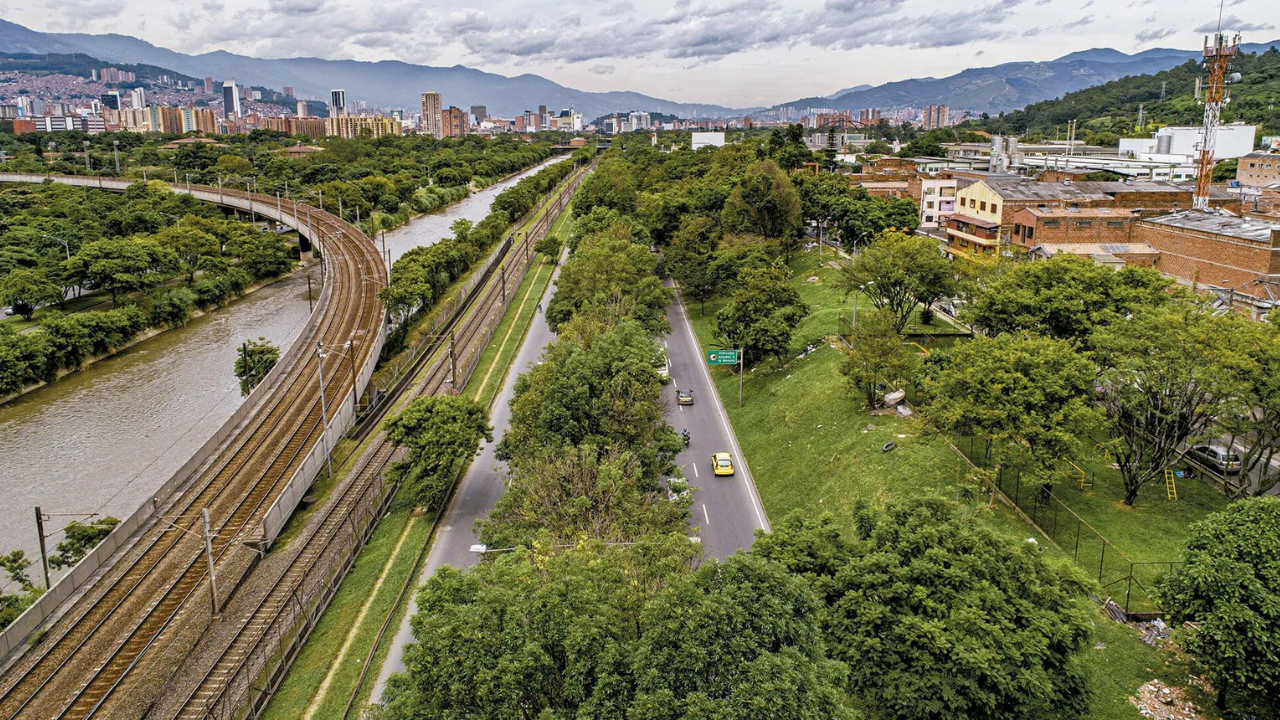
Starting in 2016, Medellín launched its Corredores Verdes (Green Corridors) project. The plan was clear: plant interconnected strips of trees, shrubs, and tropical greenery along 30 major thoroughfares, riverbanks, and former transit paths.
Fast forward past the planting of 880,000 trees and 2.5 million smaller plants, and the results speak for themselves. Average city temperatures dropped by nearly 2°C, while heavily shaded street areas experienced direct localized cooling of up to 5°C.
Here is how Medellín pulled off one of the most effective urban cooling initiatives in recent memory, what the viral social media posts get wrong about it, and what other heat-stressed cities can learn from it.
The Science of Urban Heat Islands and Evapotranspiration
To understand why planting trees works so well, you have to look at what makes cities hot in the first place.
Urban infrastructure—asphalt, brick, concrete, roofing materials—has a high thermal mass. It absorbs solar radiation all day and slowly radiates that heat back into the environment long after the sun goes down. This creates what scientists call the Urban Heat Island (UHI) effect, where city centers stay noticeably warmer than surrounding rural areas.
[Image of urban heat island effect]
When Medellín planted nearly a million trees across 65 acres of urban corridors, they broke that loop using two natural mechanisms:
- Direct Shade: Tree canopies prevent sunlight from ever hitting the ground. By intercepting radiation, surfaces stay significantly cooler. Studies from Medellín showed that while exposed asphalt surface temperatures previously topped $40^\circ\text{C}$ ($104^\circ\text{F}$), shaded pavement stayed around $30^\circ\text{C}$ ($86^\circ\text{F}$).
- Evapotranspiration: Plants act like living air conditioners. They absorb liquid water through their roots and release water vapor into the air through microscopic openings in their leaves (stomata). As the water transitions from liquid to gas, it absorbs surrounding latent heat, directly chilling the ambient air.
Fact-Checking the Internet: Did Medellín Cool Down by 10 Degrees?
If you've seen viral videos or social media posts about Medellín’s green transformation, you've probably seen claims that the city cooled down by as much as 10°C overall.
That isn't true.
It’s important to separate surface temperature from ambient air temperature:
- Ambient Air Temperature: Average overall city air temperature dropped by about 2°C.
- Micro-Climate Shade Temperature: Shaded pedestrian zones under dense canopies saw temperature drops between 3°C and 5°C.
- Surface Temperature: The actual physical temperature of the asphalt or pavement on the ground dropped by up to 10°C.
A 10-degree drop in surface temperature is massive for pedestrians walking near hot roads, but claiming the whole city cooled down by 10°C is a total misreading of environmental data. Even so, dropping ambient air temperatures by 2°C across a metropolis of 2.5 million people is a massive achievement.
How Medellín Built its Green Corridors
Medellín’s success wasn't just about throwing seeds at the ground. It was a calculated, engineered network designed to maximize airflow and shade.
      +--------------------------------------------------+
      |        MEDELLÍN GREEN CORRIDORS NETWORK          |
      +--------------------------------------------------+
                               |
       +-----------------------+-----------------------+
       |                                               |
       v                                               v
+-----------------------------+         +-----------------------------+
|    30 Interconnected Routes  |         |     Infrastructure Greening  |
| - 880,000 Trees             |         | - Vertical Gardens (5,000 m²) |
| - 2.5M Shrubs & Palms       |         | - Green Roofs on Transit    |
| - 80 km of New Bike Paths   |         | - Porous Soil Corridors     |
+-----------------------------+         +-----------------------------+
1. Strategic Native Species Selection
Forest engineers didn't just pick pretty trees. They specifically chose native species, tropical palms, and bamboo suited to Medellín's climate. The selection focused on plants that could withstand vehicle emissions while producing dense canopy foliage and high rates of transpiration.
2. Targeting High-Heat Arteries
The city focused on 30 specific corridors—primarily busy highways, rights-of-way along the Medellín River, and concrete heavy-traffic thoroughfares. By planting continuous rows of trees alongside transit lines, they created wind corridors that channel cooler mountain breezes through dense urban pockets, sweeping away trapped exhaust and heat.
3. Vertical Gardens and Infrastructure Integration
Where ground space was missing, planners went up. They installed over 5,000 square meters of vertical gardens on concrete retaining walls, overpasses, and civic buildings (including City Hall). Green roofs were added to transit stops, replacing heat-absorbing metal with moisture-retaining plants.
Beyond the Thermometer: Social and Public Health Impact
Cooling the air is great, but the secondary impacts of Medellín's green corridors are arguably even more impressive.
Reduced Air Pollution and Illness
Before the project, Medellín frequently hit dangerous levels of fine particulate pollution ($\text{PM}{2.5}$ and $\text{PM}{10}$). The living corridors act as natural biofilters, trapping airborne dust and absorbing ground-level ozone. According to public health data, acute respiratory infection rates in the city dropped from 160 per 1,000 residents down to 95 per 1,000 within three years of the program's rollout.
Community Equity and Employment
City hall didn't hire massive external private corporations to do all the work. Instead, they launched an urban gardening program that trained over 100 residents from lower-income and marginalized communities to become certified city gardeners. Today, those citizen-gardeners are paid full-time to prune, irrigate, and care for the urban forest daily.
Active Transportation Boost
Nobody wants to ride a bike or walk next to 35°C roaring traffic. By providing shaded, cool avenues, the city saw a 34.6% increase in cycling along the 80 kilometers of newly built, tree-shielded bike paths.
The True Cost: Is Nature-Based Infrastructure Cheaper?
Engineered cooling solutions like industrial misting stations or high-reflectivity road coatings carry massive upfront costs and constant electricity demands. Medellín proves that nature offers a far better return on investment.
| Metric | Medellín Green Corridors Project |
|---|---|
| Initial Capital Investment | ~$16.3 Million |
| Annual Maintenance Cost | ~$625,000 |
| Cost Per Resident | ~$6.50 one-time |
| Trees Planted | ~880,000 |
| Total Plants Added | ~2.5 Million |
| Average Air Temp Reduction | ~2°C citywide (up to 5°C localized) |
For a upfront cost of around $6.50 per person, Medellín fundamentally changed its microclimate, lowered air pollution, generated hundreds of local jobs, and saved millions in potential healthcare and energy costs.
Actionable Next Steps for Other Cities and Local Communities
You don't need a $16 million municipal budget to start implementing Medellín's cooling blueprint in your own neighborhood or city.
- Audit your localized surfaces: Identify gray infrastructure around your property or district—bare concrete walls, exposed asphalt driveways, or unshaded brick—and target them for planting.
- Prioritize canopy over turf: Lawns consume massive amounts of water without offering meaningful shading benefits. Plant high-canopy, native trees that maximize shade area per square foot.
- Incorporate vertical greening: If ground space is tight, use climbing vines, living walls, or container trellises on sunny south- or west-facing walls to keep outer building surfaces cool.
- Push for municipal transit corridors: Advocate at local city council meetings for tree-lined bike lanes and transit corridors rather than standalone, isolated city parks. Interconnected green strips yield far higher cooling and biodiversity benefits than isolated patches of grass.