Maricopa County is finally trying to step out of the national spotlight. For years, Arizona's largest county served as the ground zero for election conspiracy theories, intense legal brawls, and partisan screaming matches.
The latest battle didn't involve outside agitators. It was an internal civil war.
Republican Recorder Justin Heap and the county's predominantly Republican Board of Supervisors spent months locked in a bitter lawsuit over who actually runs the vote. In July 2026, the two sides finally signed a settlement. They agreed on a path forward, just days before the July 21 primary election.
If you are a voter in Phoenix, Mesa, Tempe, or anywhere else in the valley, this truce directly impacts how you cast your ballot. Let's break down what this settlement actually does, why these officials were suing each other in the first place, and what it means for the upcoming elections.
The Root of the Fight
To understand this mess, we have to look at how Maricopa County got here.
Elections in Arizona's most populous county are not run by a single person. Instead, power is split between the elected County Recorder and the five-member Board of Supervisors. Historically, these two entities worked together through intergovernmental agreements to share staff, technology, and facilities.
When Stephen Richer, a traditional Republican who aggressively defended the integrity of the 2020 and 2022 votes, was Recorder, he handed over several duties to the Board. This was done to keep operations smooth amidst heavy scrutiny and constant security threats.
Then came Justin Heap.
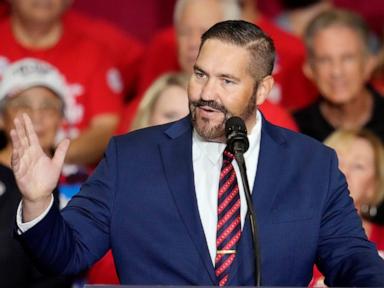
Heap, a conservative who won the Recorder's office in 2024 after defeating Richer in a heated primary, argued that those previous agreements illegally stripped power from his office. Backed by America First Legal—a conservative legal group founded by former Trump advisor Stephen Miller—Heap filed a lawsuit in June 2025. He wanted those duties back.
The Board of Supervisors didn't take this lightly. They called Heap's lawsuit a frivolous waste of taxpayer money. They argued that shifting complex IT systems and logistics right before major elections would create chaos. For over a year, the two sides traded blows in court. An appeals court even stepped in to pause a lower court ruling that would have immediately stripped the Board of its duties.
Eventually, both sides realized that heading into a high-stakes election cycle with an active lawsuit was a recipe for administrative disaster. They entered mediation under Judge Christopher Coury, which led to this new agreement.
Breaking Down the New Division of Power
The new settlement draws a sharp, clear line between the Recorder's Office and the Board of Supervisors. Instead of a messy overlap, they have divided the election cycle by phase.
The Recorder Controls Early Voting
Justin Heap and the Maricopa County Recorder's Office now have complete control over early voting.
His office will handle the selection and setup of all early in-person voting sites. They will operate the equipment and hire the staff for these locations. The Recorder also retains control over mail-in ballots, signature verification, and the drop boxes where voters deposit early ballots. To make this happen, the Board agreed to fund 12 new full-time positions specifically for early voting operations.
The Board Runs Election Day
The Board of Supervisors and its Elections Department will handle everything else.
This means the Board is in charge of selecting, setting up, and staffing polling places on Election Day itself. They will manage emergency voting and, crucially, handle the actual tabulation of all ballots. When you see voting machines being tested or ballots being fed into scanners, that is the Board's job. They also maintain the physical equipment used at polling locations.
A $15 Million IT Separation
One of the biggest points of contention was technology. Heap argued that the Recorder's Office should not rely on the Board's IT systems, claiming it compromised his office's independence.
The settlement addresses this with a massive financial commitment. The Board of Supervisors will authorize and fund a brand-new $15 million IT system specifically for the Recorder's Office. This system will operate entirely separate from the Board's network.
Because building a custom, highly secure election IT infrastructure takes time, the Board will fund 24 IT positions to support the Recorder's Office during the transition. Until the new system is fully built and certified, both offices will jointly oversee the existing systems. This ensures nothing breaks during the active 2026 voting periods.
The Political Stakes and Local Backlash
While the settlement brings legal peace, it has not cured the political divide in Phoenix. The public statements from local leaders reveal just how fragile this truce really is.
Board Chair Kate Brophy McGee made her exhaustion clear. She openly stated she was sick of the drama and tired of the county constantly landing on the front page of national news. For local leaders, the lawsuit was an embarrassing distraction that eroded public trust.
Heap spun the deal as a victory for the rule of law. He maintained that his goal was always to restore the statutory responsibilities of the Recorder's office as written in Arizona law.
Not everyone is celebrating. Steve Gallardo, the lone Democrat on the Board of Supervisors, voted against the settlement. During the public meeting, Gallardo leveled harsh criticism at Heap, suggesting the Recorder's real goal was to compromise the transparency of local elections.
Gallardo pointed out a major consequence of the deal. By giving Heap complete control over early voting, the Recorder can no longer blame the Board if things go wrong. "Now, with this, he owns it," Gallardo said.
This political ownership is significant. If there are long lines at early voting sites, or if drop box locations are poorly distributed, the blame falls squarely on Heap's shoulders.
How This Impacts the 2026 Election Cycle
If you're voting in Maricopa County, you won't see a radical shift overnight.
The July 21 primary is already governed by an interim 12-point plan approved by the Arizona Supreme Court. This was put in place to prevent administrative chaos while the lawsuit was being settled.
The comprehensive split detailed in the new settlement will fully take effect for the November 2026 general election and all future cycles.
For the average voter, the voting process remains functionally the same. You will still receive your early ballot in the mail if you're on the Active Early Voting List (AEVL). You will still drop it off at an official box or vote in person on Election Day.
The real change is behind the scenes. With clearly defined roles, there should be fewer public arguments about who is responsible for specific election tasks. If a scanner breaks on Election Day, the Board fixes it. If an early voting site has staffing issues, the Recorder's Office handles it. This clarity is designed to eliminate the finger-pointing that defined previous cycles.
Practical Steps for Maricopa County Voters
With the administrative rules settled, the focus shifts to the voters. Here is what you need to do to make sure your vote counts in the upcoming elections.
- Verify your voter registration early. Don't wait until the deadline. Check your status, address, and party affiliation on the official Maricopa County Recorder's Office website.
- Know your voting options. Decide whether you will vote early by mail, use an official drop box, or vote in person on Election Day.
- Track your ballot. Use the BeBallotReady tool provided by the county. You can sign up for text or email alerts to know exactly when your mail-in ballot is sent, received, and counted.
- Locate your specific voting site. Because of the new division of duties, some early voting locations and Election Day polling places may differ. Double-check your designated locations before heading out.
This settlement is a step toward stability. Whether it actually restores voter confidence in Arizona's most watched county depends entirely on how well both offices execute their newly defined roles.
:max_bytes(150000):strip_icc()/xochimilco_getty-56a3ea613df78cf7727fdcc0.jpg)