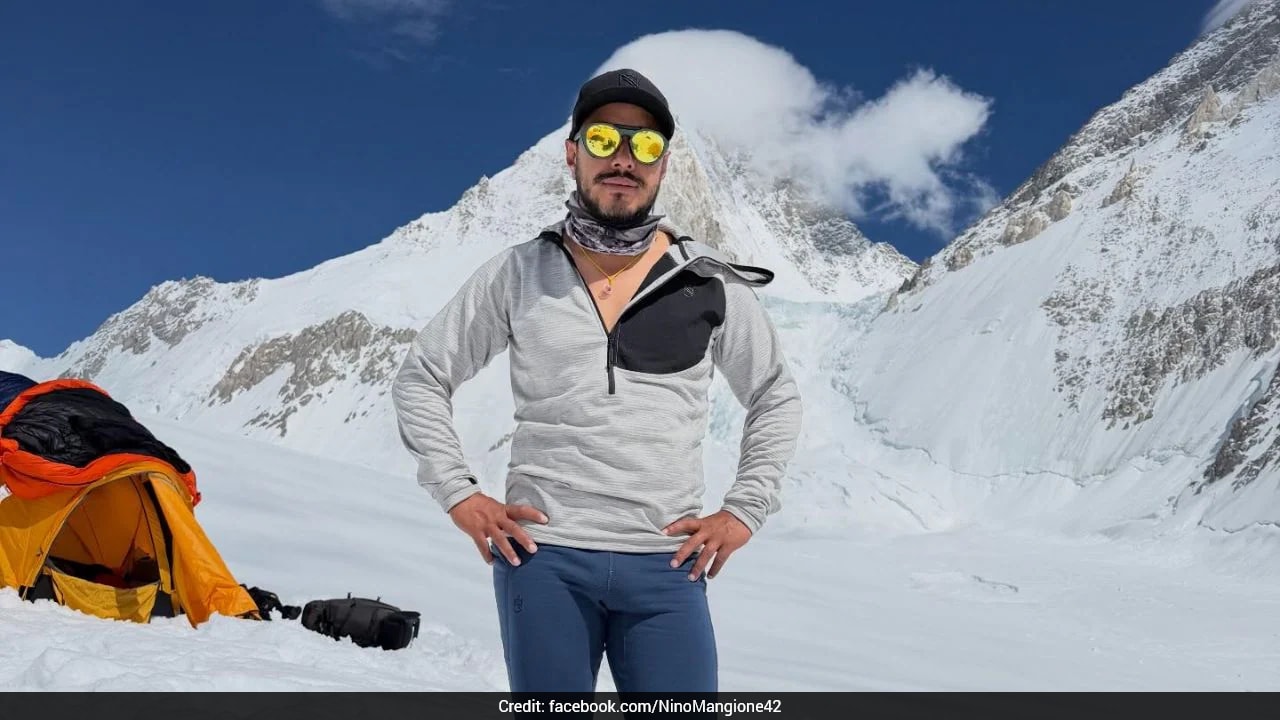
The mountain didn't care about records. On Broad Peak, brutal weather and a sudden wall of snow cut down one of the greatest endurance athletes of our generation.
Rescuers found the body of legendary Nepalese-British mountaineer Nirmal Purja, widely known as Nims Dai, at roughly 5,700 meters. Three days prior, an avalanche swept away his entire ten-member international crew on the slopes of the 8,051-meter peak in the Karakoram range. Ground teams navigating treacherous conditions managed to reach the site, confirming a massive tragedy that has shaken the global climbing community.
What Happened on Broad Peak
The disaster unfolded when a massive wall of snow slammed into the multi-national expedition. Purja was leading a team consisting of climbers from Nepal, Pakistan, Oman, the United States, and China. Weather conditions immediately grounded all military and civilian helicopters, leaving recovery operations entirely to brave ground teams and local Sherpas.
By the weekend, Elite Exped—the expedition enterprise co-founded by Purja—confirmed the worst. Five bodies have been recovered so far, including those of Purja, American climber Mallory Geis, Omani climber Nadhira Ahmed Abdullah Al Harthy, and Nepalese climbers Pur Bahadur Gurung, Wang Zhong, Nima Sherpa, and Kili Pemba Sherpa. Rescuers spotted additional remains at higher elevations, but hazardous terrain and unstable slopes prevent any immediate retrieval attempts.
The Legacy of Nims Dai
You cannot talk about modern high-altitude climbing without acknowledging Purja's absolute impact. Born in rural Nepal, he served in Britain's elite Brigade of Gurkhas and later the Special Boat Squadron (SBS) before turning his focus entirely to the extreme cold.
In 2019, he shattered conventional limits by summiting all fourteen of the world's eight-thousanders in just six months and six days—a feat chronicled in the hit documentary 14 Peaks: Nothing is Impossible. That record completely altered what people thought human lungs and legs could endure in the death zone. He didn't just climb mountains; he redefined speed, logistics, and commercial strategy in the Himalayas. At the time of his death, he was attempting to complete his second full rotation of all fourteen peaks.
The Brutal Reality of the Karakoram
Broad Peak is the twelfth-highest mountain on earth, sitting right next to the jagged monster that is K2. While guidebooks sometimes label it as an accessible eight-thousander, the mountain punishes hubris instantly.
Steep slopes, hidden crevasses, and volatile weather patterns make the Karakoram range fundamentally unpredictable. Ground rescue teams operating at 5,700 meters faced sub-zero temperatures, shifting snow packs, and the constant threat of secondary avalanches. Helicopters sat grounded because wind speeds and poor visibility made air extraction impossible.
Moving Forward After the Tragedy
The loss of ten climbers in a single sweep is a stark reminder of the raw danger inherent in extreme sports. Enthusiasts often look at glossy social media updates and commercialized summit photos, forgetting that high-altitude mountaineering remains a lethal pursuit where elite training offers no absolute immunity.
The Alpine Club of Pakistan and local recovery crews continue to monitor the upper slopes for the remaining missing team members as weather windows permit. For the rest of the climbing community, the focus shifts to mourning a pioneer while critically evaluating the mounting risks of commercial expeditions on unstable peaks.
Check local advisories, respect the weather, and remember that no summit is worth an uncalculated gamble against the elements.