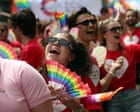
The glitter on Piccadilly hasn't even settled yet, but the reality check is already hitting hard. On Saturday afternoon, more than 35,000 marchers from 600 different groups flooded the streets from Hyde Park Corner to Whitehall. Over a million spectators lined the pavements. It looked like a massive, unstoppable party. Mayor Sadiq Khan was out there waving, pop music was blasting, and the rainbow flags were everywhere.
But if you think London Pride in 2026 is just a giant corporate-sponsored street party, you're missing the point entirely.
Beneath the heavy bass and the branded floats, this year’s march carried a frantic, sharp edge of survival. The event arrived at a boiling point for the UK's LGBTQ+ community. Scratch the surface of the celebration, and you find a community fighting back against systemic collapses, exploding waiting lists, and a wave of political hostility that isn't slowing down.
The Brutal Math Behind the Rainbow Flags
Let's look at what's actually happening when the music stops. The 2026 march took place under a dark cloud of statistics that corporate sponsors don't like to put on their banners.
Take healthcare. NHS gender-affirming care waiting lists in some UK regions now stretch past four long years. Think about that for a second. Four years of bureaucratic limbo for life-saving medical care.
Then there's the political gridlock. Back in 2018, the government pledged a comprehensive, trans-inclusive ban on conversion therapy. It's 2026, and that pledge is still just empty paper, completely uncodified into law.
Physical safety is cratering too. The latest Home Office figures reveal that police recorded over 18,000 hate crimes motivated by sexual orientation in 2025 alone. Safe spaces are vanishing right before our eyes. Since 2006, London has lost a staggering 58% of its LGBTQ+ venues. Gentrification, soaring rents, and economic pressures are wiping out the very clubs, bars, and community centers that served as sanctuaries for decades.
When veteran activist Julian Hows, 70, stood at the front of the parade, he didn't mince words. He reminded everyone that the freedoms won since the first UK march in 1972 can be stripped away in an instant. Rights aren't permanent fixtures. They're temporary privileges unless you keep fighting for them.
The Fractured Reality of Modern Pride
Honestly, the corporate gloss of the main London event is causing a massive internal rift. A lot of grassroots activists don't feel represented by the massive corporate entity that Pride in London has become.
For the past couple of years, major LGBTQ+ groups have actively distanced themselves from the main parade. The reasons are heavy and complicated. Activists are calling out "pinkwashing"—the practice of corporations using rainbow branding to look progressive while failing to support queer staff or equity initiatives behind closed doors.
More intensely, serious protests targeted sponsors over their deep connections to the international arms trade and ongoing global conflicts. The party is fracturing. On one side, you have a highly organized, heavily policed, corporate-backed spectacle. On the other, you have radical activists demanding a return to the event's raw, anti-establishment roots.
Even the rumors of a surprise appearance by Madonna, which flooded social media all week, had to be shot down by organizers. The message from the streets was clear: we don't need a distraction from a pop billionaire. The real focus belongs on the two headliners at Trafalgar Square and the core message of collective resistance.
How to Move Beyond the Mainstream Spectacle
If you want to support the community effectively, don't just show up once a year to watch a parade. The real work happens in the gaps where the system fails.
- Fund the survivors: Direct your money to grassroots venues and independent queer spaces fighting closure. They need your patronage on a random Tuesday in November, not just July.
- Pressure your MPs: Write to your local representatives directly. Demand the immediate, uncodified ban on conversion therapy and immediate funding injections for NHS gender identity clinics to slash those horrific four-year wait times.
- Support localized alternative marches: Look into events like London Trans+ Pride or Black Pride, which bypass the corporate sponsors entirely to focus purely on grassroots intersectional activism.
The party in central London is over for the day, but the crisis isn't. Standing on the sidelines and cheering is a start, but it's time to get your hands dirty.