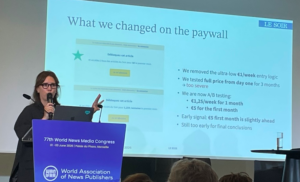
Digital publishing is stuck in a toxic relationship with its readers. For years, major newsrooms have treated new subscribers like royalty while ignoring the people who actually keep the lights on. You see it everywhere: dirt-cheap introductory rates of one dollar a month for newcomers, while loyal readers who have stayed for years get hit with quiet, aggressive price hikes.
Belgian daily newspaper Le Soir decided they had seen enough of this churn-and-burn cycle. Instead of punishing longevity, they are running a pricing experiment that flips the script. They are actively lowering prices for long-term readers.
It sounds crazy in a tight economic climate where growth has leveled off. Most publishers believe hitting a subscription ceiling means they need to squeeze more cash out of their existing base. Le Soir is betting on the exact opposite strategy, and the mechanics behind their choice reveal a lot about where independent media is heading in 2026.
The Loyalty Trap in Modern Media
Most subscription models are fundamentally broken because they rely on dynamic paywalls designed purely for acquisition. Publishers use data to figure out the exact moment you are desperate enough to read an article, hit you with a cheap promo, and then hope you forget to cancel when the rate triples a year later.
This creates a massive retention problem. Readers aren't stupid. They notice when a brand values a total stranger more than someone who has been reading their commentary for five years.
Data from WAN-IFRA’s recent industry outlook shows that digital circulation growth is cooling globally. The easy wins are gone. Publishers have already signed up the majority of people who are readily willing to pay for news. When you hit that ceiling, your focus has to shift from chasing fresh eyeballs to protecting your core community.
Le Soir noticed that their oldest subscribers were their most valuable, yet the traditional system offered them zero financial incentives to stay. By experimenting with a pricing matrix that rewards tenure, they are tackling churn before it happens.
How the Experiment Works
The newspaper isn't just handing out random discounts. Their strategy uses a tiered system based on the length of continuous subscription.
- The Transition Period: New subscribers still enter through standard promotional tiers to sample the journalism.
- The Loyalty Trigger: Once a reader hits specific multi-year milestones, their monthly bill decreases or stabilizes against inflation.
- The Community Perks: Price drops are paired with direct access to editorial staff, exclusive events, and ad-free interfaces.
This model changes the psychology of the transaction. You aren't just buying a contract that grants access to a website. You are entering a relationship where your financial commitment decreases as your emotional commitment increases.
Honestly, it is a massive gamble. On paper, reducing the average revenue per user (ARPU) of your most loyal base looks like suicidal business planning. But the math makes sense when you look at the hidden costs of acquisition.
The Math Behind Lower Prices
Acquiring a new subscriber costs significantly more than keeping an old one. Marketing budgets, targeted social media ads, and technical infrastructure for dynamic paywalls devour a huge chunk of that initial revenue.
If a reader stays for five years, their acquisition cost drops to zero. They are pure profit. If that reader leaves because they feel taken advantage of, the publisher has to spend a small fortune to replace them with a volatile newcomer who might cancel in ninety days.
By offering a discount to long-term readers, Le Soir accepts a slightly lower margin on individual bills in exchange for predictable, long-term cash flow. It creates an ecosystem where the lifetime value (LTV) of a reader skyrockets because the churn rate drops toward zero.
What Other Newsrooms Get Wrong
Most media companies treat subscriptions like software-as-a-service (SaaS) products. They think news is like a streaming app where you just add features or content to justify a higher bill.
News isn't entertainment. It is a daily habit tied to civic identity. When a publisher treats that habit like a transactional utility, they lose the trust that makes people pay for journalism in the first place.
Other brands try to solve retention by creating ultra-expensive "membership" tiers that sit far above standard subscriptions. While that works for niche outlets, it leaves the middle tier of regular, loyal readers feeling left out. Le Soir is focusing directly on that middle tier, ensuring the everyday reader feels seen.
Next Steps for Your Own Strategy
If you run a subscription business or handle audience revenue, you don't need to slash your prices tomorrow morning. You do need to audit how you treat your best customers.
Start by pulling your retention data and segmenting your users by tenure. Check the price difference between what your newest subscriber pays and what your five-year veteran pays. If your loyal readers are carrying the financial burden for everyone else, your model is a ticking time bomb.
Introduce a small, tenure-based reward system. It can be a fixed price guarantee against future hikes, or an automatic five percent loyalty discount after year three. Test it on a small cohort of your audience. Watch the retention numbers. The media landscape is too fragile to keep treating your biggest fans like an afterthought.