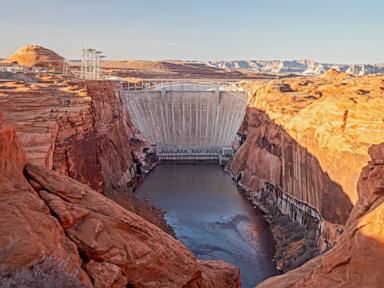
The American West is running out of time, and the massive concrete wall of the Glen Canyon Dam is proving it every single day. If you live in Arizona, Utah, California, or Nevada, you probably think of Lake Powell as a great place for houseboats or a distant geographic talking point. It isn't. It's a giant battery and a life-support system for forty million people. Right now, it's failing.
With Lake Powell reaching critically low elevation levels, experts say we are staring down the barrel of a multi-state energy and water crisis that short-term fixes can't solve anymore. The reservoir is currently sitting at 3,524.3 feet above sea level. That sounds like a big number until you realize full pool is 3,700 feet. The lake is less than a quarter full. Even worse, it's dropping by roughly 4,800 acre-feet of water every single day.
We aren't just losing water to a dry climate. We are watching the math of an outdated system crash in real time.
The terrifying math of Lake Powell reaching critically low elevation levels
To understand how bad things are, you have to look at the numbers that the Bureau of Reclamation watches every hour. The most important number on their radar right now is 3,490 feet. That's the minimum power pool.
When the water level drops below 3,490 feet, the water is too low to spin the hydroelectric turbines inside the Glen Canyon Dam. Right now, we are about 34 feet away from that line. Thirty-four feet is a terrifyingly small cushion when you consider how fast the lake is evaporating and draining.
If the turbines stop, the dam stops producing electricity. This isn't a hypothetical problem for the future. The current pace puts the reservoir on track to hit record-breaking low territory within weeks. Jack Schmidt, who heads the Center for Colorado River Studies at Utah State University, pointed out that reservoir operations get incredibly complicated once the elevation drops below 3,500 feet and live storage falls below 4.3 million acre-feet. We are already hovering right on that edge.
The absolute worst-case scenario is dead pool at 3,370 feet. At that depth, water cannot flow past the dam by gravity at all. About 240 feet of water would just sit trapped at the bottom of the canyon, completely unreachable. Millions of people downstream would see their main water supply cut off entirely. While total dead pool is unlikely because the government will step in with forced emergency cuts, the fact that scientists are openly calculating the logistics of it should tell you everything you need to know.
Your electric bill is about to take a hit
Most people don't realize where their electricity comes from until it gets more expensive. Glen Canyon Dam supplies cheap, reliable hydropower to roughly five million people across seven states.
When those turbines stop spinning, those rural electric cooperatives and municipal utilities can't just stop delivering power. They have to go out and buy replacement electricity on the open wholesale market.
Market-rate power from natural gas or coal plants during peak summer heat waves costs three to five times more than federal hydropower. If you think your air conditioning bill is high now, wait until your local utility provider passes those market rates directly onto your monthly statement. It happens faster than you think, usually within a billing cycle or two.
Too many straws in a shrinking glass
The media loves to blame the entire crisis on the recent winter snowpack failures. Yes, the snowpack was historically low, and the spring runoff barely moved the needle. But the real issue runs much deeper than a bad weather year.
Climate researcher Brad Udall from Colorado State University sums it up perfectly by saying there are simply too many straws in the glass. The foundation of the problem dates all the way back to the 1922 Colorado River Compact.
When the original legal framework was written more than a century ago, negotiators divided up the river's water based on an incredibly wet period. They legally allocated more water than the river actually produces in a normal year. Now, a warming climate is driving down runoff across the entire basin. The river is shrinking, but the legal demands of cities, farms, and golf courses haven't shrunk to match it.
We are trying to run a 21st-century civilization on 20th-century legal illusions.
Why emergency releases won't save us
In the past, the Bureau of Reclamation has tried to save Lake Powell by opening the gates at upstream reservoirs like Flaming Gorge. They dump upstream water down into Powell to prop up the elevation levels and keep the turbines moving.
It's a temporary band-aid on a gunshot wound.
Shuffling water from one emptying bucket to another doesn't create new water. Total system storage across the entire Colorado River Basin fell by over three million acre-feet in just the last year. We are draining our savings accounts to pay the daily checking account fees. Eventually, the upstream buckets run dry too.
Real steps to protect your household right now
You can't fix the water levels at Glen Canyon Dam yourself, but you don't have to sit by and wait for the grid to squeeze your wallet.
Look into a home energy audit immediately. Sealing leaks and upgrading your insulation can drop your power usage enough to offset the coming utility rate spikes. If you live in an area serviced by a small electric cooperative that relies heavily on Western Area Power Administration contracts, call them. Ask about their transition plans for when hydropower drops off.
If you are a property owner or investor in the Southwest, start paying attention to local water municipal bonds and changing water rights. The rules we have are completely inadequate for what's coming, and major policy shifts will change property values and utility structures fast.
Get serious about your personal water and energy independence today. The buffer zone is gone, and the water isn't coming back anytime soon.