Insects rule almost every terrestrial and freshwater habitat on Earth, yet they are conspicuously absent from the open ocean. For generations, biology textbooks blamed simple physics for this gap: an insect's air-filled respiratory tubes would buckle, crush, and implode under the crushing hydrostatic pressure of deep water.
That long-standing rule just broke.
Researchers studying Africa's Lake Malawi discovered that billions of tiny lake fly larvae—specifically Chaoborus edulis—routinely plunge more than 200 meters into the pitch-black, oxygen-starved depths of the lake every single day. They do this to hide from predatory fish before migrating back to the surface at night to feed. Far from imploding, these insect submariners use an ingenious biological setup that forces us to reconsider what limits animal life under extreme pressure.
How Tiny Larvae Beat High Pressure
Led by scientists from the University of British Columbia like Dr. Philip Matthews and PhD student Evan McKenzie, a research team set out to map these daily aquatic migrations using bottom-mounted sonar systems. When they dissected the larvae, they uncovered a structural modification that changes how we view insect anatomy.
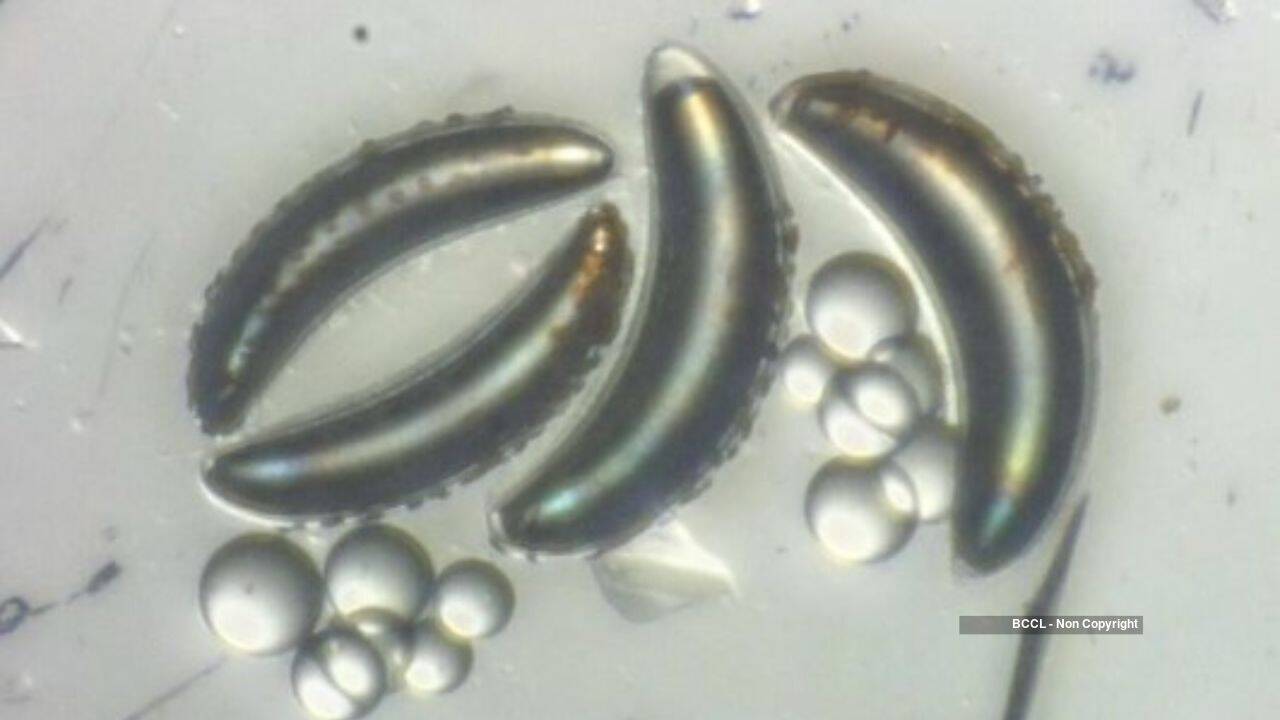
The larvae converted parts of their internal respiratory machinery into two pairs of distinct air-filled sacs. Instead of relying on these sacs strictly for breathing gas exchange—which happens mostly through their skin—they use them as organic ballast tanks. Just like an underwater submarine adjusting its trim, these larvae alter their internal chemistry to control buoyancy.
The real shocker is the material making up the walls of these sacs. They contain resilin, an elastic, rubber-like protein typically famous for giving flea legs and insect wing hinges their springy snap.
Chemistry Acting as Muscle
In Chaoborus edulis, resilin does something entirely unexpected. By modifying the local pH levels within the air sac walls, the larvae cause the resilin to swell or contract on command.
This creates a chemo-mechanical engine. Without using active muscle contractions, the larvae change the physical volume of their internal gas pockets. It allows them to navigate the water column with pinpoint precision.
To find out where the breaking point actually sat, the researchers placed live larvae into specialized laboratory pressure chambers. They dialed up the simulated depth far past normal routines. The results stunned the lab. The air sacs refused to collapse until they reached pressures equivalent to over 400 meters—and in some tests, nearly 500 meters—deep.
What This Means for Evolutionary Biology
For years, scientists assumed insect respiration was an absolute evolutionary dead end for marine colonization. If a creature's internal plumbing relies on uncompressed air pockets, deep water is supposed to be a death sentence.
These Lake Malawi midge larvae prove that air-filled structures can evolve rugged resistance to extreme hydrostatic pressure. While open oceans present different chemical and salinity challenges compared to a deep African rift lake, the physiological barrier is lower than anyone thought. Insects possess more biological flexibility than standard evolutionary models predicted.
Beyond pure biology, materials scientists are already eyeing these resilin walls. Creating synthetic, pH-responsive smart materials that change shape and volume on chemical command could lead to brand-new classes of artificial muscles or microscopic actuators.
Next time you look at a calm lake surface, remember the industrial-grade physics happening miles below. Nature keeps rewriting its own rules.