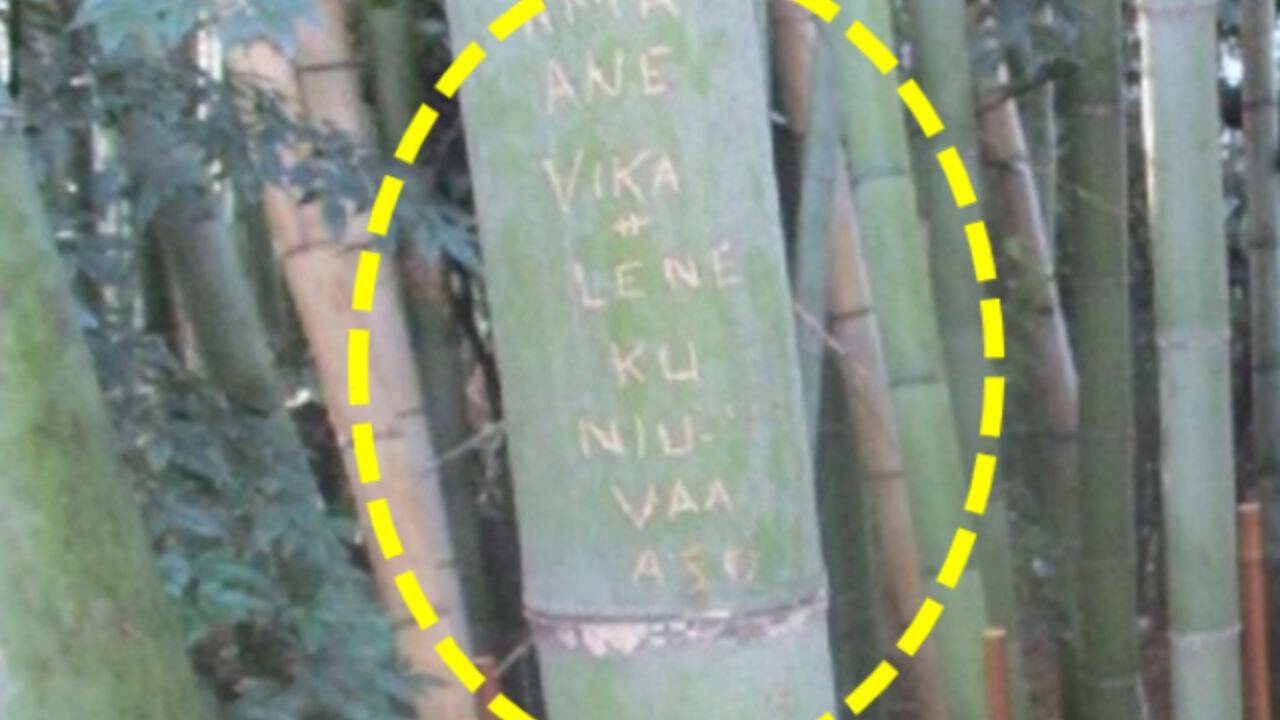
You can't carve your name into a living monument and expect local communities to just look the other way. That hard truth hit home in Kyoto, where municipal authorities faced an infuriating crisis at the world-famous Arashiyama Bamboo Grove. An official city survey revealed that roughly 350 bamboo stalks along the heavily trafficked tourist paths had been permanently defaced with sharp-pointed carvings. Names like "Kate" in English letters and "Yoshitaka" in hiragana script were hacked into living stalks on both sides of the narrow trail.
When tourism surged back to full throttle after the pandemic, bad behavior returned right alongside it. Visitors treated a fragile, historic ecosystem like a public bathroom wall. Because bamboo plants cannot heal once their outer layer is gouged, officials chose an extreme option: cutting down parts of the grove and pushing the barrier line back. For a closer look into this area, we suggest: this related article.
The Anatomy of the Arashiyama Vandalism Crisis
The Arashiyama Bamboo Grove in Kyoto's Ukyo ward is a designated Special Preservation District for Historical Landscapes. It is protected under Japan's Ancient Capitals Preservation Law. Yet, the sheer volume of foot traffic makes continuous policing nearly impossible.
The Kyoto city government owns roughly 2.3 hectares of land along the path, supporting an estimated 7,000 naturally growing bamboo stalks. Back in October, an inspection by the city's scenic preservation division confirmed that 350 individual plants were scarred. For additional context on this development, extensive analysis is available on Travel + Leisure.
While botanical experts note that surface cuts rarely kill a bamboo stalk instantly, the visual impact is devastating. Local business owners and residents watched in horror as pristine green stalks turned into an eyesore of foreign initials and character scratches.
Why Fences and Signs Failed
Kyoto officials didn't rush into drastic measures without trying softer fixes first. They deployed a range of localized Band-Aids that ultimately proved ineffective against disrespectful crowds.
Local shopping district associations and non-profit groups spent months trying to cover up the damage using green masking tape. They hoped camouflaging the scars would stop copycat behavior. Authorities also plastered warning notices in four languages—Japanese, English, Chinese, and Korean—along fences and mounted them directly onto roughly 50 local rickshaws.
The signs delivered a clear message: defacing the bamboo is a crime. Under Japanese law, carving into public plants can legally constitute destruction of property. None of it stopped tourists from pulling out sharp implements to leave their permanent mark on a temporary vacation.
The Drastic Solution: Moving the Forest Out of Reach
Realizing that warning signs and masking tape were losing battles, city officials and the Saga Community Association Federation held an emergency countermeasures meeting. Some radical voices even suggested temporarily closing the entire path to the public. Instead, they settled on a controversial physical intervention: tactical bamboo thinning.
Crews began a trial project on city-owned land, cutting down a stretch of roughly 25 to 30 bamboo stalks across a 30-meter zone. Interestingly, not all the removed stalks were heavily vandalized; healthy plants were cleared too.
The goal wasn't just punishment or cleanup. It was architecture. By removing a strip of bamboo directly adjacent to the walking path, officials successfully widened the physical gap between the trail and the remaining forest. If tourists cannot physically reach the stalks with their hands or pocketknives, the carving stops.
Misao Hashimoto, chief of the city's scenic preservation division, didn't mince words about the situation. He noted that the forest is shared property maintained through decades of sacrifice by the local community, calling the deliberate destruction deeply regrettable.
What This Means for Future Travelers
Overtourism is forcing heritage sites across the globe to rethink how much access they grant visitors. When landmarks are treated as personal scrapbooks, destinations will choose preservation over open access every single time.
If you are planning a trip to Kyoto, expect tighter spatial boundaries at popular nature spots. Respect the physical space, leave your pocketknife in your bag, and remember that taking photos should never require altering the environment. If bad behavior continues, expect more fences, more thinning projects, and even stricter tourist gates closing off the world's most treasured views.