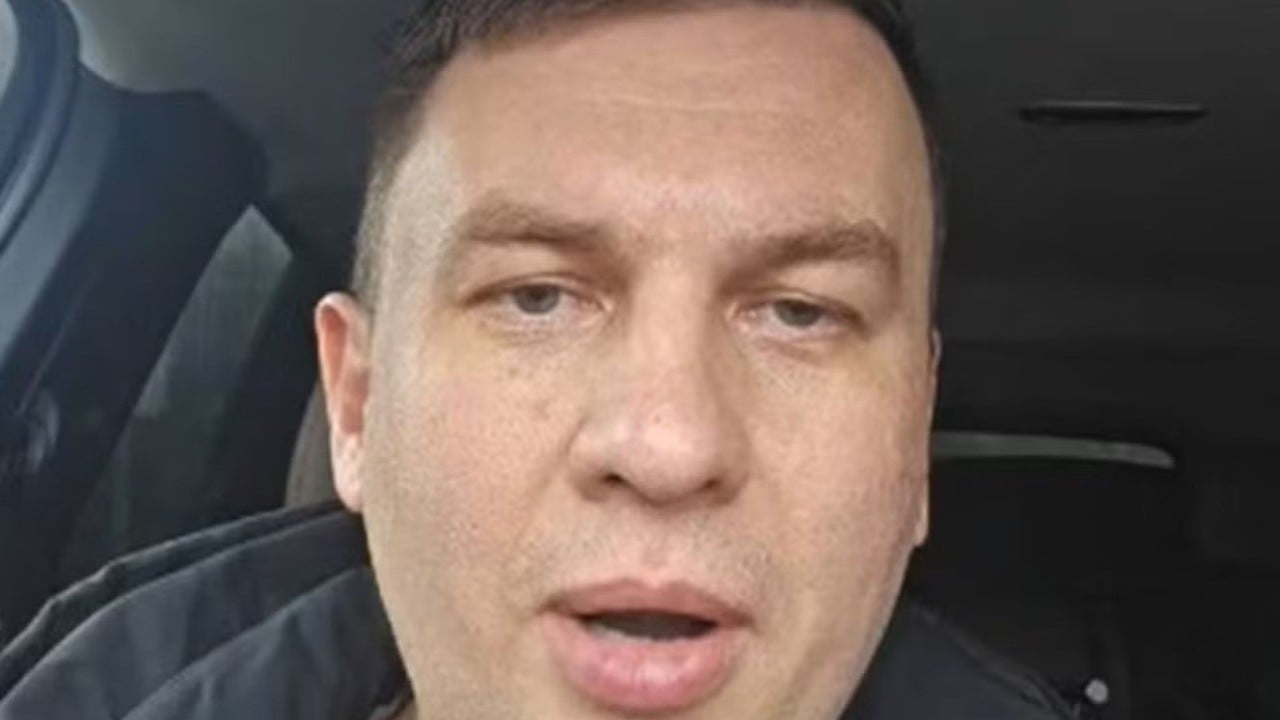
Predicting that Vladimir Putin will end up in handcuffs is a quick way to get handcuffs slapped on your own wrists.
That is exactly what happened to Ilya Remeslo, a prominent Russian blogger and lawyer who spent years serving as one of the Kremlin's most aggressive digital attack dogs. His arrest in St. Petersburg marks a vicious new turn in Russia's internal crackdowns. It proves that the regime is no longer just hunting its traditional liberal opponents. It is eating its own.
For anyone watching Russia from the outside, the arrest might look like just another standard piece of wartime censorship. But the context here is deeply twisted. Remeslo was not an anti-war activist from the traditional opposition. He was a regime loyalist who weaponized the Russian legal system to destroy the state's enemies. Now, he faces up to ten years in prison under the very same censorship laws he once cheered on.
The message from the Kremlin is brutal. Loyalty is not a shield, past services mean nothing, and the moment you break rank, you become an enemy of the state.
The Sudden Turn of a Kremlin Loyalists
To understand why this arrest matters, you have to look at who Ilya Remeslo actually is. He was not a quiet observer. He built a reputation as a fierce defender of the state, frequently appearing in state media and using his legal background to file endless complaints against independent journalists and activists. He was deeply involved in the state-backed campaigns that targeted the late opposition leader Alexei Navalny, actively working to dismantle any form of dissent from within Russia.
Then came March.
Remeslo shocked the entire Russian political ecosystem by publishing a viral manifesto titled "Five reasons why I stopped supporting Vladimir Putin". In it, he did something almost unprecedented for someone of his status. He directly blasted the president, calling the military action in Ukraine a dead-end war that was throwing Russian lives away for nothing. He even openly called for Putin to face trial as a war criminal.
The backlash from the state was instant and terrifying. Instead of going straight to a prison cell, Remeslo was committed to a psychiatric facility in St. Petersburg for a month. He later described this hospitalization as involuntary retaliation, a transparent attempt by the state to paint his political defection as a mental breakdown. He refused to recant his statements anyway.
The breaking point arrived just a day before his formal arrest, when he boldly predicted that the Kremlin leader would eventually face justice in handcuffs. State security forces did not wait long to answer. He was detained on charges of spreading false information about the military, a catch-all accusation that the state uses to crush anyone pointing out the realities of the war.
The Return of Punitive Soviet Psychiatry
Locking political critics in psychiatric wards is one of the darkest pages of Soviet history, and Remeslo's recent stint in a St. Petersburg clinic shows that the old playbook is back in full rotation. During the Soviet era, the state frequently diagnosed dissidents with "sluggish schizophrenia," claiming that anyone who opposed the communist regime must be suffering from a mental illness.
By sending a former loyalist to a psychiatric hospital before shifting him to a criminal court, the Kremlin is sending a targeted message to its remaining supporters. They want to show that defection is not a legitimate political stance. They want to frame it as madness.
It is a psychological tactic designed to humiliate the defector. If you are a liberal activist, the regime puts you in prison because you are considered a threat. If you are a former insider who turns, the regime tries to break your mind first, stripping away your credibility before they even hand down a prison sentence. Remeslo's refusal to back down after his release shows a rare level of defiance, but his transfer to Moscow for prosecution means the state is done playing psychological games. They want a conviction.
Why the Kremlin is Panicking Right Now
This arrest does not happen in a vacuum. It comes at a highly sensitive time for the Russian government. Parliamentary elections are approaching in September, and despite a surface-level appearance of absolute control, the regime is showing real signs of anxiety.
The Russian economy is feeling the strain of a prolonged conflict. Localized fuel shortages, caused by relentless Ukrainian drone strikes on oil refineries, have started to rattle the domestic population. Prices are rising, the wartime debt boom is threatening financial stability, and the Kremlin is desperate to keep a lid on any public dissatisfaction.
We saw the scope of this anxiety on the exact same day Remeslo was processed. Russian authorities also targeted Boris Nadezhdin, an anti-war politician who had previously tried to run against Putin. Nadezhdin was slapped with a fine for supposedly displaying extremist symbols, a move clearly intended to keep him entirely on the sidelines of the upcoming political cycle.
The state is cleaning house. They are making sure that no one, whether a seasoned anti-war politician or a newly disillusioned pro-war blogger, can serve as a rallying point for public anger.
The Shifting Fractures in the War Community
For a long time, the Kremlin tolerated a certain level of criticism from the pro-war camp. Online commentators, often called Z-bloggers, were allowed to complain about incompetent generals, poor military supplies, or tactical failures on the front lines. The state viewed this as a useful safety valve. It let nationalist figures vent their frustrations without ever questioning the wisdom of the war itself or the authority of Putin.
Remeslo crossed a line that the regime cannot ignore. He did not just complain about military logistics. He took aim directly at the top, pointing out the systemic failure of the entire geopolitical strategy.
When an insider who knows how the propaganda machine works decides to step away and call it a dead end, it terrifies the state security apparatus. It raises a dangerous question for the Kremlin. How many other loyalists, officials, and media figures are quietly thinking the exact same thing?
What to Watch Next
The prosecution of Ilya Remeslo is going to be handled in Moscow, far away from his home base in St. Petersburg. This indicates that the federal government is taking direct control of the narrative, preparing a high-profile warning to anyone else in the media space who thinks about breaking ranks.
If you are tracking the internal stability of Russia, watch how the rest of the Z-blogger community reacts to this case. If they remain completely silent, it means the fear of the 10-year prison sentence has successfully paralyzed internal debate. If we see further crackdowns on alternative nationalist voices, it means the Kremlin is actively narrowing the circle of acceptable speech down to absolute, unquestioning praise.
The space for independent thought in Russia disappeared a long time ago. Now, even the space for conditional loyalty is gone. You either support every decision blindly, or you find out how quickly your former allies can bring a pair of handcuffs to your door.