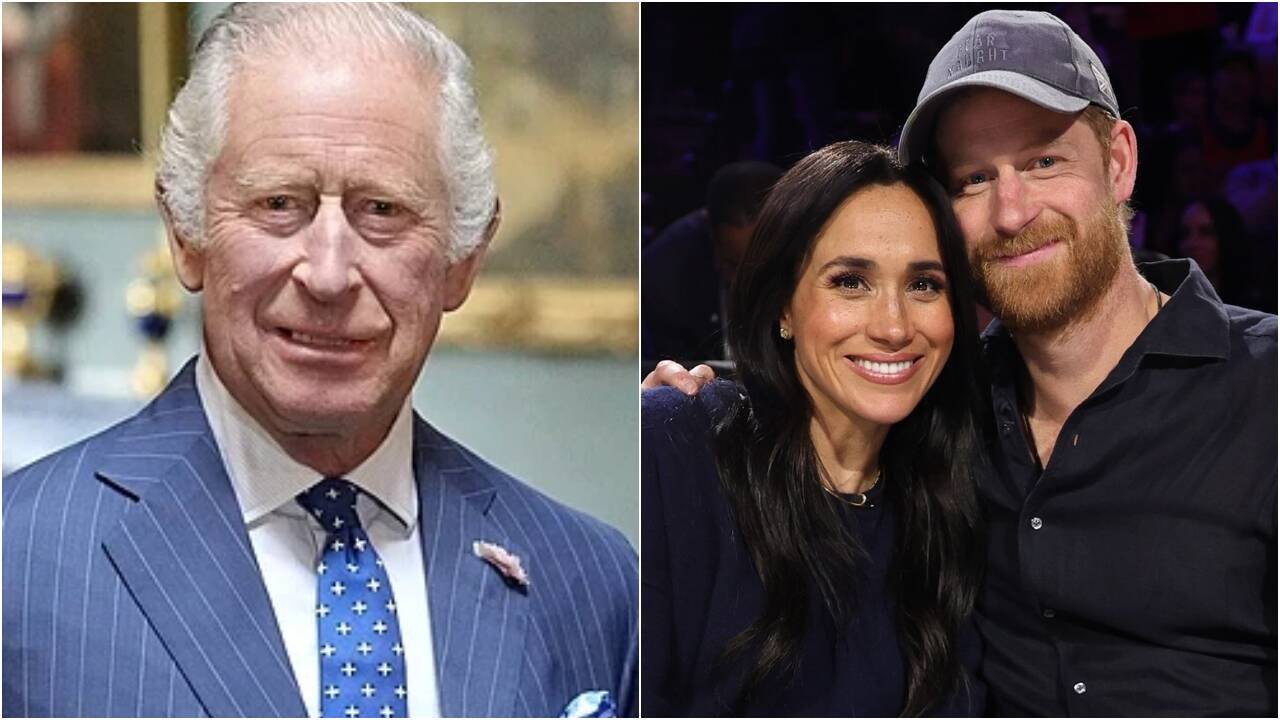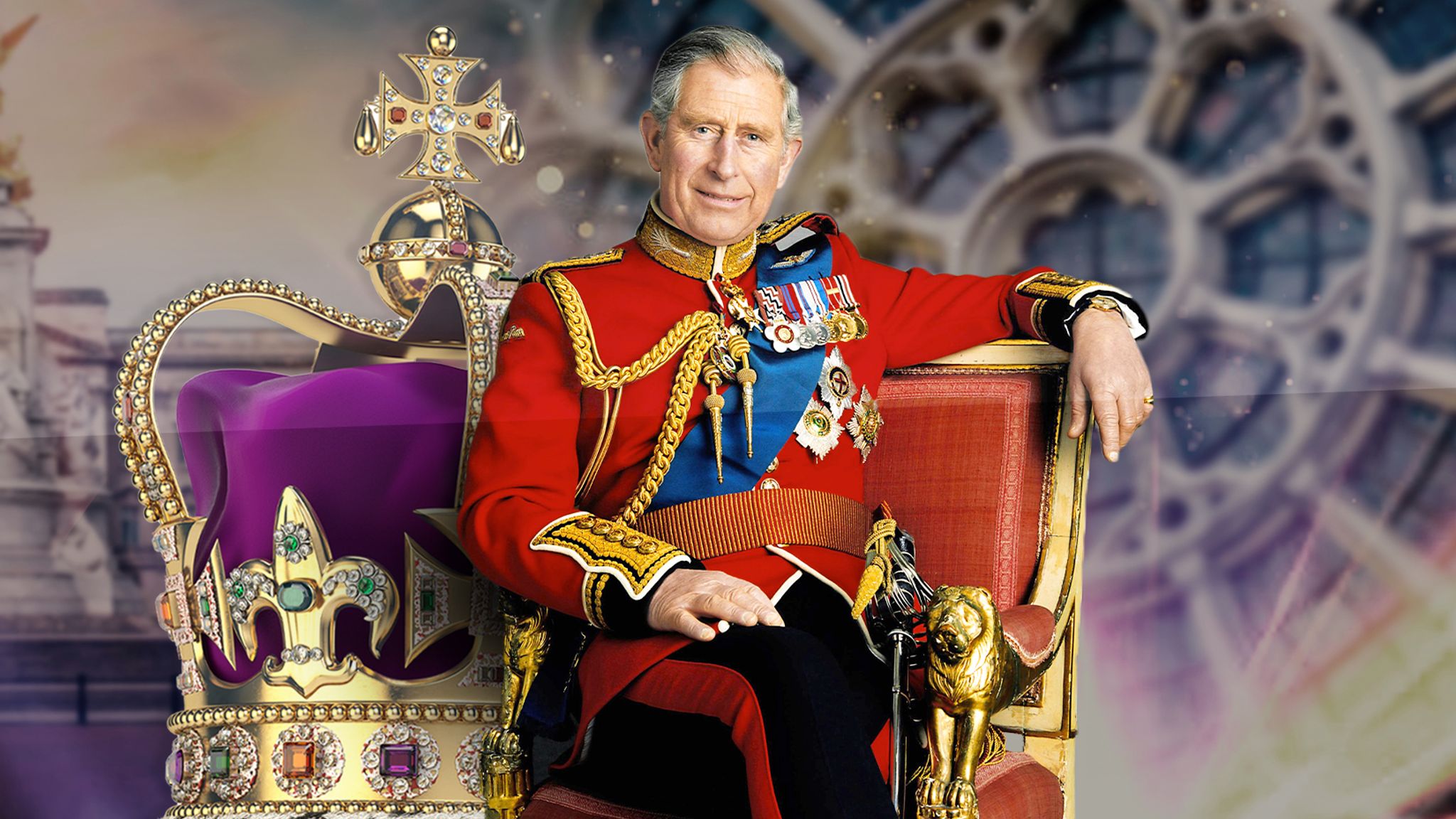
Royal titles mean very little when the checks stop and the institutional walls go up. Honestly, most royal watchers spend years arguing about punctuation, patronages, and seating charts at Westminster Abbey, missing the actual structural shifts happening behind palace doors. King Charles drawing a sharp, permanent line around Prince Harry and Meghan Markle's royal status isn't just family drama. It is a calculated institutional firewall.
Let's look at what being classified as private citizens actually entails in modern Britain. It means no taxpayer-funded security details, no official representation of the Crown, and zero ambiguity about who speaks for the monarchy. For years, the grey area between working royals and rogue family members created endless media circuses. Charles decided to close that loop permanently.
The Breaking Point of Institutional Boundaries
When Harry and Meghan stepped back from their senior royal duties, they wanted a hybrid model. They imagined a world where they could represent the UK part-time, launch commercial ventures, and still retain the gloss of institutional backing. The late Queen Elizabeth shut that down immediately during the Sandringham Summit. There is no half-in, half-out option in the House of Windsor.
Charles inherited that strict boundary and tightened the screws even further. By explicitly treating Harry and Meghan as private citizens, the current monarch is protecting the firm's brand equity. Every modern institution survives by maintaining clear lines of accountability. If anyone can use royal connections for commercial gain while outside the fold, the entire foundation loses its legitimacy.
You see this play out in how the palace handles updates. Royal websites get scrubbed, titles get sidelined, and communication paths go completely cold. It looks harsh, but from a strategic standpoint, it is pure self-preservation.
Financial Independence Versus Royal Association
You cannot claim to be an independent private citizen while cashing in on institutional secrets. That has been the core tension of the entire post-Megxit era. Deals with massive streaming platforms and tell-all memoirs generated massive revenue, but they permanently fractured trust within the family.
When you strip away the titles, what is left? A couple trying to build an independent media empire in California. Yet, the commercial viability of that empire relies heavily on proximity to the very institution they critique.
- The security dilemma: Private citizens don't automatically receive state-funded protection. Harry's ongoing legal battles over UK security highlight the steep cost of losing working royal status.
- The commercial tightrope: Every project launched from Montecito gets judged through the lens of royal proximity.
- The succession reality: Their children retain technical line-of-succession rights, but practical participation in royal life is effectively zero.
What Most People Get Wrong About Royal Exiles
People often frame this as a personal feud between a father and son. That makes for great television, but it misses the bigger picture. Monarchies are corporate entities governed by centuries of constitutional law and public perception. Charles is not acting purely as a hurt father. He is acting as a CEO protecting market share.
Public opinion in the UK remains deeply divided on the issue, but mainstream sentiment heavily favors clear boundaries. Taxpayers don't want to fund lifestyle choices for non-working relatives. By cementing Harry and Meghan as ordinary citizens in practice, Charles aligns the monarchy with public expectations of fiscal and operational responsibility.
The Long-Term Impact on the Monarchy
The modern Windsor playbook is brutal simplicity. Shrink the core, cut the dead weight, and modernize public relations. By formally cementing the split, Charles ensures that future generations won't have to deal with rogue factions diluting the brand.
If you want to understand where the British monarchy is heading, look at the slimmed-down balcony appearances. Look at the rigid enforcement of protocol. The era of loose boundaries and aristocratic freelancing is dead.
Stop looking at this through the lens of a soap opera. View it as a corporate restructuring. The lines are drawn, the roles are fixed, and there is no turning back.