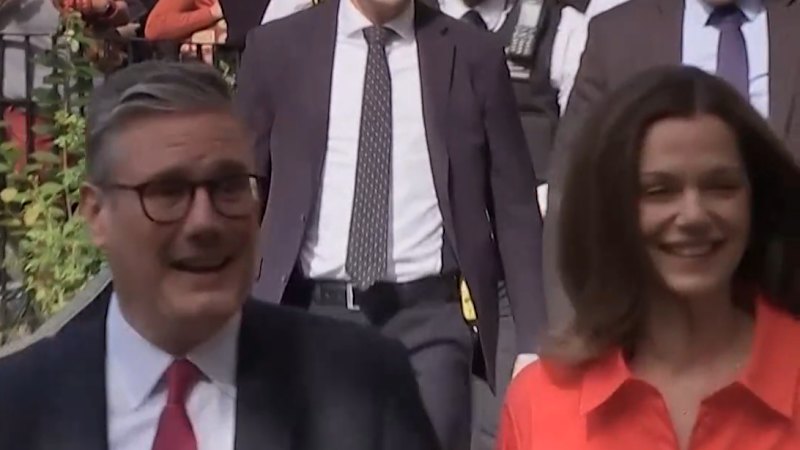
Keir Starmer is done. After months of desperate political maneuvering, the British Prime Minister is reportedly holed up at his Chequers country estate, working out an exit strategy with his wife.
The immediate catalyst wasn't a sudden economic crash or a new policy disaster. It was a by-election. On June 18, 2026, Andy Burnham—the high-profile Mayor of Greater Manchester and Starmer’s chief internal rival—won a seat in Parliament. That single victory gave Burnham the necessary Westminster launchpad to mount a formal leadership challenge.
By Friday afternoon, Starmer’s inner circle knew the game had changed. Loyal cabinet ministers spent the weekend giving the Prime Minister a stark choice: set an orderly timetable for your departure by Monday morning, or watch the Parliamentary Labour Party tear you out of office by force.
The Broken Promises Behind the Collapse
You can't understand Starmer's downfall without looking at how quickly his massive 2024 landslide victory dissolved. He entered 10 Downing Street with a historic majority, but his popularity plummeted faster than almost any leader in modern British history. By late 2025, his net approval ratings sank to minus 46 percent, hovering around the same territory as Liz Truss before her chaotic exit.
Voters aren't just tired; they're angry. The ongoing cost-of-living crisis hasn't budged, public services are buckling, and a relentless series of policy U-turns left the public believing the government had no real plan.
Then came the scandals.
The absolute turning point was the Peter Mandelson appointment crisis earlier this year. Starmer bypassed standard protocols to appoint Mandelson as the UK Ambassador to the United States, despite a failed security vetting. When hidden files revealed Mandelson’s close relationship with convicted sex offender Jeffrey Epstein, the backlash turned into a full-blown mutiny. Starmer tried to pass the blame to civil servants, claiming nobody told him about the vetting failures. It made him look weak, out of touch, and fundamentally unaccountable.
The Numbers Game in Parliament
A prime minister can survive low poll numbers, but they can't survive a revolt from their own lawmakers. The math against Starmer is brutal.
- More than 100 Labour MPs have publicly demanded his resignation.
- High-profile frontbenchers, including former Health Secretary Wes Streeting, already walked out of his cabinet in protest.
- Reports suggest up to 200 backbench MPs are ready to sign Burnham's nomination papers the second a contest opens.
When a quarter of your own party in the House of Commons openly wants you gone, you aren't really governing anymore. You're just occupying space.
Enter the Northern King
Andy Burnham is the exact opposite of Starmer’s rigid, legalistic brand. As the former Mayor of Greater Manchester, he built a massive power base by positioning himself as a voice for the working-class north against an indifferent London elite.
During the Makerfield by-election, Burnham comfortably swiped 54.8 percent of the vote, easily crushing a heavy push from Nigel Farage’s populist right-wing party. Burnham didn't waste any time during his victory speech, explicitly promising a completely new path for the country.
Burnham’s allies expect him to arrive in London on Monday to meet with MPs. While Starmer initially insisted he would fight any leadership challenge, the political reality has set in. Nobody wants a bloody, public civil war that destroys the party's remaining credibility. The consensus among senior Labour figures is that a dignified, voluntary handover to Burnham is the only way forward.
What Happens Next
If Starmer steps down or gets pushed out, Britain will install its seventh prime minister in just over a decade. This unprecedented turnover reflects a deeper, systemic instability in British politics that a single election couldn't fix.
For ordinary citizens and international observers, the immediate steps will move incredibly fast.
- The Monday Announcement: Watch for Starmer to issue a formal statement setting out a clear, short timetable for a leadership transition.
- The Burnham Coronation: Pay attention to whether other potential candidates like Angela Rayner or David Lammy back down to let Burnham take the crown without a prolonged, divisive vote.
- Policy Shifts: Expect an immediate pivot toward heavier regional spending and public infrastructure investments as Burnham tries to distance himself from Starmer's austerity-adjacent policies.
The era of Starmer's technocratic management is over. The fight for what comes next has already begun.