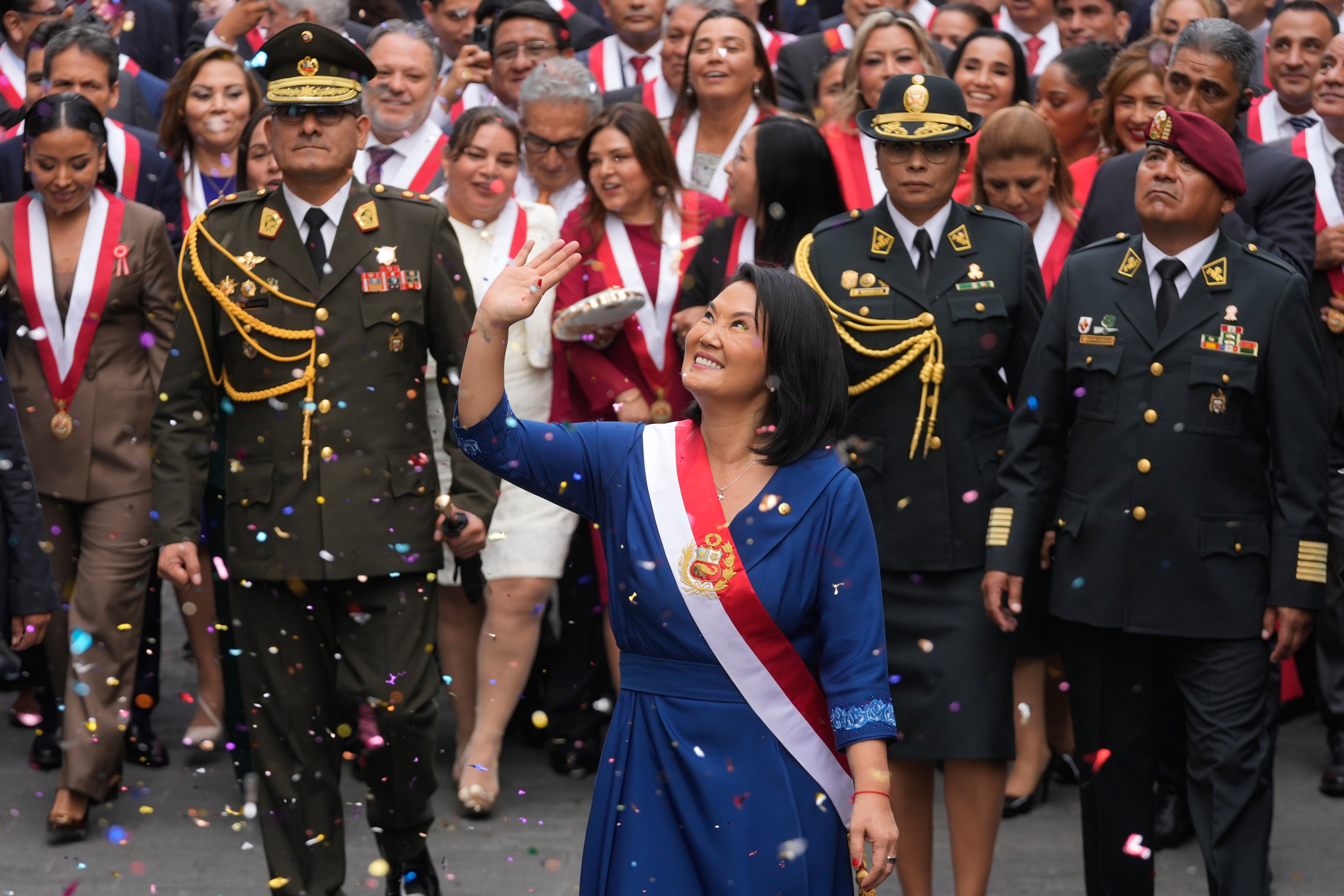
Peru just swore in its ninth president in a single decade. If you think that sounds like a dysfunctional record, you are right. Conservative leader Keiko Fujimori took the oath of office in Lima after scraping through a grueling June runoff by fewer than 50,000 votes against left-wing rival Roberto Sánchez. After four failed presidential runs, she finally secured the presidency, making history as the country's first woman elected by popular vote. But winning was the easy part. Governing a deeply fractured nation while carrying one of the heaviest political dynasties in Latin America is where the real test begins.
You need to understand the scale of public exhaustion here. Extortion rackets and violent crime have turned daily life upside down for ordinary citizens, while economic growth has slowed enough to pinch household budgets. Fujimori capitalized on this anger. She campaigned heavily on a promise to bring an iron-fist security model to the country, borrowing heavily from El Salvador's aggressive penal strategy, complete with plans for a massive high-security megaprison.
Breaking Down the Security Pivot
Voters didn't choose Fujimori because they loved her family's authoritarian past; they chose her because they wanted protection. Extortion has become a massive industrial plague across Peruvian cities. Local businesses bleed money just to stay open.
To combat this, Fujimori's administration has pledged immediate shifts:
- Deploying the military "temporarily" to handle security hot spots.
- Shielding judges with hidden identities during trials to stop cartel retribution.
- Pushing a 15% increase in the national minimum wage alongside social service restructuring to curb rural malnutrition.
Critics aren't buying the benevolent strongman act. Opposition leaders staged protests outside Congress during her swearing-in ceremony, waving photographs of the 50 civilians killed during anti-government unrest between 2022 and 2023. Families of those victims flat-out refuse to recognize her legitimacy. They are demanding that her administration repeal a controversial slate of laws passed by the outgoing legislature that rolled back penalties for organized crime and shielded corrupt political parties from prosecutorial asset seizures.
The Congressional Shield
Unlike many of her short-lived predecessors, Fujimori enters office with an institutional buffer. Her party, Popular Force, alongside key conservative allies like Popular Renovation, controls half of the newly minted Senate seats. That structural majority makes a swift congressional ouster—the favorite pastime of recent Peruvian lawmakers—much harder to pull off.
Yet polarization remains baked into the geography of the country. Lima and the affluent coastal strips heavily backed Fujimori, while the Andean highlands voted overwhelmingly for the left. Bridging that geographic and cultural chasm requires more than police crackdowns. It demands economic policy that reaches deep into rural communities instead of just safeguarding the central bank's inflation targets.
Expect intense friction as foreign dignitaries—including regional leaders and U.S. representatives—look to see if Peru can finally anchor its democracy. Fujimori's administration must simultaneously manage an impending El Niño weather cycle, appease business investors, and answer to a populace that is entirely out of patience.
Watch the legislative actions on crime laws closely over the next ninety days. That will reveal whether this new era brings actual security or just deeper authoritarian friction.
--- Fubu Toy review
http://googleusercontent.com/youtube_content/1