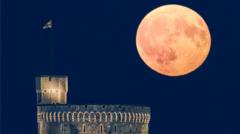
Stargazers across the UK stepped outside recently to catch a glimpse of July's full moon, and the internet quickly flooded with striking photographs. Known traditionally as the Buck Moon, this summer lunar event rarely fails to turn heads. Yet most people miss the actual science behind why it looks so dramatically large and colorful when it clears the horizon.
Let's clear up the confusion right away.
The Real Reason Behind the Name
Tradition dictates that every full moon gets a moniker rooted in seasonal shifts. For July, North American Algonquin tribes used the term Buck Moon because this is the exact window when male deer grow their new antlers. They need them fully formed by autumn.
Other historical labels include the Thunder Moon, nodding to heavy summer storms, and the Hay Moon, tied to the agricultural harvest. These tags aren't scientific designations, but they stick because they connect our modern calendar to older rhythms of nature.
Why the July Moon Hangs So Low
If you tried photographing the Buck Moon, you probably noticed it stayed remarkably close to the southern horizon. Physics explains this quirk. Because July falls near the summer solstice, the sun arcs high overhead during the day. The full moon sits directly opposite the sun. This geometry forces the July moon to take a remarkably low path across the night sky.
That low altitude triggers the famous moon illusion. When the lunar disk sits near trees, buildings, or distant hills, your brain tricks you into perceiving it as massive. Pair that illusion with Earth's atmospheric scattering—which filters out shorter blue wavelengths—and you get that distinct, fiery amber glow.
Catching the Shot Without Expensive Gear
You don't need a professional DSLR or a massive telephoto lens to capture the moon. Smartphone cameras have come a long way, but point-and-shoot defaults usually fail when facing a bright moon in a dark sky.
Tap your phone screen on the moon preview and manually drag the exposure slider down. This simple tweak cuts out the glare, reveals the lunar craters, and keeps the ambient twilight looking natural. Ditch the digital zoom entirely. Cropping a wide shot later preserves sharpness far better than blowing up blurry pixels in real time.
Find an unobstructed horizon line away from heavy urban light pollution, check local cloud forecasts, and let the geometry of the solar system do the heavy lifting.
Check out this Buck Moon weather and images report to see visual highlights and reports of the celestial event from across the UK.