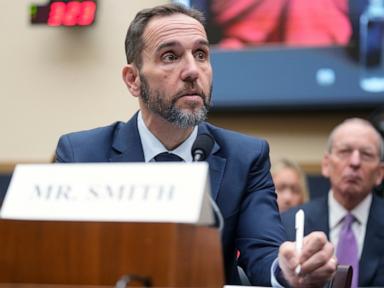
Jim Jordan just turned up the heat on Jack Smith. The House Judiciary Committee Chairman sent a criminal referral to Acting Attorney General Todd Blanche, demanding the Department of Justice investigate the former special counsel for perjury.
It didn't happen in a vacuum. It comes after months of back-and-forth fighting over how the federal government handled investigations into Donald Trump and dozens of sitting lawmakers.
If you've been following the political noise, you know congressional referrals happen all the time. Most gather dust on a shelf at Main Justice. This one might hit differently because of the specific paper trail behind it.
The whole dispute turns on a few words spoken under oath. Jordan claims Smith misled Congress about whether his team obtained personal phone messages from members of Congress. Smith’s legal team calls the accusation baseless and politically vindictive.
Here is what's really going on behind the headlines, what the legal documents show, and why this fight matters far beyond Washington political theater.
What Triggered the Criminal Referral
The story traces back to an FBI and Department of Justice probe known internally as "Arctic Frost". That investigation grew out of Jack Smith’s work as special counsel overseeing the federal 2020 election interference case against former President Trump.
As part of that work, federal investigators issued roughly 197 subpoenas to 34 individuals and 163 businesses. They requested records covering more than 430 individuals and organizations.
Republican lawmakers found out their own phone records were swept up in those subpoenas. Senator Chuck Grassley released data showing that investigators checked call details connected to dozens of members of Congress. Senator Ted Cruz revealed that his cellphone records, voicemail logs, and geolocation data were targeted by subpoenas sent to AT&T and Verizon.
Republicans immediately accused the Justice Department of weaponizing federal law enforcement to spy on political opponents.
When Smith sat down for congressional questioning, lawmakers pressed him hard on those subpoenas. That testimony set the trap that Jordan is now trying to spring.
What Jack Smith Said Under Oath
During testimony before the House Judiciary Committee, Jack Smith was asked directly about his office accessing lawmakers' communications.
Smith stated under oath that his office sought toll records, not the actual contents of phone calls or text messages.
"Toll records were sought for historical telephone routing information, collected after calls had taken place, identifying the incoming and outgoing call numbers, the time of the calls, and their duration," Smith testified. "Toll records do not include the content of calls."
That distinction is huge in criminal law. Seeking toll records requires a lower legal standard than reading private message contents. Obtaining phone logs tells investigators who talked to whom and for how long, but it doesn't reveal what they said.
For months, that statement stood as Smith's core defense. He insisted his prosecutors followed standard DOJ policy, respected privilege boundaries, and only collected meta-data.
Then new documents surfaced from the National Archives.
The National Archives Subpoena That Changed Everything
The situation shifted when Senator Grassley released a letter from the Department of Justice disclosing a separate subpoena sent to the National Archives and Records Administration (NARA).
Through that NARA subpoena, Smith's prosecutors received text message contents involving White House staffers and 44 members of Congress.
The text logs weren't filtered by an independent screening team before being passed directly to Smith's prosecution staff. They landed right on the desks of the attorneys handling the case.
Jordan argues this directly contradicts what Smith told Congress.
In his referral letter to Acting Attorney General Todd Blanche, Jordan wrote that Smith made "materially false statements" to obstruct congressional oversight.
"While Mr. Smith testified that he did not seek a search warrant from telecommunications carriers for the content of Members' text messages, he failed to disclose that his office received text message content from NARA relating to White House personnel phone records," Jordan wrote.
To Jordan, omitting that detail wasn't an honest slip. He views it as intentional deception.
The Legal Counterargument from Jack Smith's Team
Smith's defense team isn't backing down. They insist his testimony was completely truthful.
Attorneys representing Smith sent a prompt response to Jordan and Blanche, calling the criminal referral "spurious" and "baseless."
Their argument relies on precise phrasing. When Smith testified, he was asked specifically about subpoenas issued to telecommunication carriers like AT&T and Verizon. He wasn't asked about the broad record requests sent to the National Archives for official executive branch presidential records.
Smith's attorneys highlighted several facts to support their position:
- The NARA records were officially produced as presidential communications, not grabbed from personal phone carriers.
- Smith's team turned those text messages over to Trump's defense team during standard legal discovery.
- Defense attorneys at the time raised no objections regarding illegal or improper collection methods.
Top Judiciary Committee Democrat Jamie Raskin sided with Smith, calling Jordan's referral "baseless and vindictive." Raskin argued that if the Justice Department ever brought charges based on this referral, any federal court would laugh it out immediately.
How Federal Perjury Laws Actually Work
Proving perjury under federal law (18 U.S.C. § 1621 or § 1001) is notoriously difficult. Prosecutors must prove three distinct elements beyond a reasonable doubt:
- The statement was false when made.
- The statement was material to the matter under inquiry.
- The person making the statement knew it was false and intended to deceive.
That third element, intent, is where most perjury cases fall apart.
If Smith answered the question literally based on how it was asked, his legal team can easily claim he was being precise rather than deceptive. If a congressman asks "Did you subpoena AT&T for text contents?" and the answer is "No, we only asked AT&T for toll records," that statement is technically accurate. The fact that NARA provided text messages under a separate presidential records request doesn't make the answer about AT&T factually untrue.
However, under 18 U.S.C. § 1001, making a materially false statement or intentionally concealing a material fact from Congress can still trigger criminal liability. Jordan's referral focuses heavily on the concealment argument.
The Broader Pattern of Judiciary Subpoenas
This referral doesn't stand alone. It is part of a larger push by the House Judiciary Committee to dissect every aspect of the special counsel's office.
Jordan previously referred Thomas Windom, a former senior assistant special counsel under Smith, to the Justice Department for prosecution. Windom had appeared for a deposition but invoked his Fifth Amendment rights roughly 70 times, refusing to answer questions about lawmaker surveillance and grand jury activities.
Jordan also subpoenaed financial records from major national banks to track whether Smith's team analyzed financial transactions of political figures without clear probable cause.
The committee wants to push legislative reforms that restrict how special counsels operate, alter how federal agencies handle records belonging to elected officials, and codify tighter oversight rules for political investigations.
What the Department of Justice Will Do Next
The referral now sits with Acting Attorney General Todd Blanche. The Justice Department confirmed receipt of Jordan's letter and stated publicly that it "will investigate all evidence of criminal conduct."
What actually happens next comes down to formal internal procedure:
- Review by Career Prosecutors: The referral goes to career attorneys in the Public Integrity Section or a designated U.S. Attorney's Office to evaluate whether the evidence justifies opening a formal grand jury investigation.
- Assessment of Transcripts: Prosecutors will compare the transcript of Smith's deposition word-for-word against the NARA production records.
- Intent Analysis: Investigators will determine whether Smith's answers were intentionally misleading or simply narrowly tailored to the specific questions posed.
- Declination or Indictment: If prosecutors find no evidence of willful intent to deceive, they will issue a formal declination. If they find clear evidence of intentional misrepresentation, they could seek an indictment.
Historically, criminal referrals from Congress rarely lead to actual indictments. They are often viewed as political tools used to score points in the media. But given the current climate at the Justice Department and ongoing investigations into past DOJ conduct, this case will be scrutinized far more intensely than standard congressional referrals.
Practical Next Steps for Tracking Congressional Oversight
If you want to follow how this legal battle unfolds over the coming weeks, keep your eye on these specific developments:
- Watch for Official DOJ Letters: Look for formal responses from Acting Attorney General Todd Blanche regarding whether a grand jury or special counsel has been assigned to evaluate the perjury claims.
- Review Hearing Transcripts: When committee transcripts are unsealed, compare the specific wording of congressional questions against the scope of NARA record releases.
- Monitor District Court Filings: Any potential motion or legal challenge filed by Jack Smith's counsel will provide clues about his defense strategy.
- Follow Special Counsel Oversight Legislation: Watch whether the House Judiciary Committee introduces binding bills to rewrite federal Special Counsel regulations based on these findings.