When elite figures find themselves caught in the gravitational pull of a public scandal, their damage-control playbook is remarkably predictable. First comes the shock. Then, the minimization. Finally, the inevitable pivot to victimhood.
Kathryn Ruemmler—former White House counsel to President Barack Obama and, until recently, the chief legal officer at Goldman Sachs—is currently attempting this exact defense.
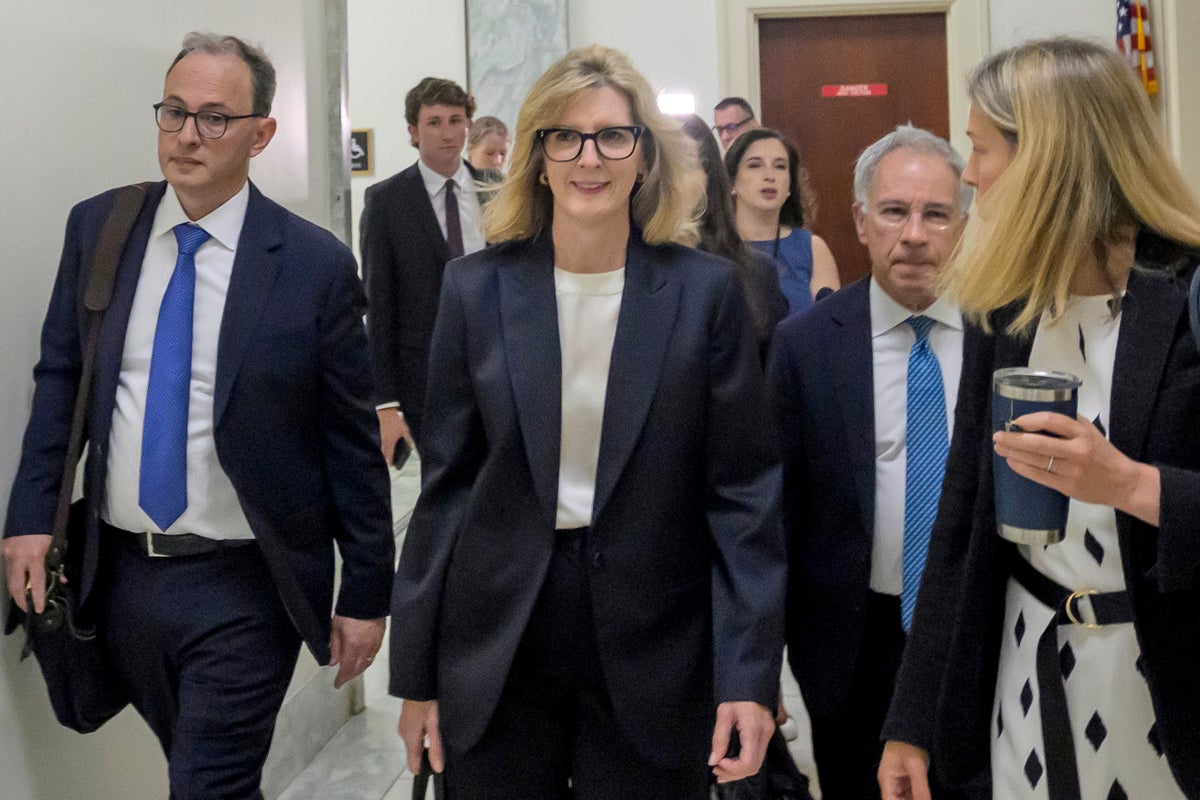
Sitting before the House Oversight Committee for a tense, closed-door interview, Ruemmler told lawmakers that Jeffrey Epstein "used" her and other respectable professionals to legitimize his standing. She claimed she was shocked by his 2019 indictment and painted Epstein as a "masterful liar".
But anyone paying attention to the actual paper trail knows this defense is incredibly thin.
The emails released by the Department of Justice earlier this year do not show an innocent lawyer getting tricked by a master manipulator. They show a highly sophisticated, incredibly powerful attorney willingly maintaining an intimate, mutually beneficial relationship with a registered sex offender.
Let's look at what is actually in those documents, why Congress is refusing to buy her story, and what this says about the transactional culture of elite Washington and Wall Street.
The Closed Door Testimony That Convinced No One
On Capitol Hill, bipartisan agreement is a rare commodity. Yet, after spending hours questioning Ruemmler, lawmakers on both sides of the aisle emerged with a shared sense of deep skepticism.
Representative Robert Garcia, the top Democrat on the committee, did not hold back when speaking to reporters. He made it clear that he found it difficult to believe she was being completely truthful. He pointed out a major procedural issue: Ruemmler's closed-door interview was not conducted under oath, which is highly problematic given the stakes of the investigation.
House Oversight Chair James Comer focused on a different, equally troubling aspect of her testimony. He noted that the most concerning part of her communication with Epstein was her active role in trying to rehabilitate the image of a man convicted of soliciting a minor.
You have to ask yourself why a former top government lawyer would put her career on the line for someone like Epstein.
The answer is simple. Access. Influence. Status.
Ruemmler claimed she first met Epstein in 2014 because he cold-called her about a massive donor-advised fund he was allegedly setting up with Microsoft co-founder Bill Gates. That is the classic Epstein hook: dangle a connection to one of the richest men in the world to get a foot in the door.
But what happened after that initial contact destroys her defense of ignorance.
What the DOJ Files Actually Revealed
Under the Epstein Files Transparency Act, the Department of Justice released thousands of pages of emails, flight logs, and calendars. These documents paint a picture that is impossible to reconcile with Ruemmler's narrative of a purely casual, professional acquaintance.
This was not a series of stiff, formal business emails. It was a cozy, highly personal friendship.
In her emails, Ruemmler referred to the convicted sex offender as "Uncle Jeffrey" and "sweetie". She wrote about how much she "adored" him.
The transactions between them were lavish:
- Expensive designer gifts, including a highly coveted Hermès bag.
- Private flights paid for by Epstein.
- All-expenses-paid spa appointments.
- Regular social gatherings and dinners.
When a professional criminal defense lawyer accepts private plane rides and luxury handbags from a man who spent time in a Florida jail for soliciting prostitution from minors, she knows exactly what kind of bargain she is making.
Yet, Ruemmler told the committee she accepted these gifts because she "saw no reason not to".
Think about that. The former top lawyer for the President of the United States saw "no reason" to reject high-priced luxuries from a registered child predator. It is a stunning admission of moral bankruptcy.
The Myth of the Masterful Liar
In her opening statement, Ruemmler leaned heavily on the idea that Epstein lied to her about his past. She claimed he told her he had not known the victims in his 2008 case were underage, and that he expressed "remorse, embarrassment, and regret" for what he described as simply paying adult women for sex.
She told lawmakers she chose to rely on the legal resolution reached by prosecutors at the time.
But here is the problem with that excuse: she was a practicing criminal defense attorney. She was not a naive civilian who did not understand the legal system. She knew how plea deals worked. She knew that rich, powerful men frequently negotiate down their charges to hide the true scale of their crimes.
To suggest that one of the sharpest legal minds in Washington just took Jeffrey Epstein's word at face value is insulting to everyone's intelligence.
She did not look the other way because she was fooled. She looked the other way because Epstein was useful to her.
He helped her build connections. He offered to help her secure a senior role at Facebook. He referred wealthy clients to her legal practice. In exchange, she lent him her formidable reputation.
Advising the Predator
Perhaps the most damning evidence against Ruemmler is not the gifts or the social visits, but the professional advice she gave him.
The DOJ documents indicate that she did not just passively receive his friendship. She actively helped him navigate the fallout of his crimes.
In one 2015 email, Ruemmler wrote to Epstein: "friendship goes two ways -- getting you some peace with respect to all of this legal shit is important to me".
This was not a lawyer representing a client. She was not his attorney of record. This was a powerful ally offering off-the-record advice on how to handle the legal scrutiny surrounding his sexual abuse history.
According to congressional investigations, her advice went deep into the mechanics of his defense.
- She reportedly educated Epstein on the legal distinctions between underage victims of sex crimes and adult prostitutes.
- She provided advice on how to attack and undermine the credibility of one of his accusers.
If you are an innocent bystander who was "used" by a mastermind, you do not spend your free time strategist-mapping ways to discredit his victims. You do not write emotional emails about how his legal peace of mind is deeply important to you.
You do those things because you have chosen a side.
The Golden Parachute Goldman Sachs Tried to Hide
While the political fallout plays out in Washington, the financial fallout is happening on Wall Street.
When the DOJ documents leaked earlier this year, the pressure on Goldman Sachs was immense. Ruemmler announced she would step down from her role as general counsel, stating that the media attention was becoming a distraction.
Her official departure date was set for June 30, 2026.
But a closer look at her current status reveals that this "resignation" is mostly a corporate illusion.
Senator Elizabeth Warren and Representative Raja Krishnamoorthi have raised serious concerns about how Goldman Sachs is handling her departure. In a scathing letter sent to Goldman CEO David Solomon, they revealed that despite her supposed exit, Ruemmler remains employed by the bank as an adviser.
Even worse? She received an 11 percent raise, bringing her total compensation for 2025 to a staggering $25 million. On top of that, she has stock options valued at roughly $80 million that are scheduled to vest over the next two years.
Goldman Sachs also hired a reputation risk firm to manage the public relations fallout and help rebuild her image.
This is the standard corporate shuffle. A high-ranking executive gets exposed for terrible judgment, public relations managers coordinate a quiet step-down, and the executive walks away with tens of millions of dollars while remaining on the payroll as a consultant.
The Real Cost of Proximity to Power
The Kathryn Ruemmler saga is a masterclass in how elite networks protect their own.
It shows how easily the line between professional duty and personal complicity blurs when there is enough money and status on the line. Ruemmler’s defense relies on the hope that we will view her as a victim of Epstein’s legendary manipulation.
But the public is tired of this story.
We saw it with Leon Black. We saw it with Bill Gates. We are seeing it now with Ruemmler.
These are some of the most powerful, highly educated, well-resourced people on the planet. They have teams of investigators, compliance officers, and advisors at their disposal. The idea that they were all simply hoodwinked by a single charismatic offender is a fairy tale.
They knew who he was. They knew what he had done. They simply decided that what he could offer them was worth more than the safety of the young women he abused.
The Actionable Takeaway for Corporate Governance
If you run a business, manage a board, or oversee compliance, the Ruemmler scandal offers a critical lesson.
You cannot rely on the personal ethics of high-profile hires, no matter how impressive their resumes are. You need hard, unyielding compliance boundaries.
- Establish strict gift-reporting thresholds. Any gift over a minor dollar amount from an outside entity must be disclosed and approved by an independent compliance board.
- Audit external networks. High-ranking executives should not be leveraging their corporate status to secure personal favors, jobs, or advisory roles through controversial third parties.
- Clawback provisions must have teeth. If an executive has to resign or step down due to severe reputational damage linked to illegal activities, their stock options and golden parachutes must be subject to immediate forfeiture.
Goldman Sachs failed to hold Ruemmler accountable, choosing instead to protect her massive payout. If companies want to rebuild trust with the public, they have to stop treating wealthy executives as too big to fail.
The House Oversight Committee’s investigation is far from over. As more documents emerge and more witnesses are forced to testify, the myth of the innocent bystander will continue to fall apart. Kathryn Ruemmler can claim she was used all she wants, but the emails tell a completely different story.