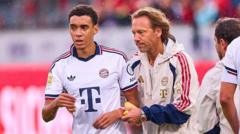
Seeing a top-tier athlete collapse on the pitch is terrifying. It freezes time. The crowd goes silent, players signal frantically for help, and for those few seconds, the result of the game ceases to matter. When it happened to Jamal Musiala twice in four days, the initial speculation went wild. Was it heatstroke? Was it a lingering effect of his recent injury? Was he simply pushing himself too hard?
The truth, as Musiala himself confirmed earlier today, is something few fans expected. He isn't dealing with a simple case of dehydration. He has been diagnosed with "temporarily occurring, brief absence seizures" caused by a neurological dysfunction.
Cutting Through the Noise
After the first incident during Bayern Munich’s friendly against RB Leipzig, the narrative quickly turned to the elements. It was a hot day—around 33 degrees Celsius (91 degrees Fahrenheit)—and heat-related exhaustion seemed like the logical, safe explanation. It’s easy to blame the sun. It’s comforting to think that once the temperature drops, the problem vanishes.
But when it happened again just four days later against Heidenheim, even with milder weather, the "heat excuse" fell apart.
Musiala wasn't hiding from the truth. He was likely undergoing the necessary medical evaluations to ensure that what he was experiencing was properly categorized. Neurological issues are rarely straightforward. They don't always show up on a standard pre-match physical, which explains why he was cleared to play against Heidenheim. His manager, Vincent Kompany, and the club's medical team weren't being negligent; they were operating with the data they had at the time.
Understanding Absence Seizures
So, what is he actually going through? Absence seizures are different from what most people imagine when they hear the word "seizure." They aren't typically accompanied by dramatic shaking. Instead, they are often characterized by a brief, sudden loss of consciousness or a "blanking out" period.
You might see someone stop what they are doing, lose focus, and seem completely disoriented for a few seconds. It’s sudden. It’s fleeting. But on a professional football pitch, where reaction times are measured in milliseconds and physical coordination is everything, those few seconds can lead to a collapse.
It is heartening to hear that Musiala is being proactive. He’s working with specialists, receiving treatment, and, crucially, he’s been given the green light to continue his daily routine. He is choosing to stay active, which doctors often encourage for certain manageable conditions.
The Human Side of the Pitch
The reaction from his teammates—like Ismael Saibari, who caught him during the Leipzig game—reminds us that these players are colleagues and friends first. The sport is high-stakes, but the culture in modern football has shifted to prioritize player welfare in a way that just wasn't the case twenty years ago.
Max Eberl’s calm, measured response as Bayern’s sporting director was the right move. There was no need for a rushed, panic-induced press conference. They let the medical professionals do their work and allowed Musiala to take control of his own narrative when he was ready.
What Comes Next
Musiala’s commitment to returning to the game is clear. He’s framed this as a challenge to face head-on rather than something to hide from.
If you or someone you know is dealing with something similar, the lesson here isn't medical advice—it's about the importance of specialized care. Neurological issues require experts. General practitioners or team doctors are great for muscle tears or viruses, but when the brain is involved, you need a neurologist.
For Musiala, the path forward is a mix of continued monitoring and a return to the game he loves. He’s made it clear that he wants privacy regarding the specifics of his treatment, and that’s a boundary we should respect. He’s a professional athlete doing the work required to manage a health condition while performing at the highest level of world football.
He’s not finished. He’s just hitting a speed bump. And frankly, given the medical clearance and the transparency he's shown, it's time to stop the speculation and let the medical process run its course. Football will always be there, but Jamal Musiala’s health is the only thing that truly matters.