Diplomats love ceremonies, especially when the cameras are rolling at the State Department. Yesterday in Washington, US Secretary of State Marco Rubio stood proudly behind the ambassadors of Israel and Lebanon as they signed a new trilateral framework agreement. The papers look official. The speeches sounded hopeful. The state department even announced a hundred million dollars in humanitarian aid to sweeten the deal.
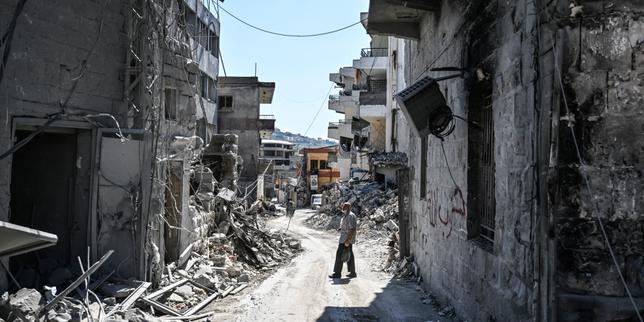
But if you think this means the conflict in southern Lebanon is suddenly over, you're looking at the wrong map.
This document isn't a final peace treaty. It's a structured gamble. The core idea is simple on paper but incredibly messy in reality. Israel has agreed to pull its troops back from a couple of minor areas. In return, the Lebanese Armed Forces are supposed to step in, take control, and eventually disarm Hezbollah.
It sounds like a logical sequence. It just completely ignores the political reality on the ground in Beirut.
The Paper Deal Signed in Washington
Let's look closely at what actually happened at the signing ceremony. Israeli Ambassador Yechiel Leiter and Lebanese Ambassador Nada Hamadeh signed the document after five intense rounds of talks mediated by the Trump administration. Rubio called it the beginning of the beginning. That's diplomacy speak for we have a long way to go.
The US is trying hard to show it has skin in the game. Along with the humanitarian aid, Washington is throwing thirty million dollars directly to the Lebanese military to cover their expenses. They are also setting up something called the Military Coordination Group for Lebanon to oversee the whole process.
The goal is to establish a path where Lebanon regains its sovereignty and Israel gets to secure its northern border so its citizens can finally go home. The text explicitly says both countries want to end the state of war. It even states that both nations recognize each other's right to exist in peace. That's a massive rhetorical shift for two countries that have been technically at war for decades.
But look past the signatures. The cracks are already showing.
What the Trilateral Framework Actually Says
The deal sets up a sequenced trial run. Instead of a massive, immediate withdrawal of Israeli forces, everything is tied to specific benchmarks. The Israeli military will hand over control of two specific pilot zones to the Lebanese army. If the Lebanese troops successfully manage those areas and keep them clear of militants, more handovers will follow.
Israeli officials made it clear that there's no fixed calendar here. Everything depends on performance. If the Lebanese army fails to secure a zone, the whole process grinds to a halt.
Lebanese Prime Minister Nawaf Salam posted on social media that this is a step toward restoring his country's territorial integrity. He tried to frame it as a continuation of previous international agreements like UN Resolution 1701. He insists that only the official Lebanese state forces have the right to carry weapons in the country.
That statement sounds authoritative. The problem is that the Lebanese government doesn't actually have a monopoly on violence in its own territory.
The Elephant in the Room is Still Armed
You can't talk about Lebanese sovereignty without talking about Hezbollah. They weren't at the table in Washington. They didn't sign the paper. And they certainly don't intend to follow its rules.
Almost immediately after the ceremony, Hezbollah officials came out swinging. Hassan Fadlallah, a prominent figure linked to the group, warned that the Lebanese authorities won't be able to enforce this agreement unless they want to start a civil war. He basically gave the government an ultimatum. Try to disarm us, and the country burns from within.
Hezbollah also claims this Washington deal is just a distraction from separate negotiations happening in Islamabad between the US and Iran. This shows the real scale of the problem. The Lebanese army is heavily outgunned by Hezbollah. Expecting a cash-strapped national military to walk into southern Lebanon and forcefully dismantle a heavily armed, battle-hardened militia is wishful thinking.
Many local commanders know this. They aren't eager to turn their weapons against their own countrymen, even if Washington pays the bills.
Why Netanyahu Is Not Backing Down on the Buffer Zone
While diplomats were celebrating in DC, Israeli Prime Minister Benjamin Netanyahu released a video statement that sounded completely different. He praised the framework but dropped a heavy dose of reality on anyone expecting a quick troop withdrawal.
Israel is keeping its main security buffer zone intact. This zone covers the geographical areas where Hezbollah used to launch anti-tank missiles into northern Israeli towns. Netanyahu was direct. He said Israel isn't letting Hezbollah or the general Lebanese civilian population back into that specific strip of land right now.
An Israeli official later clarified that the troops are only pulling back from two minor areas that were captured recently, well beyond the initial buffer zone lines. This means the actual military footprint on the ground isn't changing much. Israel is keeping its freedom of action. If they see a threat, they will strike it, framework or no framework.
This creates a massive paradox. Lebanon wants its land back before it can fully assert authority. Israel wants the threat gone before it gives the land back. It's a classic chicken-and-egg dilemma wrapped in military camouflage.
Real Steps Forward Instead of False Hope
If you're tracking this situation, don't get caught up in the grand announcements of lasting peace. Watch the small variables instead. The success or failure of this framework won't be decided in Washington or Jerusalem. It will happen in those two small pilot zones in southern Lebanon.
Here is what needs to happen next if this deal has any chance of surviving.
First, watch the deployment of the Lebanese army into those two initial pilot zones. See if they actually establish checkpoints and successfully prevent rocket teams from operating.
Second, look at how the newly formed Military Coordination Group handles the first inevitable violation. There will be compliance issues. How the US and the two sides react to the first broken rule will tell you if the framework has teeth or if it's just expensive scrap paper.
Finally, keep an eye on internal political stability in Beirut. The Lebanese government has to balance western pressure with the very real threat of domestic conflict. If the political pressure inside Lebanon spikes too high, the ambassadors might find their signatures mean very little on the ground.
Don't expect a quick fix. This framework is a slow, dangerous experiment in a region that rarely rewards patience.