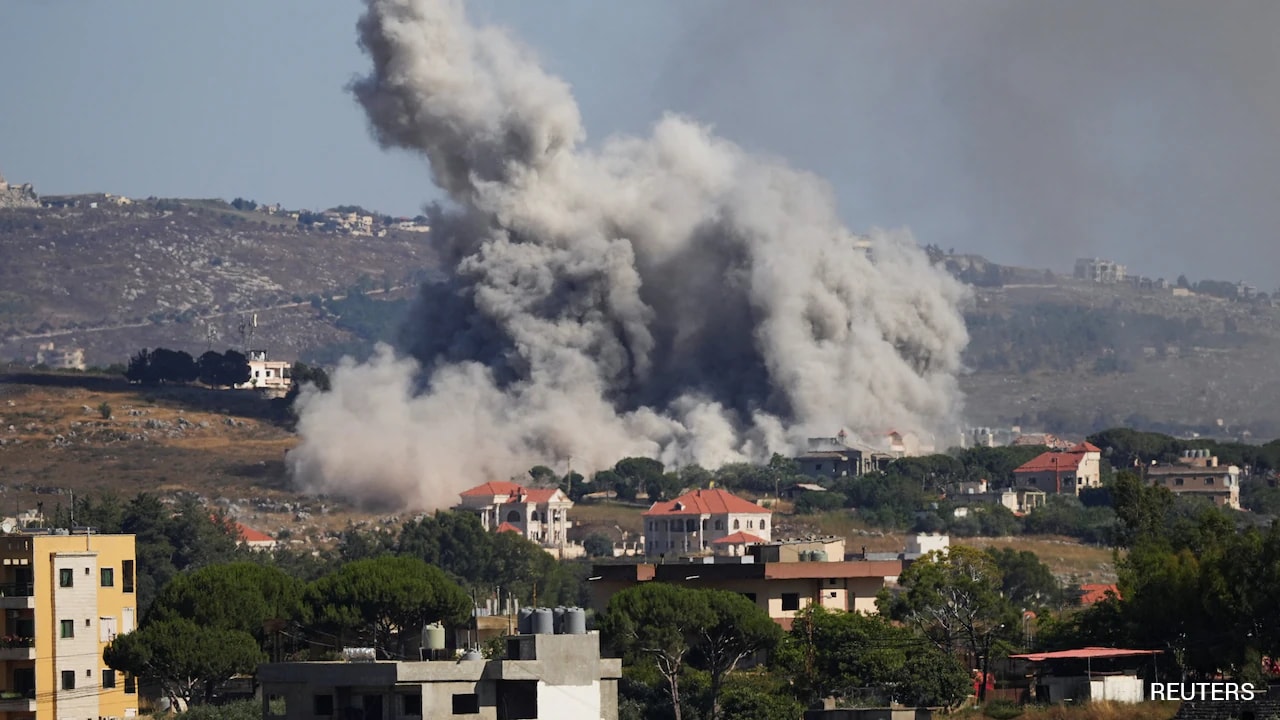
Paper truces don't stop real bullets. Less than twenty-four hours after the United States and Qatar brokered a fresh ceasefire between Israel and Hezbollah, smoke is again rising over southern Lebanon. Five people are dead. Dozens are wounded. The diplomatic breakthrough that was supposed to offer a breather to a battered region is already facing an existential crisis.
People searching for updates on this conflict want to know one basic thing. Is the peace deal dead? Honestly, it's complicated, but the initial signs are terrible. If you think a signed memorandum means the guns go silent instantly, you don't know how things work in this part of the world.
The latest round of violence erupted overnight and into Saturday morning, hitting towns across the Nabatieh region hard. According to Lebanon's National News Agency, Israeli airstrikes and drone attacks killed three people in Arabsalim, one in Deir Zahrani, and another person riding a motorcycle in Doueir. Artillery shells rained down on Nabatieh before dawn. It didn't take long for the fragile arrangement to show its cracks.
The Deadly Fuse That Set Off the Friday Flare-Up
To understand why things collapsed so quickly, look at what happened right before the announcement. The truce followed a brutal, high-casualty sequence.
Hezbollah launched a major ambush in southern Lebanon, killing four Israeli soldiers, including a battalion commander. The attack involved an explosion targeting an Israeli tank near the village of Kfar Tebnit. Israel's response was swift and massive. The Israeli military launched over 150 strikes across Lebanon, hitting the south and the Bekaa Valley. Lebanese health officials reported that 47 people died in those strikes on Friday alone.
This intense escalation threatened to derail a broader regional diplomatic effort. Washington and Tehran had recently established a framework deal to cool down the wider Middle East conflict. The violence in Lebanon grew so bad that a scheduled meeting in Switzerland between American and Iranian officials was called off. Diplomats scrambled. They pushed for an immediate local truce to save the larger peace framework. They got their agreement, but it lacked teeth from the start.
Why the Southern Buffer Zone Makes Peace Nearly Impossible
The fundamental flaw in this agreement isn't a secret. It's the geography.
Israel maintains a large security buffer zone inside southern Lebanon. Israeli Prime Minister Benjamin Netanyahu made it clear that troops aren't leaving that zone anytime soon. He stated they'll stay as long as necessary to protect communities in northern Israel.
Hezbollah sees this position as an ongoing occupation. They use the presence of Israeli troops on Lebanese soil to justify continued operations. From their perspective, firing at these forces isn't a violation of a truce; it's resisting an active invasion.
Look at the numbers from overnight. An Israeli military official stated that Hezbollah fired more than 50 projectiles at Israeli forces in southern Lebanon right after the ceasefire took effect.
Hezbollah's leadership remains defiant. Naim Qassem openly declared that the group would continue to confront Israeli forces if attacked. He insisted that the Israeli military would eventually be forced to withdraw from every inch of Lebanese land.
This dynamic creates a classic loop of escalation.
- Hezbollah fires at Israeli troops inside Lebanon.
- Israel views this as a flagrant violation of the truce.
- Israel launches retaliatory airstrikes on towns and infrastructure.
- Both sides claim they are merely defending themselves.
How the Broader US and Iran Dynamic Fits In
This isn't just a local border fight. It's tied directly to the diplomatic relationship between Washington and Tehran.
The Trump administration pushed heavily for a multi-front memorandum of understanding with Iran to halt the wider regional war. This deal has faced fierce blowback in Washington. Critics from both political parties question if the deal gave away too much to Tehran ahead of the upcoming midterms.
When Hezbollah attacks killed Israeli soldiers, the political pressure on Netanyahu skyrocketed. He couldn't look weak. He ordered the military to strike back with maximum force.
Meanwhile, external actors are watching closely. The Houthi movement in Yemen issued statements accusing Israel of sabotaging the broader de-escalation framework. The regional stakes are massive, affecting global energy prices and international shipping lanes. Yet, the entire framework depends on whether two bitter enemies on the ground can stop shooting at each other.
What to Expect in the Coming Days
Don't look for a quick resolution here. The diplomatic track isn't completely dead, but it's on life support. Direct talks between Israel and Lebanon are scheduled to resume in Washington on Tuesday for a fifth round of negotiations.
If you want to track whether this ceasefire has any real chance of survival, watch these specific indicators.
First, track the volume of projectile fire from Hezbollah. If the rocket and drone counts drop below double digits over a 48-hour window, it means Tehran is successfully pressuring the group to hold back.
Second, watch the movement of the Israel Defense Forces. As long as Israeli troops occupy positions inside the southern buffer zone, friction points remain. Any minor tactical movement by an Israeli squad will trigger a tactical response from local Hezbollah cells.
Third, monitor official statements regarding the broader US-Iran deal. If Washington threatens to reimplement heavy blockades or economic sanctions due to compliance failures in Lebanon, the entire regional framework could fall apart.
True stability won't come from a hastily signed piece of paper. It requires resolving the physical reality of troops on the ground. Until that changes, expect more headlines about broken promises and sudden strikes.