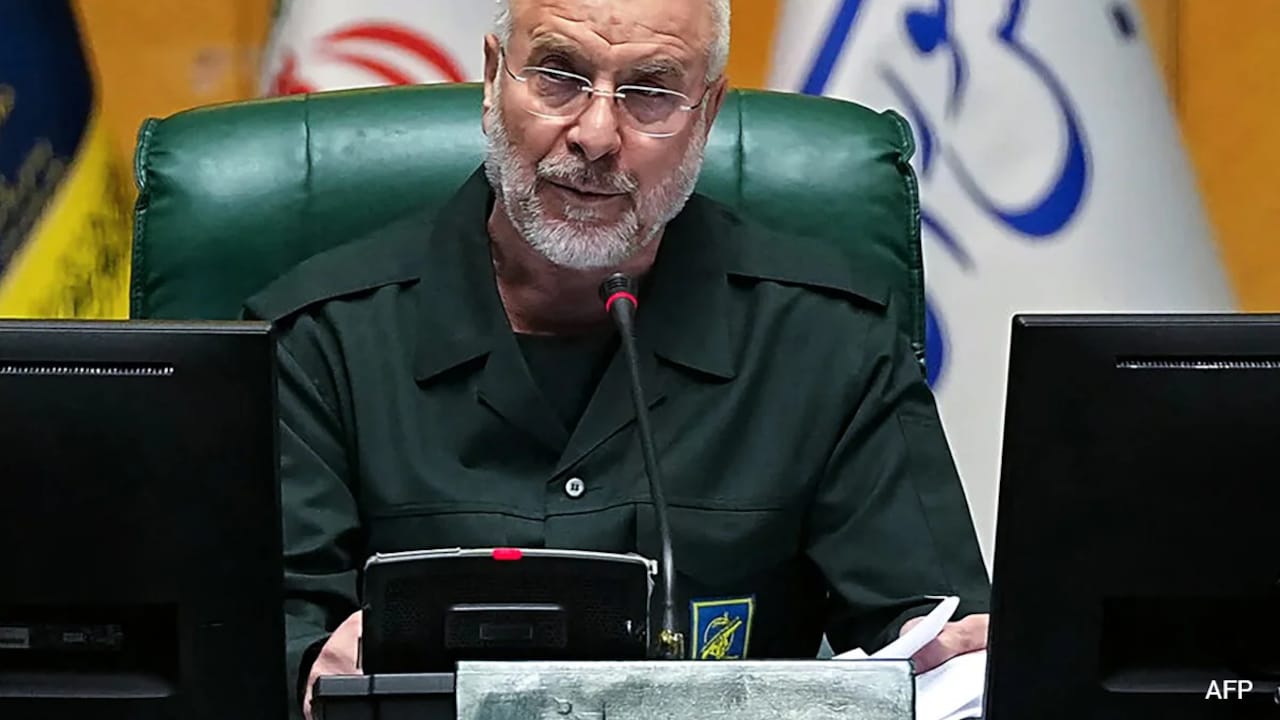
You can sign a peace treaty on a luxury estate in Versailles, but you cannot force the hardliners back home to play nice. The ink isn't even dry on the surprise memorandum of understanding between Donald Trump and Iranian President Masoud Pezeshkian, and yet Tehran is already flashing its teeth. Mohammad Bagher Ghalibaf, Iran's chief negotiator and parliament speaker, just sent a blistering reminder to Washington that any future technical discussions are strictly chained to the Islamic Republic's unyielding core demands.
When Ghalibaf declared that talks with the US are bound by Tehran's red lines, he wasn't just talking to American diplomats. He was talking to his own furious conservative base. The sudden announcement that US Vice President JD Vance postponed his highly anticipated trip to Switzerland for direct technical talks shows exactly how fragile this entire framework is.
If you think this diplomatic breakthrough means a smooth ride toward Middle East peace, you're looking at the map upside down. The agreement triggered a mandatory 60-day window to hammer out a final settlement regarding Iran's nuclear infrastructure and crippling global sanctions. But with Iran's military leadership warning that their fingers are still on the trigger, the road to August 17 looks less like a diplomatic highway and more like a minefield.
The Fragile Reality of Iran's Red Lines in US Talks
Diplomacy looks great in press releases. It's much uglier when the domestic political machine starts grinding. Ghalibaf's public statement, broadcasted by the official IRNA news agency, made it clear that Iran will not yield an inch of strategic leverage despite signing the temporary truce.
His warning was blunt. He stated that if the enemy seeks to be excessive, Iran has proven it won't hesitate to deliver a crushing response. This is classic Tehran brinkmanship, but it carries extra weight right now. The country just emerged from a devastating conflict that kicked off on February 28 following intensive US-Israeli airstrikes. The economy is bleeding, the ports have been choked under a two-month naval blockade, and the public is exhausted. Yet, the leadership cannot afford to look weak.
For decades, the Islamic Republic has built its entire identity on resistance against Washington. Giving up its nuclear ambitions or abandoning its regional proxy network overnight would feel like absolute capitulation to the hardliners in parliament. Ghalibaf is balancing on a tightrope. He needs the sanctions relief to rescue a collapsing economy, but he cannot compromise on what the regime views as its sovereign right to self-defense.
Inside the Postponed Switzerland Meeting and the 14 Point Deal
The world expected senior American and Iranian officials to sit down at the Buergenstock mountain resort in Switzerland to map out the technical specifics of this deal. Then the White House abruptly canceled JD Vance's departure. The official reason pointed to complex logistics and unfinished scheduling frameworks. The real reason is almost certainly a furious behind-the-scenes argument over what actually constitutes a red line.
The broad strokes of the 14-point agreement seemed straightforward enough on paper. Here is what the temporary framework laid out:
- An immediate ceasefire across all Middle Eastern fronts, specifically targeting the conflict involving Israel and Hezbollah in Lebanon.
- The immediate lifting of the US naval blockade on Iranian ports.
- A 60-day window where Iran reopens the Strait of Hormuz with zero transit fees for international shipping.
- A firm commitment from Tehran to halt the development and procurement of nuclear weapons.
The US military has already moved to fulfill its end of the bargain. US Central Command announced it officially ended its maritime blockade, allowing commercial vessels to freely enter Iranian waters for the first time in months. Simultaneously, Iran's Supreme National Security Council ordered local port authorities to expedite shipping requests through the Strait of Hormuz without charging the usual fees.
It looks like progress. But it's actually an illusion of stability. The real friction lies in what happens when those 60 days expire in mid-August. Iran has already announced plans to implement a aggressive system of maritime fees once the grace period ends. They claim total historic control over the strategic waterway, even warning European nations that any independent naval escort missions will be treated as an act of hostility. That's not the behavior of a nation ready to compromise.
The Secret Rift Inside Tehran's Supreme Leadership
To understand why Ghalibaf is taking such a hard stance, you have to look at the unprecedented political drama unfolding in the halls of Iranian power. Supreme Leader Ayatollah Mojtaba Khamenei took to state television to announce that he approved the memorandum of understanding. But he didn't stop there. He openly admitted that he held a completely different view on the matter.
That's a massive deal. The Supreme Leader almost never signals internal dissent so transparently. Khamenei made sure to tell the public that face-to-face negotiations do not mean accepting the American point of view. He basically gave the government permission to talk, but pulled the leash incredibly tight.
This internal tension explains why President Pezeshkian and Foreign Minister Abbas Araghchi are constantly repeating the same nationalistic script. They are defending their political lives. If they return from Switzerland with a deal that allows United Nations inspectors unfettered access to sensitive military sites, the conservative factions will tear them apart. Ebrahim Rezaei, the spokesperson for the parliament's National Security Commission, went on social media to declare that parliament will actively fight any government attempts to grant international watchdogs access to domestic facilities.
Why Washington Has Just as Much to Lose
Donald Trump is betting heavily on his ability to force a historic grand bargain through sheer economic pressure and military deterrence. He used Truth Social to demand a complete ceasefire on all fronts, including Lebanon and Israel, claiming the United States is entirely committed to peace.
But Trump is facing immense pressure from his own allies. US Defense Secretary Pete Hegseth told NATO defense ministers in Brussels that Washington will instantly reimpose the brutal naval blockade and restart direct military actions if Tehran breaks a single promise. The American administration cannot afford to look like it got played by Iranian negotiators.
The political calculus in Washington is incredibly risky. If the technical talks collapse, Trump faces a major foreign policy setback right after celebrating a win at Versailles. If the talks succeed but involve major concessions on sanctions, he faces a wall of opposition from domestic lawmakers who demand the total dismantling of Iran's nuclear program.
How the Regional Chaos Shatters the Deal
The biggest threat to this fragile diplomatic experiment isn't happening in Washington or Tehran. It's happening on the ground in southern Lebanon. Despite the signed agreement mandating an immediate halt to hostilities, Israeli airstrikes have continued to hit targets across Lebanon following alleged ceasefire violations by Hezbollah.
This regional violence directly undermines Ghalibaf's position. Iran views its influence in Lebanon as a core security pillar. If Israel continues to strike Hezbollah while the US watches from the sidelines, Tehran will view it as a direct violation of the spirit of the deal.
The entire framework relies on a delicate balance of trust that simply does not exist. Look at the media landscape inside Iran right now. Ultraconservative outlets like the Kayhan newspaper are openly calling the deal a trap. Their editors argue that the Americans never honor commitments, pointing out that Iran is giving up real maritime leverage in the Strait of Hormuz for vague promises of future relief.
The Next Strategic Steps for Global Observers
The next few weeks will determine whether the Middle East transitions into a period of managed stability or plunges back into regional warfare. If you are tracking this situation for business, energy, or geopolitical reasons, stop watching the public handshakes and focus on these specific operational indicators.
Track the Maritime Traffic Data
Watch the daily vessel counts through the Strait of Hormuz via MarineTraffic or similar tracking services. If Iran begins harassing commercial ships or hinting at early transit fees before the 60 days end, the deal is dead.
Monitor Parliamentary Debates in Tehran
Keep a close eye on the Iranian parliament's legislative sessions. If Ghalibaf and his conservative allies introduce bills designed to restrict the government's negotiating team, it means the internal pressure from the Supreme Leader's circle has become unmanageable.
Watch the Verification Timelines
The August 17 deadline is the ultimate cliff. If a concrete date for the rescheduled technical talks in Switzerland isn't locked in within the next two weeks, assume both sides are quietly preparing to return to open conflict.

,webp/024/987/765/v2/2560x1440.209.webp)