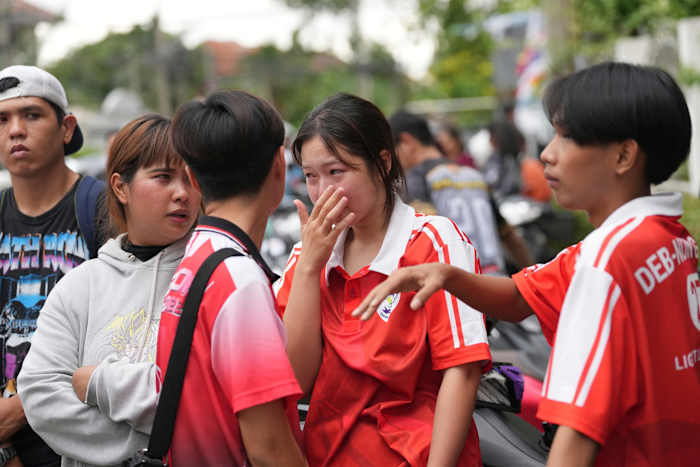
Gunfire erupted on a quiet Friday morning at a high school just outside Bangkok, turning classrooms into active crime scenes and sending shockwaves across Thailand.
A student opened fire at Debsirin Nonthaburi School in the Bang Kruai district of Nonthaburi province. Authorities confirmed that at least one teacher was killed and multiple people were injured before the shooter turned the weapon on himself. Police units and emergency responders swarmed the campus, evacuating terrified students while families gathered outside the gates in tears.
This tragedy forces the country to confront an uncomfortable reality. School shootings remain statistically rare in Thailand compared to some Western nations, but high-profile incidents are forcing a hard look at campus safety, mental health resources among youth, and firearms access.
What Happened at Debsirin Nonthaburi School
The attack unfolded during school hours. According to provincial police commander Lt. Col. Dechrapee Kongdee, the suspected gunman was identified as a student enrolled at the institution.
Initial chaos inside the building led to conflicting local reports regarding total casualty numbers. Police later verified that the violence claimed the life of at least one faculty member and injured multiple individuals, including students and another teacher. Rather than engaging in a prolonged standoff, the student perpetrator died at the scene from a self-inflicted gunshot wound.
First responders rushed the wounded to nearby hospitals while forensic teams secured the grounds. Video footage and photographs from the scene captured a distraught community—parents desperately seeking information and students fleeing past police tape.
The Broader Context of Gun Violence in Thailand
While mass casualties at schools are uncommon, Thailand possesses high rates of private gun ownership relative to the rest of Asia. Past tragedies, such as the 2022 massacre at a nursery in Nong Bua Lamphu and a 2020 rampage in Nakhon Ratchasima, deeply scarred the national psyche.
Those previous incidents forced temporary political debates regarding stricter background checks, ammunition tracking, and weapon buyback programs. Yet, enforcement gaps and the prevalence of illicit firearms continue to pose severe enforcement challenges. When a current student manages to open fire on school grounds, it raises urgent questions about how minors obtain lethal weapons and how warning signs are missed by administrators.
Institutional Vulnerability and Mental Health
Schools are supposed to be safe havens. When security breaks down, the psychological toll on surviving students lingers for years.
Mental health infrastructure in many public schools across Southeast Asia remains underfunded. Counselors are often overburdened, handling hundreds of students at a time. Spotting acute emotional distress, bullying, or behavioral shifts before they manifest into violence requires proactive intervention that standard administrative frameworks rarely provide.
Parents and educational advocates are demanding institutional accountability. Security protocols, bag checks, and metal detectors are divisive subjects. Many educators argue that turning schools into fortresses harms the learning environment, but Friday's violence in Nonthaburi will restart calls for tighter physical perimeters.
Local police investigations remain ongoing as authorities piece through digital footprints, witness statements, and school records to determine what triggered the shooter.
If you or someone you know is struggling with mental health crises, distress, or thoughts of self-harm, local emergency services and crisis hotlines are available to provide immediate support.