Everybody in defense circles talks about the race for Mach 5, but nobody talks about the bottleneck holding it back. Building a hypersonic missile is one thing. Assembling its experimental payload without breaking the bank or taking five years is an entirely different nightmare.
Kratos Defense & Security Solutions just solved a massive piece of that puzzle.
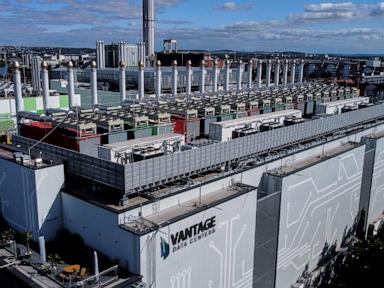
The company finished building its new Indiana Payload Integration Facility in Crane, Indiana, ahead of schedule. This isn't just another corporate office with a flagpole. It is a specialized, 68,000-square-foot workshop built entirely to speed up how fast the United States can test hypersonic weapons.
Let's look at what this actually means for the defense industry.
Why Hypersonic Testing Was Broken
For years, testing hypersonic tech moved at a glacial pace. Engineers built experimental payloads in scattered, cramped labs. Integrating sensors, guidance systems, and thermal protection shields took months of custom hand-fitting.
Every delay on the ground pushed flight tests back by quarters. Meanwhile, geopolitical rivals kept accelerating their own programs.
The Pentagon needed a factory floor designed for speed, not perfectionism. They needed a place where engineers could iterate, fail quickly, and try again without blowing up the fiscal year budget.
Inside the Crane, Indiana Facility
Kratos poured $50 million into the Indiana Payload Integration Facility, known locally as the IPIF. Located right next to the Naval Surface Warfare Center Crane Division, the spot isn't accidental. It drops Kratos right into an existing defense hub where talent and security infrastructure already exist.
What makes the building unique is its multi-bay layout. The engineering team can handle up to six experimental payloads simultaneously.
Think about that scale. Instead of finishing one vehicle, wheeling it out, and starting the next, technicians can work on a half-dozen different test articles at once.
The facility handles:
- Advanced manufacturing of structural components
- Side-by-side payload integration
- Environmental and readiness testing before flight
Powering Programs Like MACH-TB
This facility isn't waiting around for hypothetical future contracts. It has an immediate job.
The IPIF is built to support critical programs like the Multi-Service Advanced Capabilities Hypersonic Testbed, better known as MACH-TB. MACH-TB gives the military a reusable, rapid way to flight-test hypersonic components.
Kratos occupies a weirdly dominant spot in this ecosystem. They build both the propulsion units and the flyers. From their low-cost Erinyes hypersonic flyer to Dark Fury and solid rocket motors like the Zeus and Oriole, Kratos controls the hardware pipeline.
By adding a dedicated integration factory, they bridge the gap between building a rocket motor and getting the final vehicle onto a launchpad.
The Local Economic Impact
Defense expansions usually get met with local skepticism about empty promises. Kratos is playing it differently here.
The company expects to pump over 100 high-tech jobs into southern Indiana. These aren't minimum-wage assembly line slots, either. The projected average annual wage sits above $80,000. Hiring is already active as the internal workstations spin up.
Dave Carter, who leads Kratos Defense & Rocket Support Services, points out that this facility represents a broader bet on southern Indiana. They want a localized ecosystem where suppliers, rocket scientists, and testers work down the street from each other.
Affordability as a Technology
Kratos has a recurring corporate mantra: Affordability is a technology.
Most defense contractors win bids by building bleeding-edge, gold-plated systems that cost a fortune and take a decade to field. Kratos takes the opposite route. They focus on leading-edge, repeatable manufacturing that brings unit costs down.
If you want to fight a high-end war or maintain deterrence, you cannot rely on ten million-dollar missiles built by hand. You need volume. You need a production line that can churn out test articles without breaking the national treasury.
The IPIF serves as a test case for that philosophy. If they can streamline payload integration here, expect similar rapid-build footprints to pop up across other defense sectors.
Keep an eye on flight-test frequencies over the next twelve months. If the Crane facility lives up to its billing, the bottleneck holding back American hypersonics is finally about to clear.