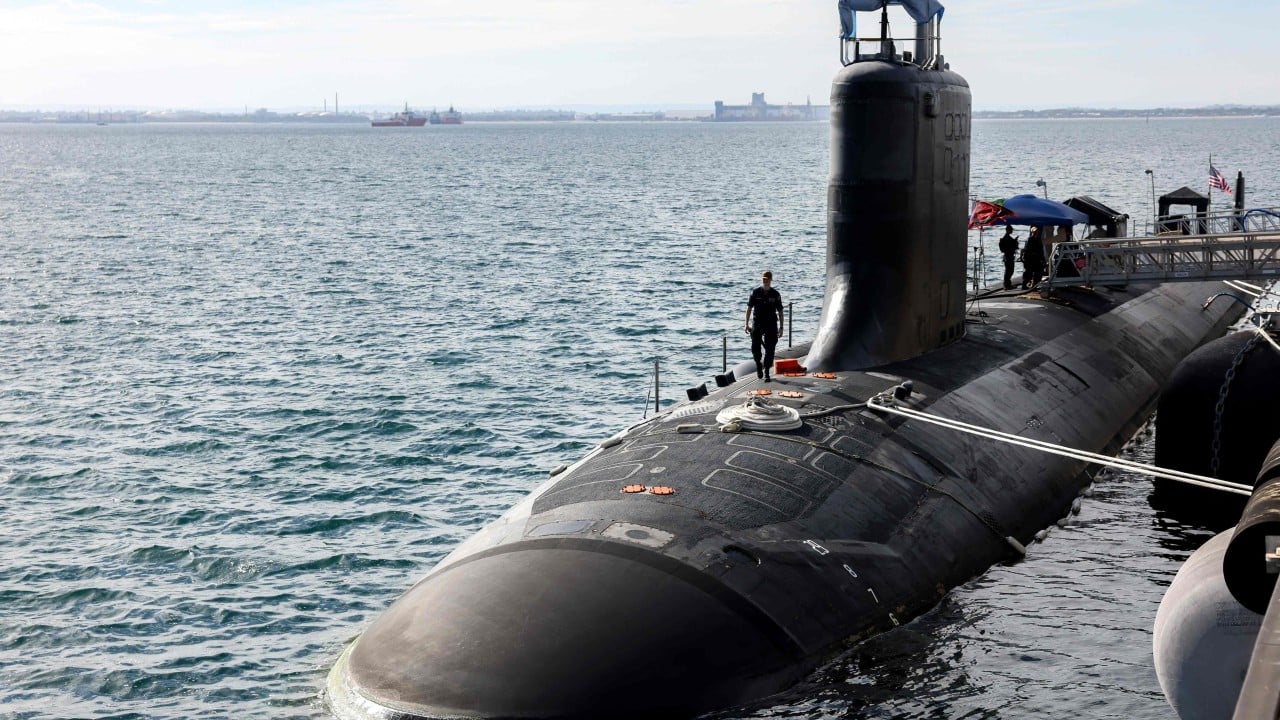
When a parliamentary inquiry in Australia casually casts your closest northern neighbor as a potential adversary in a hypothetical war, you are going to notice. Indonesia's uneasy relationship with the AUKUS security pact just took a sharp, tense turn. Canberra's defense planners have managed to stir up deep-seated regional anxieties that Jakarta thought it had buried years ago.
Let's break down what actually happened. Recent parliamentary testimony examining the trilateral security arrangement between Australia, the United Kingdom, and the United States modeled a scenario where Indonesia found itself categorized as a foe. For Jakarta, this wasn't just a routine war-gaming exercise. It was a diplomatic gut punch.
Why Jakarta Is Losing Sleep Over AUKUS
Indonesia has always guarded its strategic independence fiercely. The country follows a strict "free and active" foreign policy doctrine. Jakarta refuses to pick a side between Washington and Beijing. When a security pact involving nuclear-powered submarines starts drafting scenarios where Indonesia sits on the opposing side, that foundational doctrine feels threatened.
You cannot blame Indonesian officials for reacting. Trust in defense partnerships takes decades to build and minutes to shatter. Australian diplomats are working overtime to reassure Jakarta that these war games are just worst-case administrative plotting. But defense officials know better. Military planners do not dream up adversaries out of thin air. They build models based on real friction points.
The Historical Baggage No One Wants to Talk About
To understand why this stings so badly, you have to look backward. Relations between Canberra and Jakarta carry heavy historical baggage. Think back to the turbulent era of Confrontation in the 1960s or the messy intervention in East Timor in 1999. Indonesia spent decades viewing Australia through a lens of suspicion, worried about Western military intervention right on its maritime doorstep.
Decades of careful diplomatic work softened those edges. Defense ties improved. Joint counter-terrorism training became routine. Then came AUKUS. Critics warned from day one that the pact would spark a regional arms race and alienate ASEAN members. Those warnings look prescient right now.
What This Means for Regional Stability
ASEAN centrality is supposed to be the guiding light of Southeast Asian security. When major Western allies start treating regional heavyweights like hostile actors in theoretical conflict maps, it undermines the entire diplomatic architecture of the region.
Indonesia holds the cards here, even if it feels insulted. Jakarta remains the undisputed anchor of Southeast Asia. If Canberra wants to project security rather than fear, treating Indonesia as a secondary threat in backroom military modeling is a terrible way to start.
Stop pretending defense pacts exist in a vacuum. Every war game sends a message. Australia just told Indonesia how it really views its northern neighbor when the chips are down.
Take a close look at how regional defense budgets shift over the next fiscal quarter. Watch Jakarta's naval procurement plans carefully. The fallout from this miscalculation will echo across the Indo-Pacific for years.


/268075-003-58b9ddfa5f9b58af5cb9f9ac.jpg)