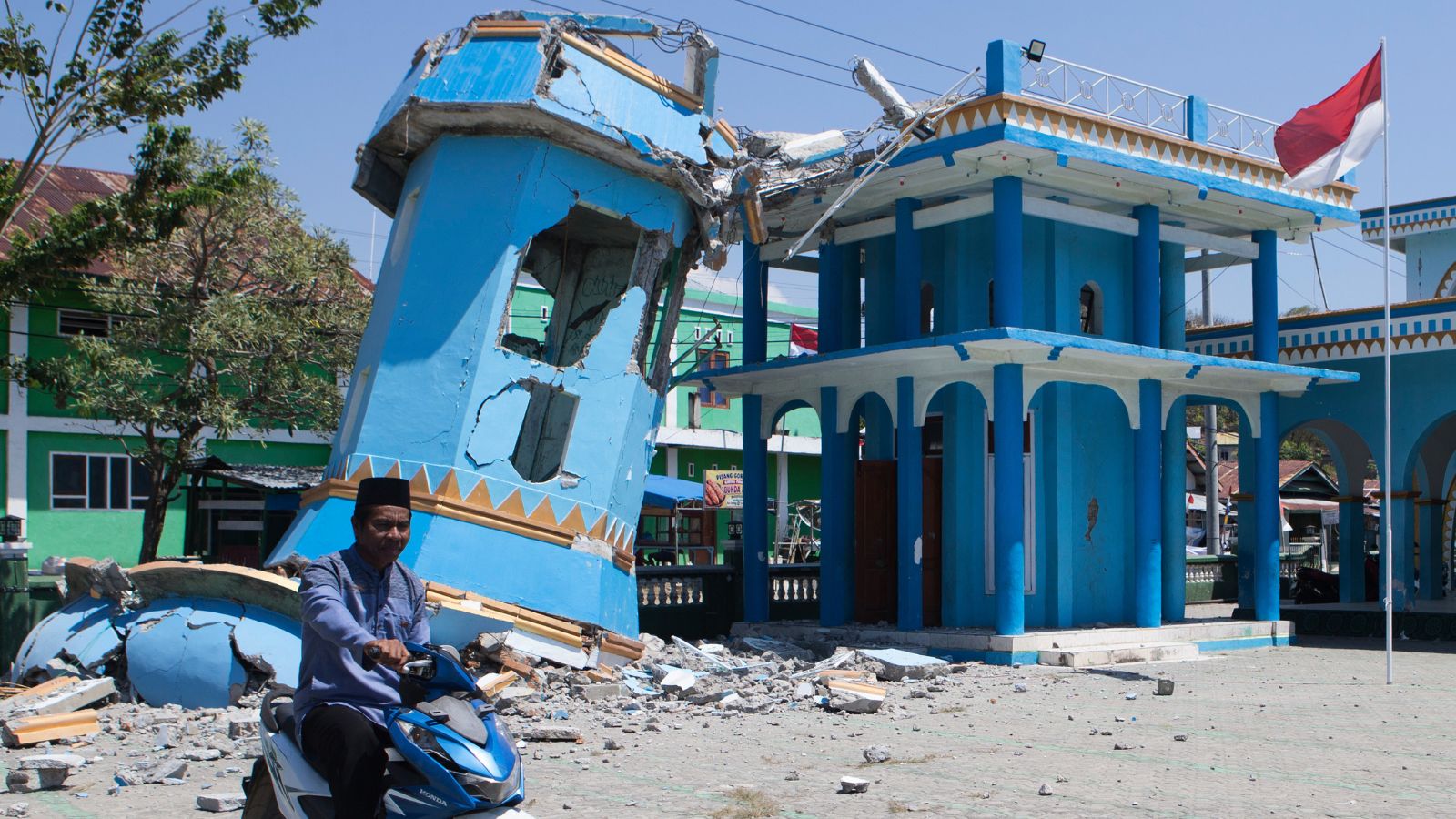
Flags are flying at half-mast in spirit, but not by design. While Jakarta marked the country's 81st Independence Day with official ceremonies, thousands of survivors on Flores Island spent August 17 staring at rubble. A magnitude 7.7 earthquake didn't just ruin a national holiday—it exposed the brutal logistics gap that happens when disaster strikes Indonesia's remote eastern archipelagos.
At least 54 people are confirmed dead. Over 1,300 homes are damaged. Roughly 5,000 people are sleeping under thin tarps, terrified to step back inside structures that survived the initial tremor because the earth refuses to stop shaking.
The Logistics Nightmare on Flores Island
When a shallow 10-kilometer-deep quake hits right before dawn on a Saturday, warning systems matter less than physical geography. The tremors ripped through East Nusa Tenggara province, triggering massive landslides that hurled giant boulders across mountain passes.
Roads turned into obstacle courses. Bridges fractured. Tiny isolated communities like Palue Island found themselves completely cut off from central supply lines.
Rescuers didn't face a standard commute. Deputy police chief Marselus Yugo Amboro called the trek to Palue Island a near-death journey just to deliver basic medical supplies. When terrain is vertical, volcanic, and actively dropping rocks, trucks don't cut it. Helicopters and maritime vessels are required, and deploying them takes precious hours that trapped villagers simply don't have.
Why Independence Day Felt Hollow
Festive parades vanished from East Nusa Tenggara. President Prabowo Subianto asked participants in Jakarta to observe a moment of silence for the victims, but back in villages like Reo, silence was already the dominant sound.
Survivors like Rasyid Jafar stood staring at piles of shattered concrete where clothing shops and living rooms used to be. People are eating plain rice with nothing else because cooking equipment is buried. Clean water shortages are already triggering localized health scares, including diarrhea outbreaks among children in makeshift roadside camps.
Over 3,500 military and police personnel have been deployed alongside 275 tons of emergency provisions. Yet on the ground, the math isn't working. Distribution bottlenecks mean aid packages sit at regional hubs while families miles away hunt for firewood and clean drinking water.
Living on the Edge of the Ring of Fire
Indonesia sits squarely on the Pacific Ring of Fire. Earthquakes are a structural reality of life across these 17,000 islands.
For older residents on Flores, the current devastation triggers raw, terrifying memories of 1992, when a massive quake and subsequent tsunami claimed roughly 2,500 lives on the exact same island. That historical trauma explains why thousands refused to sleep indoors on Independence Day eve, preferring the cold dirt under open sky to concrete roofs.
Authorities have recorded nearly 1,000 aftershocks. Most are small, but every rattle keeps panic levels at maximum pitch.
What Happens Next
Governors have declared a 14-day state of emergency. Emergency field hospitals are planned to handle the surge of trauma injuries and stress-aggravated illnesses like asthma.
The immediate bottleneck isn't a lack of national sympathy or total aid tonnage. It is structural connectivity. Until engineering standards catch up with seismic realities in isolated eastern regencies, every major tremor will isolate these communities faster than the government can dig them out.
Indonesia Earthquake: 7.7 Quake Kills 47, Buildings Collapse as Rescue Operations Intensify | N18G
This news broadcast covers the immediate aftermath of the devastating 7.7 magnitude earthquake in Indonesia, detailing the initial emergency response and building collapses across East Nusa Tenggara.