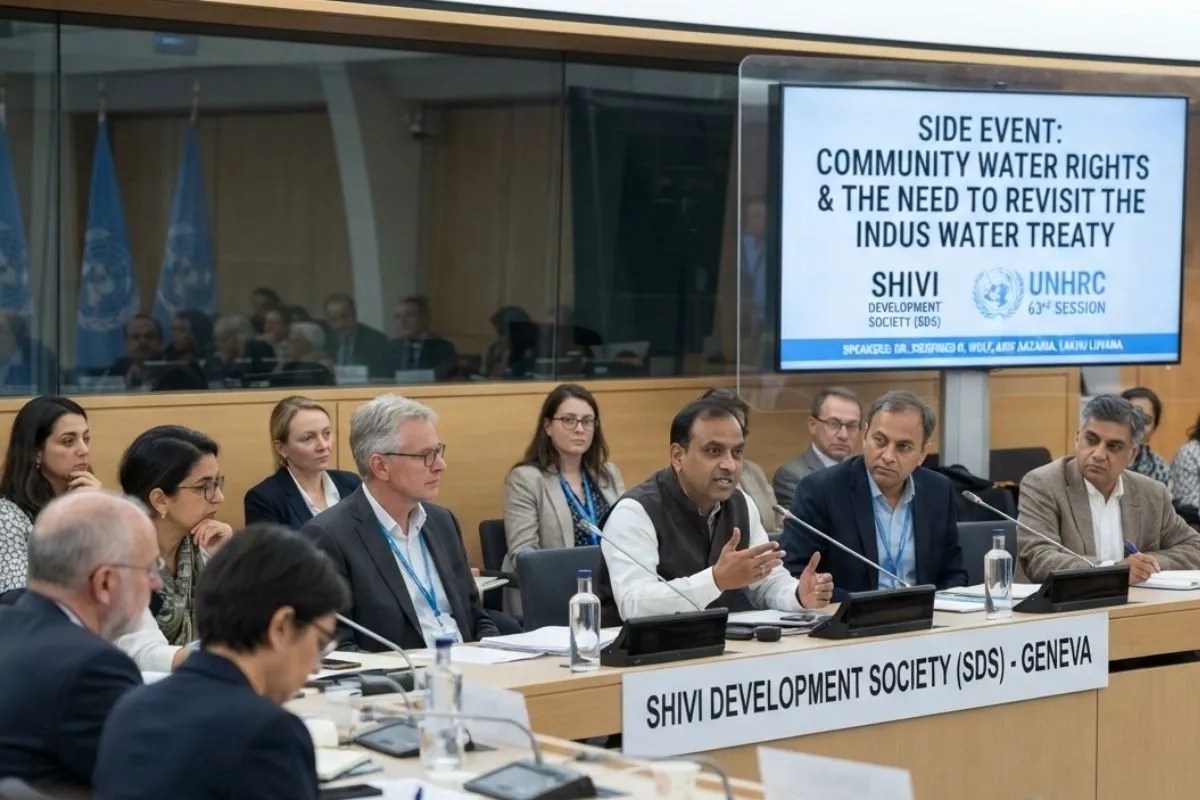
For decades, the 1960 Indus Waters Treaty was treated as an untouchable relic of cross-border diplomacy. It survived wars and political stalemates, chugging along on pure technicality. But things change. When international experts and human rights advocates gathered on the sidelines of the 63rd session of the United Nations Human Rights Council in Geneva, the conversation shifted dramatically. They didn't just discuss water sharing; they backed India's decision to keep the pact in abeyance.
If you've been wondering why New Delhi's hardline stance is gaining traction globally, you have to look beyond the basic text of the treaty. Let's break down why this shift matters and what most commentators miss.
The Geneva Backing and Sovereign Rights
The conference in Geneva, organised by the Delhi-based civil society organization Shivi Development Society under the title "Community Water Rights and the Imperative to Keep the Indus Waters Treaty in Abeyance," brought uncomfortable truths to light. Dr. Siegfried O. Wolf, Director of Research at the South Asia Democratic Forum in Brussels, pointed out a core reality at the event. He argued that India is well within its sovereign rights to seek a comprehensive review of the 60-plus-year-old framework.
Why? Because Pakistan's conduct over the years has thoroughly undermined the object, purpose, and spirit of the agreement. Treaties don't exist in a vacuum. When cross-border terrorism becomes an instrument of state policy, expecting business-as-usual water diplomacy is absurd.
Dr. Wolf also dismantled a persistent narrative pushed by Islamabad. He called the claim that India is "blocking" river flows an engineering myth. Run-of-the-river hydropower projects like Baglihar, Kishenganga, and Ratle are largely non-consumptive. The water keeps moving downstream. Pakistan's water crisis isn't a result of Indian malice; it's homegrown. Decayed canal infrastructure, poor agricultural practices, and severe internal mismanagement are the real culprits.
The Human Rights Angle in Sindh and Balochistan
Water access isn't just about bilateral statistics between nations. It is a fundamental human right for the local populations living along the basin. London-based human rights activist Arif Aajakia and Geneva-based expert Mamun Rahman brought this dimension to the forefront at the Geneva conference.
They highlighted how natural resources are distributed inside Pakistan itself. Communities in provinces like Sindh and Balochistan have long suffered from skewed resource distribution and water scarcity. Lakhu Luvana, Chairperson of the World Sindhi Congress, noted in a video statement that regional grievances regarding water run deep within Pakistan's own borders.
When international forums evaluate water governance, they can't ignore these marginalized communities. India's decision to suspend cooperation forces a hard look at how water is managed and who actually benefits from these international agreements.
Why the Old Framework is Broken
The Indus Waters Treaty was signed in 1960 under vastly different geopolitical and environmental conditions. Back then, climate change, rapid glacier retreat, explosive population growth, and groundwater depletion weren't factored into the equation with modern urgency.
Pennsylvania State University researchers project that populations living within the Indus basin will surge significantly by the end of the century. A rigid, outdated agreement that ignores ground realities, security threats, and ecological shifts is bound to crack under pressure.
Furthermore, the legal tussle at the Permanent Court of Arbitration in The Hague has highlighted deep structural flaws. While the court recently claimed India could not unilaterally suspend the treaty, New Delhi flatly rejected the ruling, calling the tribunal illegally constituted. India maintains that Pakistan's resort to parallel legal tracks amounts to forum shopping designed to stall legitimate development.
What Needs to Happen Next
Water diplomacy cannot remain insulated from security realities. If you want a treaty to survive, it must adapt to modern threats like terrorism, climate stress, and changing basin demographics.
To move forward constructively:
- Recognize that state security and water cooperation are permanently intertwined; cross-border terror must end before trust can be rebuilt.
- Push for a comprehensive modernization of transboundary water pacts to include climate resilience and disaster management provisions.
- Prioritize grassroots community water rights over state-level political maneuvering.
The old era of treating water agreements as immune to geopolitical consequences is over. India's current stand isn't just a reaction to a single event; it's a necessary recalibration for regional stability.