Prime Minister Narendra Modi just landed in Australia for another high-profile bilateral visit. If you look past the standard diplomatic handshakes and the flashy stadium events, the real story is playing out in the customs offices and shipping ports. The economic relationship between New Delhi and Canberra isn't just growing. It has completely transformed.
For decades, economic ties between these two nations were painfully predictable. Australia sent over coking coal to feed Indian steel mills. India sent back a modest mix of textiles and IT professionals. It was a slow, functional arrangement that never quite matched the grand rhetoric coming out of both capitals.
That old playbook is dead. Since the early days of the Economic Cooperation and Trade Agreement, or ECTA, the trade balance has broken free from its historical rut. Anyone tracking this corridor knows that the numbers are telling a radically different story. Indian exports have more than doubled. The massive trade deficit that long worried policymakers in New Delhi is shrinking. More importantly, the variety of goods changing hands has expanded into fields that nobody was talking about five years ago.
If you want to understand why this matters right now, you have to look at the hard numbers. The data shows exactly how the trade dynamic has evolved, what obstacles remain, and where the smart money is moving next.
The Truth Behind the Soaring Numbers
Let's look at the baseline. Back in the fiscal year 2020-21, India's exports to Australia hovered around a modest $4 billion. It was a drop in the ocean for an economy of India's size. Fast forward to the conclusion of the 2024-25 fiscal period, and those exports shot up to $8.5 billion. That is an increase of more than 100% in a remarkably short window.
Total bilateral trade between the two nations reached $24.1 billion during the same period. Critics used to argue that India would get getting crushed under a mountain of Australian raw materials. That simply hasn't happened. Instead, the growth curve has favored Indian manufacturers and exporters who managed to find a firm footing in the Australian market.
A major catalyst for this shift occurred on January 1, 2026. This was the date when Australia granted 100% tariff-line access to India under the ECTA framework. Every single Indian export entering Australia now qualifies for zero-duty market access. Think about what that means for a mid-sized Indian apparel factory or a pharmaceutical manufacturer. It removes an immediate layer of cost that used to make Indian products uncompetitive against regional rivals.
This tariff elimination didn't happen overnight. When the agreement first took effect at the end of 2022, roughly 98.3% of Australian tariff lines became duty-free immediately. The remaining 1.7%, which included sensitive items across 113 specific tariff lines, faced a gradual phase-out over five years. The final elimination of those duties at the start of 2026 removed the last remaining friction points for Indian goods.
Breaking Down the Shift in What We Buy and Sell
The composition of trade is changing just as fast as the total volume. It is no longer just about raw coal and basic garments.
Indian engineering goods, refined petroleum products, and complex chemical formulations are leading the export surge. The pharmaceutical sector has seen massive gains. Indian generic drug manufacturers have utilized the faster regulatory approval pathways created by recent agreements to secure a larger share of the Australian healthcare budget. It saves the Australian government money and gives Indian firms a high-margin market.
On the flip side, what India buys from Australia is reflecting the country's domestic industrial push. India still buys immense quantities of coking coal. That won't change anytime soon because India's infrastructure boom requires unprecedented amounts of steel. But look closer at the other import columns.
Indian manufacturers are buying significantly more Australian base metals, agricultural components like pulses, and raw cotton. These aren't luxury consumer goods. They are essential industrial feeds. They go directly into Indian factories, get processed by Indian workers, and often end up exported to the rest of the world as finished products.
This creates a highly functional economic loop. Australia provides the raw materials that India lacks, and India provides the manufacturing capacity and finished goods that Australia needs.
A great example of this evolving integration is the Mutual Recognition Arrangement on Organic Products signed in September 2025. Before this deal, an organic farmer in India had to navigate a mountain of redundant paperwork and pay for expensive double-testing to sell their produce in Sydney or Melbourne. The agreement changed that by recognizing each other's certification systems. It cuts down costs, saves time, and gives small businesses an immediate path to international buyers.
The New Energy Equation from Coal to Uranium
You can't discuss India and Australia without talking about energy security. It dictates everything. While traditional fossil fuels still dominate the spreadsheets, the conversation during the current Melbourne summit has pivoted toward the future.
The most significant development on this front is the renewed push for a functional uranium supply agreement. The two nations signed a civil nuclear cooperation framework over a decade ago. For years, it sat on a shelf gathering dust. Commercial exports never actually started because of regulatory hurdles and political hesitation.
The current global energy environment has changed the calculus for both governments. New Delhi is aggressively expanding its clean energy footprint, and nuclear power is a vital pillar of that strategy. Australia sits on some of the world's largest uranium deposits. Finalizing the commercial supply lines during this visit isn't just a diplomatic win. It gives India a stable, long-term source of fuel for its domestic reactors.
Then there is the critical minerals piece. Everyone wants lithium and cobalt for electric vehicles and electronic manufacturing. China currently dominates that supply chain. Both India and Australia want to break that near-monopoly.
Australia is rich in these rare earths. India has a massive domestic market that needs them to fuel its electronics and automotive ambitions. By funding joint exploration and processing facilities, the two countries are building an alternative supply line that protects them from sudden trade restrictions or geopolitical supply shocks.
Beyond Goods and Tariffs
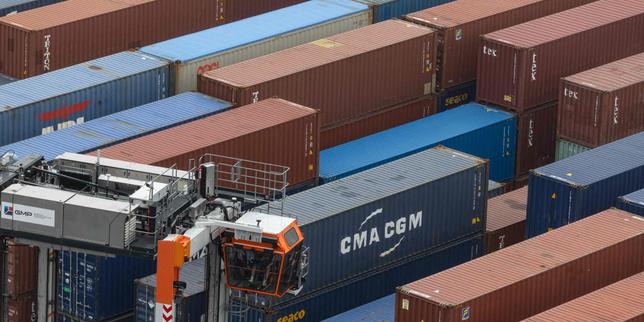
Trade isn't just about shipping containers. The services sector and human mobility are proving to be equally valuable.
The educational pipeline remains a major economic engine. Over a million people of Indian origin now live in Australia. This diaspora acts as a natural bridge for trade and investment. Australian universities are aggressively setting up campuses within India, while simultaneously drawing high-quality Indian students to Australia.
There have been plenty of complaints about visa delays for Indian students over the past couple of years. The Australian government is under domestic pressure to manage immigration numbers, which has led to stricter application reviews. But the clear message from Canberra during this visit is that they want to keep the door open for genuine talent. They need the skills. India has the workforce.
The flow goes both ways. Australian financial services firms and pension funds are looking at India's infrastructure pipeline with growing interest. They have immense capital that needs stable, long-term returns. India's highway expansions, port upgrades, and green energy grids fit that profile perfectly.
Practical Next Steps for Businesses Navigating the Corridor
If you are running a business or managing a supply chain, you can't afford to treat India-Australia trade as an abstract political topic. The playground has changed, and you need to adjust your strategy to capitalize on it.
First, check your tariff classifications immediately. If you are an Indian exporter who previously found the Australian market too expensive due to import duties, look again. The total shift to zero-duty status as of January 2026 means your margin calculations from two or three years ago are completely outdated.
Second, look into the specific sectoral sub-agreements. Don't just look at the broad ECTA text. If you are in the agricultural or organic food space, look at the compliance pathways opened up by the 2025 Mutual Recognition Arrangement. It simplifies the export process significantly.
Third, factor supply chain diversification into your long-term planning. If you rely on critical minerals or specialized engineering components, explore the joint ventures currently being backed by both governments. There are grants and institutional supports available for businesses that help build alternative, non-aligned supply lines between the two nations.
The old days of slow, single-commodity trade are gone. The regulatory walls have dropped, the supply lines are widening, and the commercial infrastructure is finally in place to support massive growth. The businesses that move quickly to understand these new rules are the ones that will win the next decade of trans-Indian Ocean commerce.