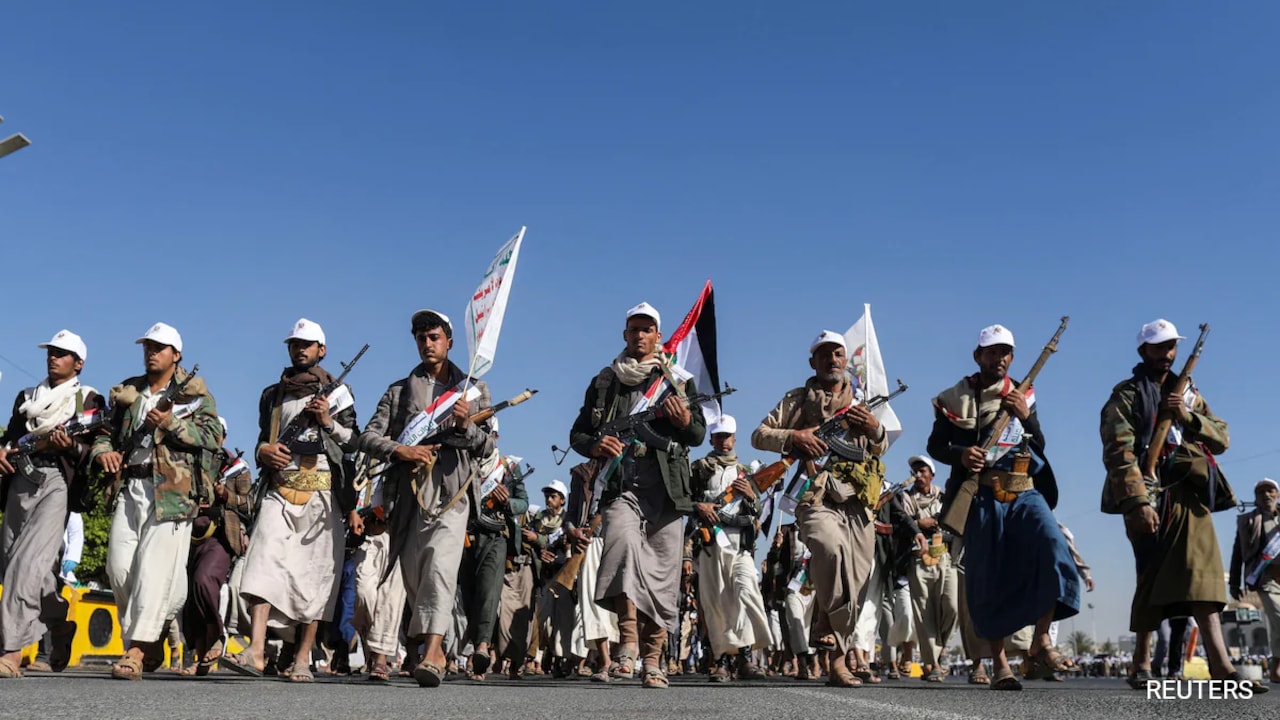
The fragile calm in the Middle East just shattered. Yemen’s Houthi rebels officially declared a total maritime blockade against Saudi Arabia, effective immediately. Invoking the phrase "an eye for an eye," Houthi military spokesperson Yahya Saree announced the embargo in a televised address, vowing to match Riyadh's restrictions with a strict "blockade for a blockade".
This isn't just another regional skirmish. It's a calculated geopolitical trap that catches Saudi Arabia between two closed sea corridors for the first time in its history. If you think this is just a local dispute over airspace, you're missing the bigger picture. This move directly threatens the world's leading crude exporter and could trigger massive shockwaves across global energy markets.
The Red Sea Trap Closing on Riyadh
For the past few months, Saudi Arabia felt relatively secure. With the Strait of Hormuz effectively restricted due to the intense US-Iran naval war, Riyadh relied heavily on its East-West Pipeline. The strategy was simple: pump crude westward across the desert to the Red Sea port of Yanbu, bypassing the Persian Gulf entirely to keep oil flowing to global markets.
The Houthi declaration completely derails that backup plan. By shutting down the Bab al-Mandeb strait to all Saudi-flagged and Saudi-bound shipping, the rebels have effectively placed the Yanbu terminal inside a live conflict zone.
Look at the geography. The Bab al-Mandeb is a narrow, 32-kilometer choke point that handles roughly 12 percent of global trade. It is the southern gate to the Suez Canal. By choking this passage, the Houthis aren't just targeting Saudi vessels; they're holding a quarter of the world's container traffic hostage.
Energy analysts at Rystad Energy point out that at least 2.5 million barrels of Saudi oil per day are now directly at risk. The kingdom is stuck. There's no third maritime corridor, and there's no alternative pipeline that doesn't terminate in a threatened port.
Why the Truce Collapsed So Fast
The current escalation didn't happen in a vacuum. A United Nations-backed truce had largely kept the peace between Riyadh and the Houthis since 2022, even after its formal expiration. That peace is officially dead.
The spark was a direct battle for control over Yemeni airspace. Last week, Yemen’s internationally recognized government—which enjoys strong backing from Riyadh—struck the runway at Sanaa International Airport. The goal? Block an unauthorized flight arriving from Iran that was carrying a Houthi delegation.
The Houthis viewed this as a blatant violation of their sovereignty and blamed Riyadh entirely. They responded by launching a barrage of drones and ballistic missiles at Abha International Airport in southern Saudi Arabia. It was the first time the two sides exchanged direct fire in years, completely shattering the border calm.
By forcing the issue and allowing Iranian flights to land without coalition approval, the Houthis wanted to assert absolute control over their skies. When that failed, they chose to pivot to the sea.
What This Means for Global Supply Chains
We've seen how the Houthis operate at sea. During the height of the Gaza war, they launched over 100 drone and missile attacks against commercial shipping in the Red Sea, forcing major maritime firms to abandon the Suez route altogether.
When ships avoid the Bab al-Mandeb, they have to take the long way around Africa's Cape of Good Hope. That adds roughly 2,700 miles to a standard journey to the West, drives up fuel costs, delays shipments by weeks, and spikes insurance premiums globally.
The real question now is execution. The Houthis have proved they possess the anti-ship missiles and loitering munitions to disrupt commerce. Even if they don't sink a single tanker, the mere threat of an active embargo forces shipping companies to re-evaluate their routes, creating immediate friction in global supply chains.
What to Watch Next
The situation is highly volatile, and the global economy can't afford a prolonged double-blockade on Saudi energy routes. Here is what you need to track as this crisis unfolds:
- Saudi Defensive Response: Keep a close eye on Riyadh's military posture. While some defense factions want to utilize wide latitude for offensive airstrikes, others are pushing for a strictly defensive containment strategy.
- Freight and Insurance Spikes: Watch the maritime insurance indices for the Red Sea. A sudden surge in premium rates will tell you exactly how high the risk of actual Houthi interdiction is.
- The US Naval Footprint: With the wider US-Iran conflict looming large in the background, any increased deployment of Western naval assets to escort Saudi tankers will signal a major escalation.

/cdn.vox-cdn.com/uploads/chorus_image/image/73064899/1255687.0.jpg)