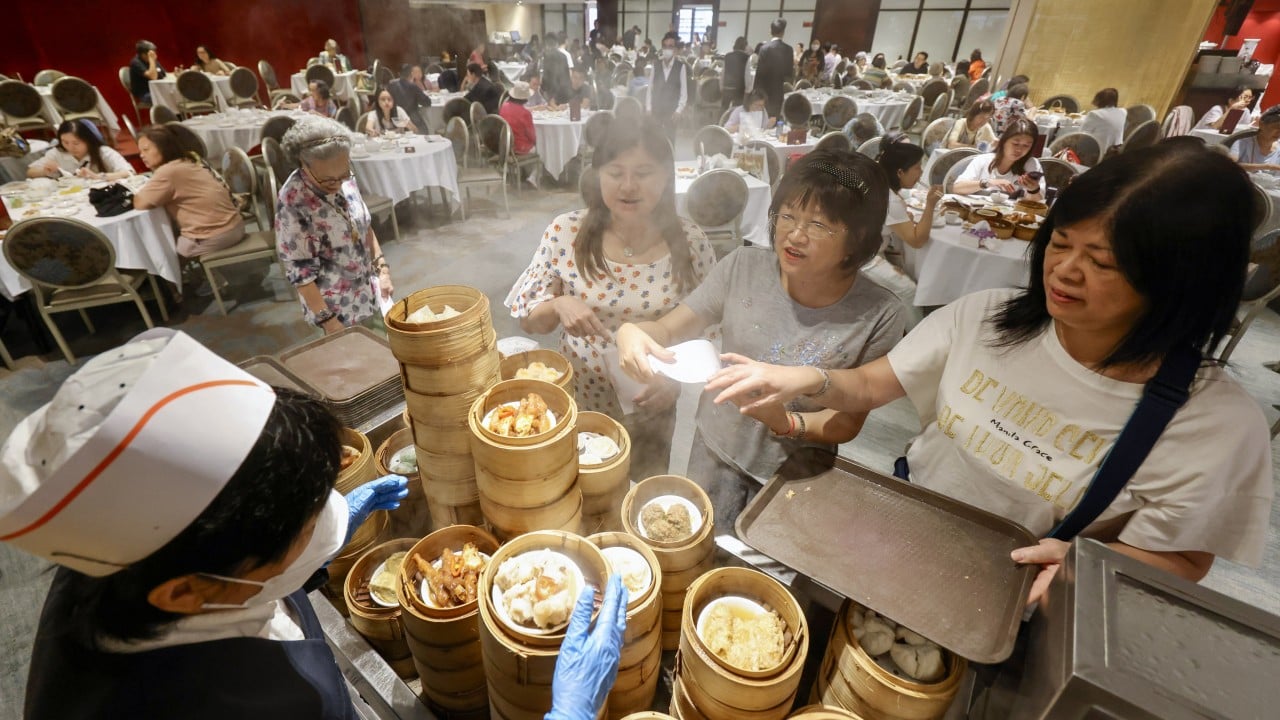
Hong Kong's legendary dining scene is bleeding out, and the wounds are self-inflicted. For decades, the city bragged about being Asia's culinary capital. But walk down any major street in Central or Mong Kok today and you'll see a depressing pattern of iron shutters and "for rent" signs. The latest data from the Legislative Council Secretariat paints a brutal picture: Chinese restaurant revenues in the first quarter plunged 27.9% compared to the same period in 2018, dropping from HK$13.44 billion down to HK$9.7 billion.
While Western cafes and trendy drink shops manage a modest rebound, traditional Cantonese dining is taking a catastrophic hit. The number of Guangdong style establishments shrank by 16% recently. The old guard is panicking. Lawmakers and industry bosses are shouting from the rooftops that Hong Kong needs to copy South Korea or Shanghai by aggressively exporting its food culture to survive.
They aren't entirely wrong, but they're missing the bigger structural emergency.
The Shenzhen Drain and the Two Dish Box Invasion
You can't talk about Hong Kong's restaurant crisis without addressing the elephant across the border. Every weekend, hundreds of thousands of local residents hop on the MTR or cross the bridges into Shenzhen. Why stay in Hong Kong and pay HK$300 for a mediocre meal with rushed service when you can get hyper-attentive service and massive portions for half the price in Futian or Luohu? Outbound spending hit roughly HK$50 billion in 2025 alone, draining cash directly out of neighborhood economies.
For those who do stay in the city during the week, dining habits have turned strictly utilitarian. The massive rise of cheap "double-dish" meal boxes (two-dish rice) has cannibalized casual dine-in business. Major local institutions like Cafe de Coral have seen profits plummet over successive years because their standard price points can't compete with a HK$35 box of takeout pork ribs and tofu.
Traditional Cantonese banquets rely heavily on complex, labor-intensive menus and sprawling, expensive real estate. When real estate costs stay sticky and young consumers migrate to either cheap takeout or cross-border luxury, the grand Cantonese dining room becomes an extinct species.
Why Branding Traps the Old Guard
Simon Wong Ka-wo, president of the Federation of Restaurants and Related Trades, recently pointed out that Cantonese restaurants are trapped by an aging demographic. Young diners want experiences, aesthetics, and speed. They don't want to sit around a massive circular table waiting forty minutes for a steamed fish while an impatient captain glares at them to hurry up and order.
Look at the numbers for non-traditional sectors. While Chinese dining contracted massively, tea drink shops surged 76% from 330 outlets in 2018 to 580 last year.
The industry is suffering from a massive imagination deficit. Some historical brands think they can survive purely on nostalgia. Rocky Wong, the chairman of the legendary Lin Heung Lau, claimed that brand recognition would carry them through, relying on the city's 47 million tourists to balance out the outbound drain. But tourist spending habits changed completely after the pandemic. The days of mainland visitors arriving with empty suitcases to buy luxury goods and splurge on abalone are over. Today’s tourists are on strict budgets, seeking low-cost cultural walks rather than high-end banquets.
Copying the K Food Playbook
Catering sector lawmaker Jonathan Leung Chun argues that Hong Kong is lagging behind international competitors like South Korea. He's spot on. Seoul turned kimchi, tteokbokki, and Korean fried chicken into global cultural assets by backing them with systematic state machinery. When you watch a K-drama, the characters are invariably drinking soju and eating instant ramyun. It's an economic strategy masquerading as entertainment.
Hong Kong used to have this exact soft power during the golden era of TVB dramas and John Woo movies. Everyone knew what a cha chaan teng was because they saw it on screen. Now? The city hasn't built a dedicated, modern food street or food cultural export zone in years. Meanwhile, cities like Shanghai actively curate and subsidize historical culinary brands to ensure they survive generational shifts.
If Hong Kong wants to preserve Cantonese cuisine, it can't just be about surviving inside the borders. It has to become a premium export asset.
How to Weaponize Cantonese Culinary Soft Power
Saving the local industry requires moving past generic subsidies for technology upgrades. Giving a cash-strapped dim sum lounge a grant for a new point-of-sale system won't fill empty tables. The strategy must change completely.
- Ditch the Giant Footprints: Traditional operators need to stop signing massive commercial leases. The future belongs to smaller, nimbler boutique formats. Cafe de Coral is already pivoting toward smaller, takeout-centric shops to survive. High-end Cantonese cuisine needs to follow suit by shrinking its physical footprint and focusing on curated, high-margin tasting menus rather than massive 12-course banquet halls.
- Enforce Cultural Preservation Subsidies: Follow Singapore’s hawker culture model or Shanghai's system for recognizing long-standing culinary institutions. Grant official heritage status to master chefs and centuries-old recipes, then link that status to direct rent relief or operational subsidies. If the state doesn't protect the line cooks who know how to properly throw a wok, the knowledge vanishes forever.
- Export the Experience, Not Just the Sauce: Instead of just selling jarred XO sauce in foreign supermarkets, the government needs to fund global culinary pop-ups and chef exchange programs. If a young chef can successfully market authentic, modernized Cantonese small plates in London or Paris, it creates an aspirational halo effect that draws high-spending global travelers back to the source city.
The data proves that consumer habits have permanently shifted. The restaurants trying to wait out the economic storm will go bankrupt before the weather clears. The only way to save Hong Kong Cantonese dining is to stop treating it like a real estate business and start treating it like a global cultural export.