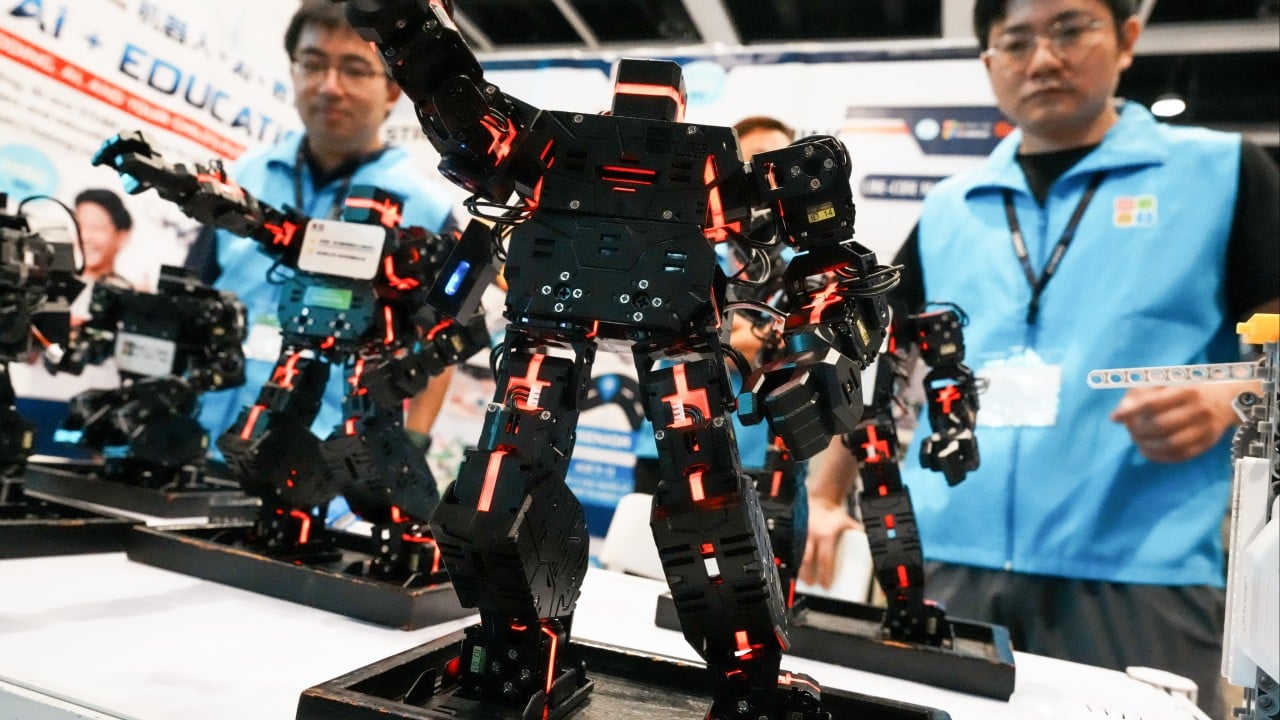
Financial Secretary Paul Chan recently stood before a crowd at a tech festival, reiterating a point that has become the bedrock of Hong Kong's economic policy for 2026: if the city wants to remain relevant, it has to get comfortable with aggressive AI adoption. You’ve heard the buzzwords before, but this isn't just another government PR campaign. It’s a structural pivot aimed at moving the city from a financial hub to a smarter, tech-integrated powerhouse.
For years, Hong Kong played it safe. It relied on its status as a banking gateway. Today, that’s not enough. The global competition is fierce, and the only way to stay in the game is to move fast.
The Reality of AI Plus Strategy
Chan’s "AI+" initiative isn't about making fancy chatbots. It’s about embedding machine intelligence into the actual plumbing of the city's industries. Whether it's healthcare, logistics, or smart manufacturing, the goal is the same—automate the boring, optimize the complex, and cut costs wherever possible.
I’ve seen enough "innovation" initiatives go nowhere. The difference here is the commitment to infrastructure. We’re talking about the Sandy Ridge data facility cluster, which provides a massive amount of physical space for high-end computing. You cannot run a modern, AI-first economy without serious hardware. Policies are fine, but electricity and processing power are what actually move the needle.
Moving Past the Hype
A lot of business leaders I talk to are still stuck in the "what if" phase. They’re worried about data governance or they think it’s too expensive to implement. Honestly, the cost of doing nothing is much higher.
Look at what’s happening in the financial sector. The Hong Kong Monetary Authority is pushing ahead with stablecoin licensing and blockchain-AI integration. If you’re a mid-sized firm in Hong Kong and you’re still relying on manual data entry or legacy software, you’re basically inviting a competitor to eat your lunch.
- Start with low-risk pilots: You don't need a total overhaul on day one. Pick one department, like customer service or inventory management, and introduce agentic AI.
- Invest in training: It’s not just about hiring new talent. Your current team knows your business better than any outside consultant. Teach them how to use these tools to multiply their output.
- Focus on data quality: If your data is a mess, your AI will be a mess. Spend time cleaning your internal systems before you try to plug in a model.
The Leadership Gap
The biggest bottleneck in Hong Kong right now isn’t the technology itself. It’s the leadership gap. While many frontline workers are already using AI daily to scrape through emails or summarize reports, executives are often lagging.
If you are at the helm of a company, your job isn't to become a programmer. Your job is to understand how these tools change your business model. Are you using AI to just do things slightly faster, or are you changing how you create value? That’s the difference between staying ahead and becoming an obsolete footnote.
Taking Action Now
Don't wait for another government committee or a new tech festival to tell you what to do. The roadmap is clear.
- Audit your workflows: Where do your people spend the most time on repetitive, high-volume tasks? That’s your first candidate for automation.
- Engage with the ecosystem: Hong Kong has invested in research clusters and subsidy schemes. Use them. If you’re building something innovative, apply for the available R&D funding.
- Set the culture: If leadership doesn't use AI, nobody else will. Stop treating it as a "tech" project. Treat it as a fundamental operational shift.
The city is moving toward an AI-native future. You can either be a part of that transition or get left behind. The tools are ready. The policy tailwinds are here. It’s on you to execute.