Skipping your smear test is easy to justify. Life gets busy, clinic appointments clash with work hours, and let's be honest, the thought of the traditional clinical exam makes plenty of people want to cancel immediately. Roughly four million women across England are currently overdue for their cervical screening. That is not just a statistic. That is a massive public health vulnerability.
The NHS is changing the playbook. Millions of women who have missed their routine appointments are now getting the option to order free at-home testing kits. If you have avoided the clinic out of embarrassment, anxiety, or pure scheduling chaos, this rollout is designed directly for you.
How the New At-Home HPV Tests Work
The process is remarkably straightforward. Instead of a speculum exam performed by a clinician, eligible women aged 30 to 65 who have missed appointments will receive invitations via the NHS app, text, email, or post.
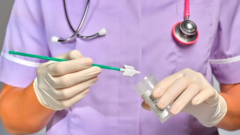
You log into the NHS app or online portal to order your kit. It arrives in a plain envelope. Inside, you will find a simple swab used to collect a vaginal sample yourself in a matter of minutes. You drop it in the post box for free, sending it straight back to NHS laboratories.
The lab tests your sample specifically for high-risk human papillomavirus, known as HPV. This virus causes roughly 99.7% of all cervical cancers.
What Happens After You Send the Sample Back
Most people do not realize that the home kit does not look for cancer cells directly. It looks for the virus that causes them.
If your test comes back clear of high-risk HPV, you breathe a sigh of relief and return to your normal routine for the next few years. You do not need to step foot in a doctor's office.
If high-risk HPV is detected, the narrative changes. You will be asked to attend a standard clinical appointment to get a closer look. Finding the virus early gives doctors the upper hand long before abnormal cell changes have any chance to develop into something dangerous.
Breaking Down the Barriers Keeping People Away from Clinics
Current figures show that only about 68.8% of eligible women in England are up to date with their screenings. That sits well below the national target of 80%. Medical professionals point to several concrete obstacles holding people back.
- Fear of physical discomfort or pain during the procedure.
- Deep-seated anxiety or past medical trauma.
- Logistical hurdles like inflexible work hours or lack of local clinic availability.
- Plain old embarrassment.
Health leaders like Dr Sue Mann, national clinical director for women's health at NHS England, note that offering a private alternative shifts the power back to the patient. You control the environment. You control the timeline.
The Larger Goal of Eliminating Cervical Cancer
This phased rollout is a massive piece of a much larger puzzle. The health service is marching toward an ambitious target: eliminating cervical cancer entirely by the year 2040.
Charities like Cancer Research UK and The Eve Appeal have championed this shift for years, arguing that modern healthcare needs to adapt to people's lives rather than expecting everyone to fit into rigid clinical structures. Self-sampling is already standard practice in other countries, and the data consistently shows it brings hesitant demographics back into the healthcare umbrella.
Keep an eye on your NHS app or text messages over the coming weeks if you are overdue. When your invitation arrives, order the kit, do the quick swab, and mail it back.