Hollywood is shrinking. If you talk to any writer, actor, or crew member right now, they will tell you the same thing: the work has dried up, the checks are smaller, and the greenlights are incredibly rare.
Now, the corporate giants want to make the sandbox even smaller.
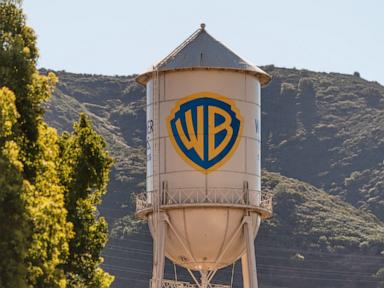
On July 14, 2026, the Writers Guild of America (WGA) threw a massive wrench into the machinery of corporate consolidation. The union, representing thousands of screenwriters across both the East and West Coast branches, filed a federal antitrust lawsuit in San Francisco. Their goal is simple: block Paramount’s proposed $111 billion buyout of Warner Bros. Discovery (WBD).
This is not just another boring corporate legal dispute. It is a desperate, necessary stand for the economic survival of the people who actually write the stories we watch. If this merger goes through, we are looking at an unprecedented consolidation of creative power that will reshape American entertainment forever.
Why the WGA Is Suing to Stop the Deal
The WGA’s legal complaint does not pull any punches. Filed in the U.S. District Court for the Northern District of California, the lawsuit argues that merging Paramount and Warner Bros. Discovery violates federal antitrust laws.
The core of their argument rests on a concept that economists call "monopsony." While a monopoly means there is only one seller of a product, a monopsony means there is only one buyer. In this case, the combined Paramount-Warner entity would become the single largest employer of film and television writers in the United States.
When one company controls that much of the market, writers lose all their leverage.
The WGA’s complaint identifies three specific markets where this merger would cause immediate, devastating harm:
- Episodic Television and Streaming Series: With fewer platforms competing for pitches, the combined studio can easily drive down per-episode rates and shorten room runs.
- Overall and First-Look Deals: The prestigious development deals that keep top-tier talent tied to a studio will disappear or pay pennies on the dollar because writers will have nowhere else to take their ideas.
- Theatrical Screenwriting: Bringing together two of the remaining "Big Five" legacy film studios means fewer theatrical greenlights and lower upfront fees for feature screenplays.
WGA East President Tom Fontana summed up the threat clearly. He pointed out that this mega-studio would have "tremendous power to suppress our wages, eliminate opportunities for emerging writers, cut jobs across the industry, and produce less programming".
Basically, if you think there is nothing good to watch on TV right now, just wait until one board of directors controls both HBO and CBS, Max and Paramount+, Warner Bros. Pictures and Paramount Pictures.
The Monopsony Trap and the Book Publishing Precedent
This lawsuit is not a shot in the dark. The WGA’s legal team, led by Shinder Cantor Lerner LLP, is leaning heavily on a major legal precedent from recent history: the blocked merger of Penguin Random House and Simon & Schuster in 2022.
In that case, the U.S. Department of Justice successfully argued that letting the world’s largest book publisher buy its rival would create a monopsony. The court agreed that the combined giant would control too much of the market for top-selling books, which would inevitably lower the advances paid to authors.
The WGA is applying that exact logic to Hollywood.
When Amazon bought MGM or Disney bought Fox, the industry grumbled, but those deals slipped through. This time, the scale is completely different. We are talking about merging two massive, distinct legacy operations that have defined American cinema for a century.
If a court agreed that book authors deserved protection from a publishing mega-merger, it is hard to argue that screenwriters do not deserve the same protection from a studio mega-merger. The economic dynamics are identical. Fewer buyers equals lower pay. It is basic math.
The Twelve States Leading the Charge
The writers are not fighting this battle alone. Just twenty-four hours before the WGA filed its paperwork, a powerful coalition of 12 state attorneys general, led by California’s Rob Bonta, launched their own massive antitrust lawsuit to block the deal.
The states are pulling out all the stops. Late on Monday, July 13, the coalition filed an emergency motion seeking a temporary restraining order and a preliminary injunction. They wanted to freeze the transaction immediately.
Why the sudden rush?
Paramount and Warner Bros. Discovery have been racing to close this deal as early as July 22, 2026. The states asked the companies to pause voluntarily so the courts could review the antitrust concerns. The corporate executives flatly refused. That refusal forced the states to go to court to demand an emergency halt.
The legal calendar is now incredibly tight:
- Friday, July 17, 2026: A federal judge will hear arguments on the states' motion for a temporary restraining order.
- Wednesday, July 22, 2026: The date the companies hope to close the merger, which is also when the European Commission is expected to announce its own regulatory decision on the deal.
While the Trump administration’s regulators in the U.S. have given the deal a nod, along with officials in China, Canada, and Australia, the massive pushback from state attorneys general and the UK's competition regulators has turned this into a global battle.
Is Skydance Selling Snake Oil?
Naturally, the executives pushing this merger claim they are actually the good guys.
Paramount, which is now steered by David Ellison’s Skydance, released a defensive statement arguing that a combined company is exactly what Hollywood needs to survive. They claim the merger will give them the "scale and resources" to reverse the industry's painful post-strike decline.
They are promising a lot of shiny things:
- A commitment to release at least 30 movies a year in theaters.
- An exclusive 45-day theatrical window for those films.
- An expanded slate of television series and movie greenlights.
- Maintaining two distinct, independent film studios to keep commissioning projects.
"A stronger Hollywood only means something if it's stronger for the writers who power it," Paramount said in its official statement.
It sounds wonderful on paper. But anyone who has worked in entertainment for more than five minutes knows that corporate promises made during a merger review are worth about as much as a screenwriting credit on a project stuck in development hell.
Once the deal closes and the crushing reality of that $111 billion debt load sets in, those promises of "more development slates" usually evaporate. They will be replaced by the inevitable "efficiencies" and "cost-saving measures" that translate directly to layoffs and canceled shows. We saw it when Disney bought Fox. We saw it when AT&T bought Time Warner. There is zero reason to believe this time will be any different.
Real Tactics for Entertainment Professionals Facing the Squeeze
If you are a writer, director, producer, or crew member, you cannot afford to just sit back and watch this court battle play out like a spectator sport. The consolidation trend is real, and the next few weeks will decide the rules of the game for the next decade.
Here is what you should be doing right now to protect your career:
Diversify Your Creative Outlets
Do not rely entirely on the traditional studio system. If you are a screenwriter, start looking at independent film financing, international co-productions, or self-publishing. Cultivating direct-to-consumer platforms (like serialized newsletters, independent podcasts, or self-funded short films) gives you leverage when the major buyers shrink to a tiny handful.
Double Down on Union Solidarity
The WGA is fighting this because collective bargaining is the only real shield workers have against corporate monopsonies. Show up to meetings, stay informed, and support the union's legal fund. When the studios see a unified workforce, they are much more hesitant to aggressively slash wages and benefits.
Understand the International Market
While Hollywood is consolidating, international production is expanding. Look for opportunities in the UK, Europe, and Canada, where local content quotas and government subsidies keep the production ecosystem slightly more diverse and less dependent on a single American boardroom.
The hearing on Friday, July 17, is going to be a massive indicator of where this industry is headed. If the judge grants the temporary restraining order, it buys the creative community time. If the judge lets the deal proceed toward the July 22 closing date, the era of the mega-studio is officially here. Prepare accordingly.