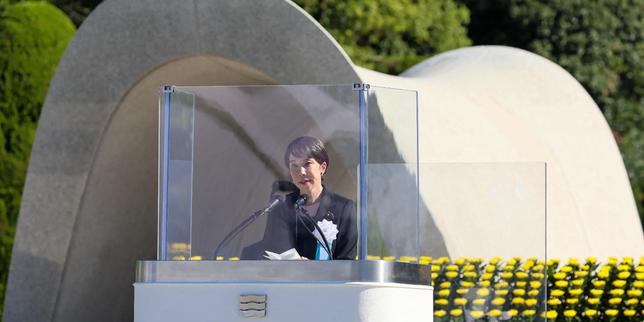
Eighty-one years after a flash of blinding light tore through the morning sky above Hiroshima, the annual memorial has turned into something far more contentious than a quiet day of mourning.
You would think the focus would remain strictly on remembering the dead and honoring the survivors. Instead, this year's gathering is dominated by an uncomfortable political reality. Japan is actively wrestling with whether it should rethink its lifelong stance against nuclear weapons. If you have been paying attention to Tokyo's recent defense debates, you know this shift didn't happen overnight. But seeing it collide with the anniversary of the world's first atomic bombing makes the stakes painfully obvious.
The Defense Overhaul Shaking Up Postwar Taboos
Japan is rewriting its core defense documents before the end of the year. That sounds like bureaucratic jargon, but it carries massive geopolitical weight.
For decades, the nation has stood firmly behind its Three Non-Nuclear Principles. These rules forbid the country from possessing, producing, or allowing nuclear weapons onto its territory. It is a foundational pacifist doctrine born straight out of the ashes of 1945.
Now, senior government officials are floating remarks that chip away at that historic wall. They are testing the waters. They want to see how the public reacts to the idea of "extended deterrence" and tighter security cooperation that dances right up to the edge of the nuclear line.
Critics argue that Tokyo is slowly normalizing what used to be unthinkable. When politicians start openly debating nuclear strategy during a week dedicated to peace, the contradiction is glaring.
Why Public Opinion Matters Right Now
Japan occupies a unique psychological space in global politics. It remains the only country to suffer actual wartime atomic attacks, enduring bombings in both Hiroshima and Nagasaki. That identity has anchored its fierce anti-nuclear pacifism for generations.
Yet, the security landscape in East Asia has deteriorated rapidly. Regional tensions involving nuclear-armed neighbors have politicians scrambling. They are asking hard questions about whether traditional pacifism leaves the country vulnerable in a worst-case scenario.
This creates a sharp divide on the streets of Hiroshima. Citizens and anti-nuclear activists want the government to double down on disarmament. They see any softening of the Three Non-Nuclear Principles as a betrayal of history. On the flip side, defense hawks view these discussions as a matter of survival in a hostile neighborhood.
What Comes Next for Tokyo's Security Policy
The upcoming defense revisions will force a definitive choice. Tokyo can't straddle the fence forever.
If the government waters down its anti-nuclear posture, it risks alienating domestic pacifists and infuriating regional neighbors who remember Japan's imperial past. If it stays entirely rigid, leaders fear they won't have the defensive muscle required to deter modern threats.
Watch what happens in the Diet over the coming months. The debate moving past closed doors and into the open air of Hiroshima's memorial day proves that Japan's nuclear taboo is cracking.
Read the text of the upcoming defense policy revisions closely when they drop. That is where you will see whether Tokyo officially pivots away from its past, or reaffirms its commitment to a nuclear-free future.