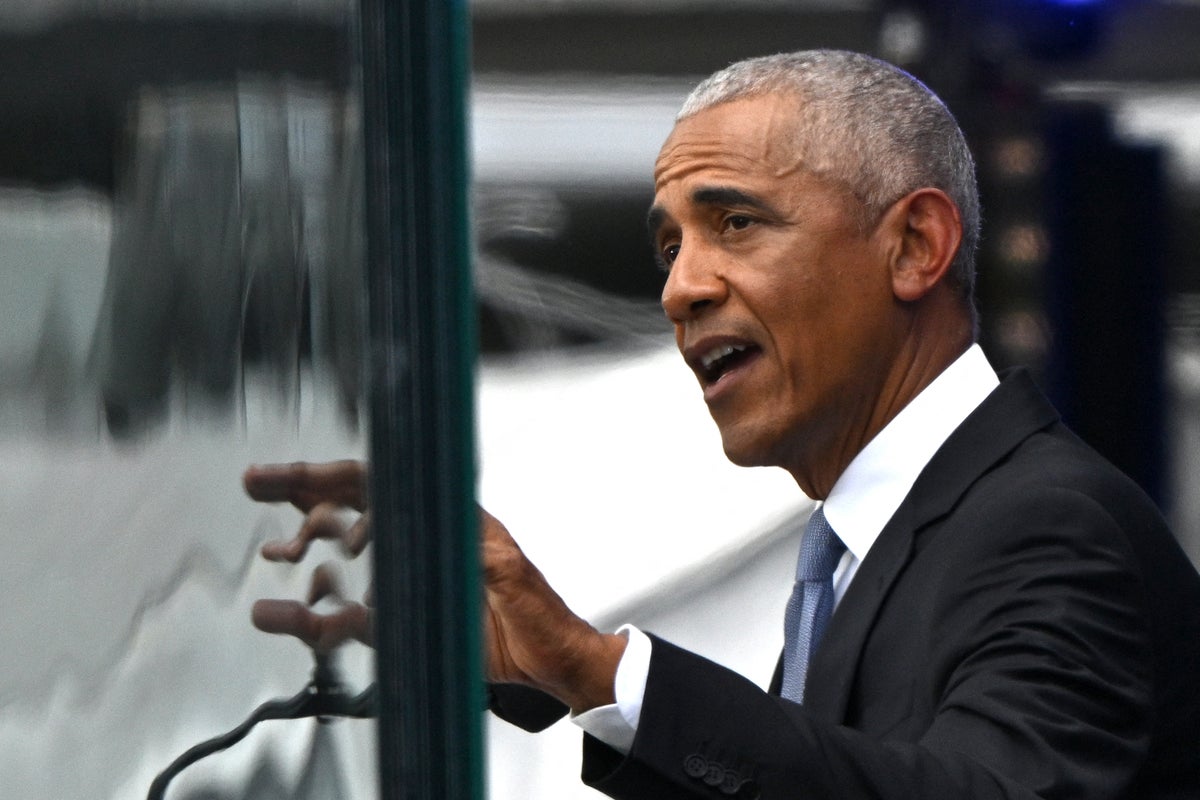
Political campaigns always reveal a candidate's true colors, but sometimes they expose a bizarre disconnect between a politician's public attacks and their private life. That is exactly what happened when Barack Obama criticized JD Vance for immigration speeches that systematically ignore his own family history. Speaking to voters, the former president highlighted a reality that the Ohio senator prefers to leave out of his standard campaign script. Vance has built a political brand around a dark, apocalyptic vision of immigration, yet his own wife, Usha Vance, is the daughter of Indian immigrants who built a classic American success story.
It is a glaring disconnect. It makes you wonder how someone reconciles those two realities. Obama did not mince words when he pointed out this selective memory on the campaign trail. He forced a conversation about identity, opportunism, and the personal compromises people make for political power.
The moment Obama criticized JD Vance for immigration double standards
During a high-profile campaign rally, Obama laid bare the hypocrisy that often defines modern political theater. He reminded the audience that the American story is inherently messy and interconnected. When political figures weaponize fear against newcomers, they usually rely on a neat division between "us" and "them."
Obama blew up that division. He specifically called out how Vance speaks about immigrant populations as if they are a monolithic threat to the American way of life. The former president noted the irony of a man running on an aggressive anti-immigrant platform while going home every night to a family built on immigration.
Usha Vance's parents emigrated from India. They are highly educated professionals who contributed significantly to their communities. They did exactly what generations of immigrants have done before them. By erasing that narrative from his public persona, Vance shows a willingness to sacrifice his personal reality for political currency. It is a calculated move designed to please a base that demands hardline rhetoric, even if that rhetoric directly contradicts the candidate's own life.
The strategic erasure of Usha Vance's family story
Look closely at how Vance structures his arguments. He frequently talks about his roots in Appalachia, his grandmother, and the struggles of the white working class in Ohio. He wrote an entire book about it. That story is real, and it resonated with millions of readers.
But there is another chapter he deliberately keeps quiet.
His wife's parents came to America with very little and built a life through academic and professional achievement. Usha herself is a graduate of Yale Law School and clerked for Supreme Court justices. She represents the pinnacle of immigrant success in America. Yet, when Vance stands at a podium, he paints a picture of immigration that is entirely criminal, destabilizing, and destructive.
Why the silence? Because acknowledging the nuance ruins the narrative. If you admit that immigration can bring brilliant, hardworking people who make the country stronger, you can no longer run a campaign based on pure fear. You have to admit that the issue is complicated. Vance chose the easy way out. He opted for a black-and-white worldview that leaves his own wife's family out in the cold.
How political ambition rewrites personal history
This is not just about one couple. It is about a broader trend in American politics where ambition overrides authenticity. People change their views all the time, but Vance's transformation has been particularly stark. He went from being a self-described "Never Trump" conservative who worried about the demonization of minorities to a politician who leads the charge against them.
Think about the rhetoric surrounding towns like Springfield, Ohio. Vance championed wild, unverified rumors about Haitian immigrants, causing real-world chaos for schools and local businesses in his own home state. He defended those claims by saying he needed to "create stories" so that the media would pay attention to the suffering of American citizens.
When you look at that behavior alongside Obama's critique, a pattern emerges. Vance views immigration purely as a tactical tool. When it helps his career to marry into an immigrant family and benefit from that intellectual partnership, he does it. When it helps his career to demonize legal immigrants in Ohio to score points on cable news, he does that too. It is cynical, and it shows a profound lack of core conviction.
The double standard of legal versus illegal definitions
Defenders of the senator will immediately argue that there is a massive difference between legal and illegal immigration. They will say that Usha's parents came here through the proper channels, while the people Vance attacks did not.
That defense falls apart under scrutiny.
The Haitian immigrants in Springfield were there legally under Temporary Protected Status. They had federal authorization to live and work in Ohio. That did not stop Vance from targeting them. His speeches do not carefully distinguish between visa categories or immigration statuses. Instead, they rely on broad, sweeping generalizations designed to make voters feel under siege.
When Obama called out this behavior, he was pointing to the danger of this rhetoric. When politicians blur the lines between legal residents and criminal elements, they endanger everyone who looks or sounds different. They create an environment where the achievements of families like the Vances are treated as the exception, while the vast majority of immigrants are treated as a threat.
What this means for the future of political rhetoric
The critique from Obama marks a shift in how Democrats are handling the immigration debate. For a long time, the party stayed on the defensive, trying to explain policy nuances while Republicans used simple, emotional appeals. By turning the focus onto Vance's personal life, Obama highlighted the fundamental lack of sincerity in the MAGA immigration platform.
It forces voters to look at the human cost of political posturing. If a leader cannot even show loyalty to the spirit of his own family's journey, how can voters trust him to look out for theirs?
This debate is not going away. As long as politicians use immigration as a wedge issue, the contradictions in their personal lives will remain fair game. Vance wanted to have it both ways. He wanted the prestige of an elite, multicultural family life in private, and the political benefits of a nationalist populist in public. Obama simply pointed out that you cannot hold both of those positions without losing your credibility.
Step away from the political theater and look at the facts
If you want to understand the true impact of this debate, stop listening to campaign speeches and look at the actual data surrounding immigration and American communities.
- Check the economic numbers. Study after study from organizations like the Bush Institute and the Brookings Institution shows that immigrants, both legal and undocumented, contribute billions in taxes and fill critical labor shortages.
- Look at crime statistics. Research consistently demonstrates that immigrant populations have lower crime rates than native-born Americans.
- Read local journalism. Avoid the national cable news echo chambers and read reports from local newspapers in towns experiencing demographic shifts to see how communities actually adapt.
The next time you hear a politician deliver a fiery speech about the dangers of immigration, look at their background. Look at who funds them, who they marry, and how they live their private lives. You will often find that the crisis they sell on television is very different from the reality they enjoy at home.