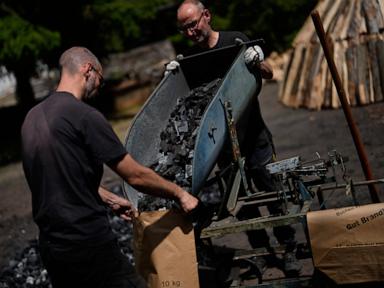
Smoke still rises above the German woods. It is heavy, blue, and smells like history. Most people think traditional charcoal burning died out with the industrial revolution. They assume every bag of briquettes at the grocery store comes from massive, automated factories overseas. But deep inside specific forests in Germany, two brothers keep the old craft alive. They build smoke-shrouded mounds of wood just like their ancestors did centuries ago.
Charcoal burning is not a stunt. It is brutal, precise manual labor that requires reading wood smoke like an open book. If you misjudge the burn, the entire stack turns to useless ash or stays raw timber.
The Reality of Traditional Charcoal Burning
You cannot learn this craft from a manual. It takes decades of soot under your fingernails. The two brothers operating in the German woodland spend weeks stacking hardwood logs into massive, dome-shaped mounds. They cover these wooden pyramids with layers of earth and leaves. Then, they ignite the core.
The process demands constant supervision. Day and night, the brothers monitor the color and density of the smoke escaping tiny vents in the earth mound. A shift in the wind or a sudden rain shower changes everything. If a vent opens too much, oxygen rushes in and triggers a runaway fire. If it chokes too much, the process stalls.
Here is what most modern consumers miss. Industrial charcoal relies on chemical accelerants and quick-burn additives. Traditional wood charcoal requires only wood, earth, and immense patience. The resulting fuel burns hotter, cleaner, and leaves behind a pure wood flavor that grill masters chase relentlessly.
Why This Ancient Craft Survives
Efficiency dictates modern manufacturing. Yet, this ancient method persists. Why? Because demand for authentic, high-grade fuel remains steady among artisanal metalworkers, blacksmiths, and culinary purists.
Mass production cuts corners. Traditional burning honors the wood. Oak and beech logs transform slowly over several days inside an oxygen-starved chamber. The moisture cooks out. The resins break down. What remains is pure carbon structure ready to handle extreme heat.
The brothers do not view themselves as museum curators. They are working producers filling a distinct niche market. Their survival depends on quality, not volume. They know that once traditional skills vanish, they are nearly impossible to resurrect. Knowledge lives in people, not textbooks.
Breaking Down the Process
Let us look at how the physical work actually unfolds.
- Wood selection determines quality. Hardwoods like beech and oak form the backbone of the operation because they yield dense, long-burning fuel.
- Stacking requires geometric precision. Logs lean tightly against a central chimney stake to ensure uniform airflow once the burn begins.
- Covering the mound seals the environment. Dirt and fine ash keep oxygen levels low enough to carbonize the wood instead of burning it to ash.
- Monitoring means sleepless shifts. The brothers watch the smoke color shift from white steam to pale blue, signaling different stages of internal transformation.
What You Can Learn From Traditional Charcoal Makers
You do not need to build a smoking earth mound in your backyard to appreciate what these brothers do. The core takeaway centers on respect for raw materials. We live in a disposable culture where things break and we throw them away instantly. Traditional craftsmanship forces a different mindset. It demands that you slow down, understand the variables, and invest physical effort into a finished product that actually lasts.
Next time you fire up a grill, skip the chemical-soaked quick-light bags. Look for real lump hardwood sourced from sustainable forestry operations. You support a dying lineage of practical craftspeople who refuse to let the smoke die out.