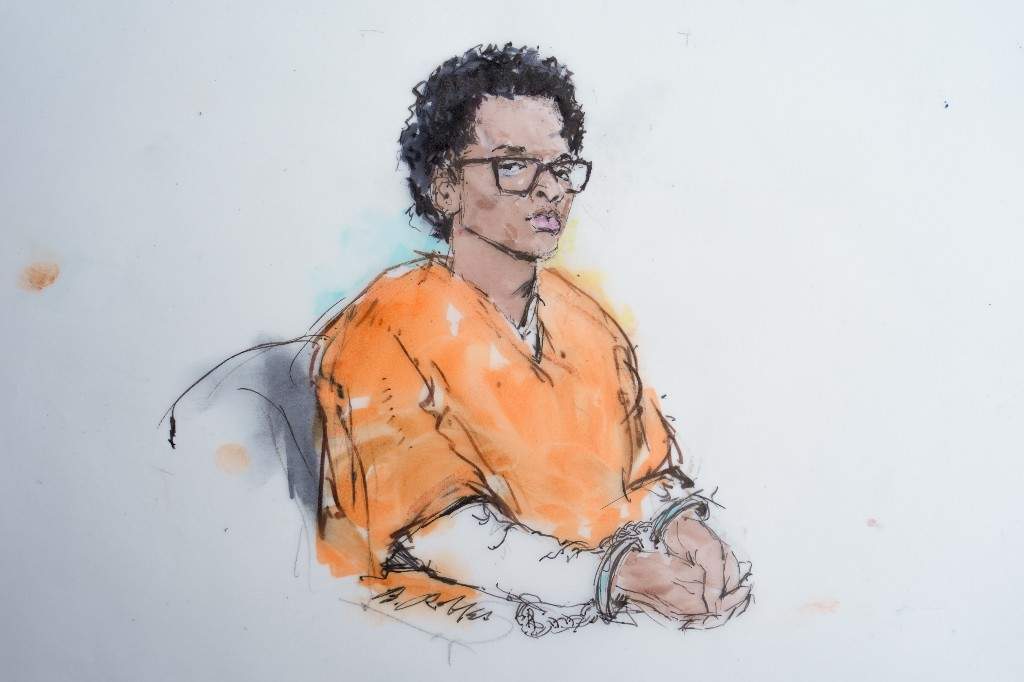
The courtroom went quiet when the photos hit the screen.
A large black rubber floor mat in a Hollywood Hills garage didn't look like much under standard lighting. But when LAPD criminalist Lauren Wallace sprayed it with chemical reagents during her forensic sweep, the entire surface glowed a luminous, electric blue.
That blue glow meant one thing: chemical reaction with blood traces that someone had tried hard to scrub away.
For two days in late July 2026, Los Angeles prosecutors laid out physical and forensic details against 21-year-old David Anthony Burke, known to millions of streaming fans as indie-pop artist D4vd. Burke sits in an orange jumpsuit, facing charges of first-degree murder, child sexual abuse, and mutilation of human remains in the death of 14-year-old Celeste Rivas Hernandez.
If you've followed pop culture headlines, you know the basic outline. A rising star with a major label deal, a missing teenager, and a gruesome discovery inside a towed electric vehicle. But listening to actual expert testimony in court strips away the internet noise. What's left is a cold, methodical chain of evidence that makes the defense's job nearly impossible.
The Blue Glow inside the Hollywood Hills Garage
LAPD criminalist Lauren Wallace took the witness stand to walk through what her team found at Burke's former rented property. The scene in the garage wasn't just messy—it showed signs of organized cleanup.
Investigators found black rubber mats covering the concrete floor. When Wallace tested those mats, she found straight, linear slash marks cutting through the material. They matched the kind of damage a sharp blade or saw edge leaves behind.
She didn't stop at the mats. Wallace applied chemical tests across the floor and nearby gear. The bright blue luminescence lit up garbage bags, cleaning wipes, a rowing machine, and a green tarp. Nearby lay a crumpled blue inflatable pool. It was slashed in multiple places, but it still carried a strong scent of fresh laundry detergent—a clear sign someone used soap to hide whatever happened inside it.
Earlier court filings from the District Attorney's office stated that DNA extracted from blood on those garage floor mats matched Celeste Rivas Hernandez.
The defense team, led by attorney Blair Berk, tried to poke holes in this testimony immediately. Berk pressed Wallace on chemical limitations, reminding the court that initial field tests are presumptive. They prove the presence of blood-like reactions, not individual identity by themselves.
That's standard defense protocol. Attack the test methods, raise doubts about contamination, and question whether gloves were worn properly by every technician walking through the door. But presumptive field hits combined with matched DNA samples in court filings create a tight wall of evidence. It isn't just one spot on a floor. It's a pattern spread across tools, bags, and workout equipment.
Eleven Air Fresheners and a Towed Tesla
If the garage scene established where the prosecution says the murder happened, the 2023 Tesla Model X showed where the body spent the summer.
LAPD criminalist Chelsea Murillo testified about processing the vehicle in September 2025 after it sat in a Hollywood impound lot. Tow yard workers had called authorities after noticing a foul smell drifting from the vehicle.
When Murillo opened the doors, she found at least 11 different air fresheners shoved into every corner of the cabin. Febreze pods were crammed into the center console and tucked into rear seat pockets.
It didn't work. Murillo testified that the stench of human decomposition was overpowering, even through the synthetic perfume.
Inside the front trunk—the "frunk" space unique to electric cars—investigators found a black cadaver bag containing a human head and torso. Nearby plastic garbage bags held severed limbs. Flies and maggot activity had taken over the compartment.
Murillo found presumptive blood stains in the Tesla's third row. During cross-examination, Berk aggressively questioned why Murillo didn't swab the exterior door handles for third-party DNA.
"It didn't seem necessary," Murillo replied directly from the stand.
To a casual observer, that answer sounds like a misstep. Defense lawyers love answers like that because they can argue lazy police work. But prosecutors don't need fingerprints on an exterior door handle when the car is registered to the suspect, digital records put him behind the wheel, and the victim's remains are stuffed inside the vehicle's front storage.
The Paper Trail and Digital Footprints
Physical evidence gets the headlines, but digital receipts tell the story of premeditation.
LAPD Homicide Detective Joshua Byers testified that digital subpoena records showed Burke's account purchasing specific items online right around the time Rivas Hernandez went dark on April 23, 2025.
What did he buy?
- Three chainsaws
- A commercial-grade body bag
- A blue inflatable pool
- A heavy-duty shovel
When police raided Burke's Hollywood Hills home months later, two of those three chainsaws were sitting in the garage. Forensic tests on those two power tools came back negative for blood. That gave the defense a moment to breathe. But the third chainsaw remains missing.
The prosecution's theory is straightforward. They argue Burke placed the victim in the inflatable pool inside the garage to contain fluid, used cutting tools to dismember her, packed her into the body bag he bought online, and loaded her into his Tesla.
Then he went on tour.
Records show Burke drove the Tesla until late July 2025, parked it near his house, and left town for concert dates. The car sat on a public street for weeks until city parking enforcement finally towed it in September.
There is also the matter of the victim's U.S. passport. California Highway Patrol Officer Sean Buenrostro testified that a road worker found the document discarded off a highway near Santa Barbara in January 2026. Cell tower data placed Burke in that exact rural location twice: once on the night Rivas Hernandez died, and again six weeks later.
You don't accidentally drive two hours out of Los Angeles to drop a missing girl's passport on a highway shoulder.
Financial Motivation and a Career on the Line
Motive matters to a jury, even if judges only look for probable cause during preliminary hearings.
Why would a 20-year-old musician with millions of Spotify streams and a major record contract risk everything?
An executive from Interscope Records took the stand on Wednesday to detail Burke's lucrative recording contract. Burke wasn't just an indie sensation uploading bedroom pop. He had multimillion-dollar brand deals and massive commercial upside ahead of his debut album release in April 2025.
According to court documents filed by prosecutors, Burke had been in an illegal sexual relationship with Rivas Hernandez since she was 11 or 12 years old. Text messages recovered by investigators included explicit references to sex, pregnancy scares, and Plan B.
The night before her cellular activity stopped forever, Rivas Hernandez got into a fierce argument with Burke. She had grown jealous of his relationships with other women and threatened to go public with details about their illegal relationship.
In the music industry, exposure on child abuse charges destroys a career overnight. Contracts get cancelled, catalog plays vanish, and income stops instantly. Prosecutors argue Burke ordered an Uber to bring her to his home on April 23, 2025, and stabbed her to death to keep her quiet.
The district attorney added special circumstance allegations: murder for financial gain, lying in wait, and killing a witness. Those additions make Burke eligible for the death penalty or life in prison without parole if convicted.
What the Defense Has to Work With
Blair Berk isn't a novice. She is one of the most experienced criminal defense lawyers in Los Angeles, and her strategy during this preliminary hearing was clear.
She isn't offering an alternative suspect yet. Instead, she is laying groundwork for trial by highlighting every procedural flaw in the LAPD investigation.
Berk hammered on several key points:
- The two chainsaws recovered in the garage had zero blood evidence on them.
- Chemical floor sprays yield presumptive results that require rigorous lab confirmation.
- Forensic technicians didn't swab external areas of the Tesla, leaving open questions about who else touched the vehicle.
- Body camera footage from February 2024 showed deputies visiting Burke's house after Rivas Hernandez was reported missing, where Burke was polite and cooperative.
In that 2024 video, Burke told deputies the girl had lied about her age and claimed she was 18. The deputies joked around with him and left without searching the property thoroughly.
Berk wants a future jury to believe the LAPD rushed to judgment once a celebrity name was attached to a grim discovery. She wants to create reasonable doubt by showing that officers cut corners because they thought they already had their guy.
It's a standard defense playbook when physical evidence is heavy. When you can't dispute that a body was in your client's trunk, you attack the chain of custody and force the state to prove every single link beyond a shadow of a doubt.
What Comes Next as the Hearing Ends
A preliminary hearing isn't a full trial. The judge doesn't decide guilt or innocence. The sole purpose is determining whether prosecutors have enough probable cause to hold the defendant for trial.
Los Angeles County District Attorney Nathan Hochman stated publicly that his team didn't even need to present all their evidence during this multi-day hearing. They only needed to present enough to cross the legal threshold.
With matched DNA in court filings, luminol reactions covering garage equipment, digital purchase logs for dismemberment tools, and a body found inside a car registered to the suspect, the judge will almost certainly bind David Burke over for trial.
For the public, this case serves as a stark reminder of how fast digital and forensic breadcrumbs come together in a modern homicide investigation. Between cell tower logs, credit card statements, and chemical sprays, hiding a crime in 2026 leaves a trail that pure luck can't wash away.
If you are tracking this trial, keep your eyes on the upcoming pre-trial motions. The defense will try to suppress the Tesla search and challenge the cell tower data. The DA's office will decide whether to formally seek capital punishment. Official court transcripts and evidence filings through the Los Angeles County Superior Court portal will be the primary source for real-time updates as formal trial dates are scheduled.