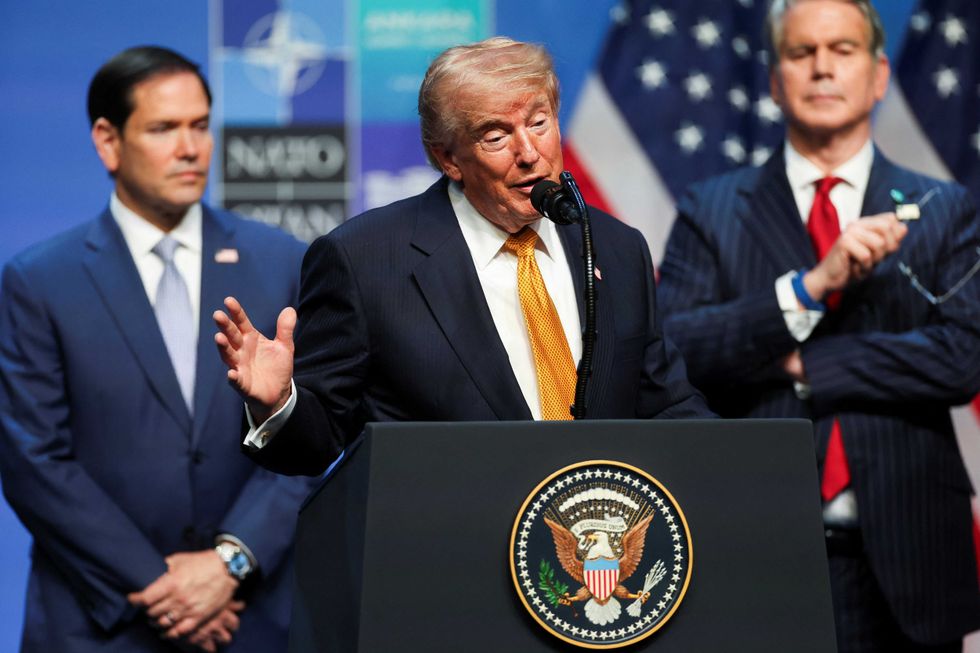
World leaders aren't shivering in their boots anymore when Donald Trump logs onto social media or walks up to a press podium. The standard narrative is that his unpredictability keeps adversaries off-balance and forces allies into compliance. But behind closed doors at recent international summits, the reality looks completely different. National security officials and seasoned diplomats are quietly whispering a much more damaging truth: the fear factor is gone.
The shock value has worn off, and Washington's global leverage is paying the price. You might also find this related story interesting: Why Iran Is Multi-targeting The Gulf And Jordan Right Now.
The Shrinking Power of the Unpredictability Strategy
For years, the core of Trump’s foreign policy playbook was calculated chaos. The idea was simple: if your opponents don't know what you'll do next, they'll tread lightly. It worked as a political branding tool, but it's hitting a wall of diminishing returns on the global stage.
Take the recent NATO summit in Ankara. While the cameras caught the usual tense bilateral meetings, the underlying friction wasn't about awe; it was about exhaustion. Trump used his time to criticize European allies over defense spending and bizarrely tied future U.S. troop levels in Europe to how allies handled his long-running fixation with Greenland and the fallout of the Iran conflict. As extensively documented in latest articles by Reuters, the implications are worth noting.
Instead of panic, the response from European capitals was telling. Spain’s prime minister’s office dismissed hostile comments about cutting trade ties as "business as usual." When a superpower's economic and military threats are treated like standard bureaucratic noise, the leverage disappears.
Cracks in Defense Deterrence
The strategic cost of this erosion is playing out right now in the Middle East. After Iranian forces allegedly targeted commercial vessels in the Strait of Hormuz, Trump ordered retaliatory military strikes hitting dozens of targets. He declared the 60-day interim truce deal "over," calling negotiators "scum" and "sick people."
But look at how Tehran responded. Instead of backing down under the weight of American military dominance, Iran immediately retaliated, launching combat drones at U.S. positions at Sheikh Isa Air Base in Bahrain and targets in Kuwait.
"As far as I'm concerned, it's just a waste of time dealing with them," Trump told reporters, signaling a complete abandonment of the diplomatic track.
When a regional adversary openly matches American strikes with its own drone attacks on U.S. installations, the traditional fear of overwhelming American retaliation isn't working. Advers adversaries are calling the bluff because they've watched the cycle repeat too many times.
Europe Prepares to Walk Alone
The biggest shift isn't how enemies see Washington, but how oldest allies do. European leaders have stopped trying to manage or appease the White House's shifting moods. German publications like Der Spiegel are openly warning that relying on the U.S. for security guarantees is a mistake, arguing that the continent must urgently build its own defense independent of Washington.
The ongoing Pentagon posture review, which includes canceling future deployments of armored brigade combat teams to Europe, has forced a hard realization. The U.S. still maintains roughly 80,000 troops on the continent, but European diplomats are already operating under the assumption that the American nuclear umbrella is no longer a permanent guarantee.
Instead of waiting for the next policy shift, Europe is accelerating its own defense integration. They are purchasing weapons independently and cementing ties with battle-tested militaries like Ukraine’s. They aren't trying to outlast a single administration; they're moving on.
What This Means for Global Security
When regional powers and historic allies stop taking Washington's threats at face value, the world gets more unstable. Unpredictability only works when people believe you have a clear line you won't let them cross. Without that credibility, every diplomatic dispute risks spinning out of control because nobody knows where the actual boundaries lie.
If you are tracking international relations or defense policy, stop focusing on the escalatory language or the press room performance. Watch the concrete policy moves. Watch how middle powers build alliances that intentionally bypass Washington. That's where the real shift is happening.
Your next step to understand this changing landscape isn't reading more opinion pieces. Look closely at the independent defense spending bills passing through European parliaments right now and the shifting naval patrol patterns in the Persian Gulf. Those budget lines and troop deployments tell the true story of a world that's learning to operate without fearing the White House.