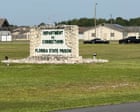
Florida has officially moved into a class of its own regarding capital punishment. On August 18, 2026, the state carried out the execution of 61-year-old William Frances Silvia, marking the 13th time an inmate has been put to death within its borders this year. This isn't just a statistical anomaly. It represents a clear, aggressive shift in how the state handles death row sentencing and finality.
When you look at the raw numbers, Florida accounts for more than half of all executions in the United States so far in 2026. This isn't happening by accident. It's a calculated acceleration. Meanwhile, you can read similar stories here: The Truth About The Lindsay Clancy Case Everyone Is Ignoring.
The reality of the current system
You might wonder how a state reaches this pace. It’s not just about the number of inmates on death row; it’s about the legal mechanism. Silvia, who was convicted for the 2006 murder of his estranged wife and the attack on his mother-in-law, had been through the system for nearly two decades. His original 2008 sentence was vacated, but a second sentencing phase in 2018 returned the same result.
The core issue that legal observers point to involves the efficiency of the capital defense system. Silvia's team argued that the Capital Collateral Regional Counsel was stretched too thin to provide the necessary support. The Florida Supreme Court disagreed. When the highest court in the state closes these procedural gaps, the path to the execution chamber becomes significantly shorter. To see the bigger picture, we recommend the detailed article by USA Today.
Why the numbers keep climbing
If you’re watching the trend, you’ve noticed the increase in frequency. Florida isn't waiting around. In July 2026, the state took the unprecedented step of executing two men on the same day. That hadn't happened in almost a decade in any American state.
This environment is defined by:
- A clear political mandate from the governor's office to enforce existing death penalty statutes.
- A judicial climate that favors finality over lengthy, repetitive appeals.
- A logistical readiness to carry out these sentences on a tighter schedule.
With two more executions already on the calendar for September—Harold Gene Lucas and Daniel Owen Conahan Jr.—the state shows no sign of slowing down. This isn't a temporary spike. It is the new normal.
The legal and ethical friction
The debate around this isn't going anywhere. For families of victims, the speed of these executions is often framed as justice finally served after years of legal limbo. For opponents, the primary argument remains focused on the inherent risks of a system that cannot guarantee perfection.
The "busiest death chamber" title carries real weight. It means more strain on the state’s legal apparatus, more protests outside the prison at Starke, and more national scrutiny.
If you want to understand the direction of American capital punishment, look at the Florida model. It’s not relying on new, experimental laws. It’s simply removing the friction from the existing ones.
What to expect next
Expect the state to maintain this tempo. The scheduling of consecutive executions suggests a highly organized, administrative approach. The governor’s office isn't just signing warrants; they are creating a consistent timeline.
If you follow these cases, watch the filings coming out of the federal courts. While the US Supreme Court consistently denies stays in these cases, the legal arguments themselves reveal how defense teams are trying to navigate a state that is no longer interested in delay.
There's no indication that the pace will slacken before the end of the year. Florida has committed to this path, and the logistics of the system are now running on autopilot. Justice, in this context, has become a matter of rigorous, unforgiving scheduling.