Andy Burnham is heading back to Westminster, and his sudden departure leaves a gigantic, three-billion-pound power vacuum in the North West. Following Keir Starmer's resignation, Burnham won a parliamentary by-election in Makerfield and is officially running to become the next Prime Minister. That means Greater Manchester needs a new metro mayor, and fast.
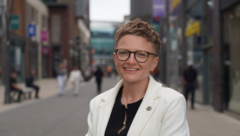
Labour didn't waste any time. The party just announced that Councillor Bev Craig, the leader of Manchester City Council, will stand as their official candidate for the upcoming mayoral by-election on July 30.
Choosing Craig makes total sense on paper. She knows the regional machinery inside out, she serves as the deputy mayor for the economy, and she's highly respected by local business leaders. But stepping out from Burnham's massive shadow into a high-stakes, flash election isn't going to be a walk in the park.
The shift from high profile to quiet competence
Let's be completely honest about the situation. Andy Burnham wasn't just a mayor. He was dubbed the "King of the North," a former Westminster cabinet minister with national name recognition who could go toe-to-toe with Downing Street on live television. When he spoke, the entire country listened.
Bev Craig is a different kind of politician. She made history in 2021 when she became the first female leader of Manchester City Council, taking over from Sir Richard Leese, who held the job for a quarter of a century. Since then, she's quietly and effectively managed the growth of the city centre, led international trade delegations, and focused heavily on building affordable housing.
But local government competence doesn't always translate into automatic election wins across a massive, diverse region of 2.9 million people. Greater Manchester isn't just the trendy, booming streets of the city centre or the leafy suburbs of south Manchester. It includes ten distinct boroughs, from Wigan to Oldham, where political frustrations run incredibly deep.
Why the July 30 by-election is a serious test
If you think this election is a guaranteed blowout for Labour, you haven't been paying attention to recent British politics.
This isn't a standard local election where turnout is low and tribal loyalties carry the day. It's a sudden summer by-election, and the opposition isn't coming from the traditional Conservative or Liberal Democrat camps. The biggest threat to Labour outside the core city bubble is Reform UK.
Political insiders across the region are already warning that a "safe pair of hands" might struggle to connect with voters in northern boroughs who feel completely ignored by the political establishment. Reform will almost certainly weaponise the fast-paced transition, framing Craig as a continuation of a city-centric Labour status quo.
To win, Craig needs to convince voters in places like Rochdale and Bolton that she represents their interests, not just the economic powerhouse of Manchester itself. Her campaign team clearly understands this vulnerability. In her launch statement, she leaned heavily on her background, describing herself as a "former council estate kid whose family endured unemployment, ill health and financial hardship."
What is actually at stake for the region
The winner of the July 30 vote doesn't just get a fancy title. They inherit some of the most devolved regional powers in the entire country. The Greater Manchester Metro Mayor oversees:
- The Bee Network: The massive ongoing project that brought the region's buses back under public control for the first time in decades.
- A £3 Billion Budget: Funding that covers transport, adult education, housing regeneration, and skills training.
- Emergency Services: Direct control over the Greater Manchester Police and the regional fire service.
Craig has already promised to freeze fares on the Bee Network, launch a New High Streets Fund to revitalize neglected town centres, and push heavily for a new generation of council housing.
The electoral system will also play a huge role here. The voting system requires voters to pick a first and second choice. Historically, this supplementary vote framework benefits Labour by squeezing populist challengers who rely purely on protest votes.
What needs to happen next
The clock is ticking down to the vote at the end of July. If you live in Greater Manchester, you can expect a frantic, condensed five-week campaign.
If you want to have a say in who controls the region's transport, policing, and billions of pounds in local funding, you need to ensure you're registered to vote and check the specific identification requirements for the polling stations. The political landscape of the North West is shifting faster than anyone anticipated, and the outcome of this vote will shape regional devolution for the next decade.