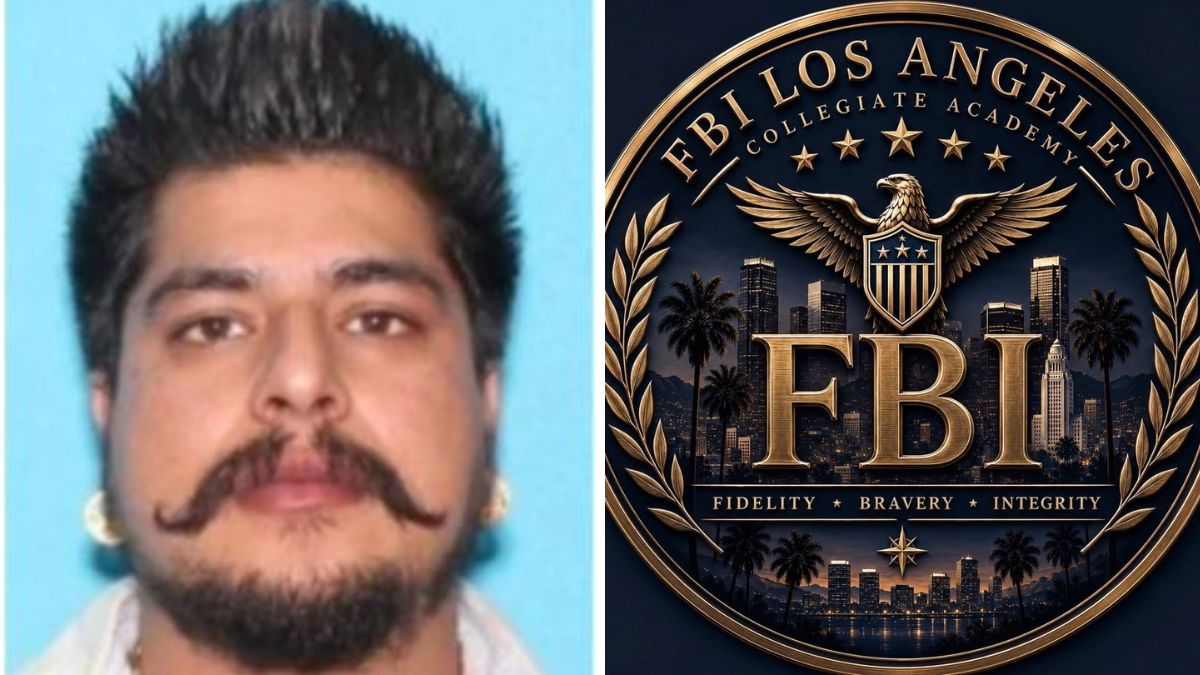
He was on the run. Then he was on the FBI's most wanted list. Less than forty-eight hours later, he was in handcuffs.
The capture of 26-year-old Nitish Kaushal, better known by his street name "Lala," reads like a high-stakes crime novel. The FBI bagged him in Vermont, right on the edge of the Canadian border, ending a frantic manhunt that had law enforcement agencies on high alert. Also making news lately: What Trump's Newly Declassified Intelligence Actually Says About Election Security.
Kaushal isn't your average run-of-the-mill local criminal. He is an alleged enforcer for the Jaggu Bhagwanpuria Organized Crime Group, a brutal India-based syndicate that started in Punjab and somehow found its way into the suburbs of Southern California. His sudden arrest on the quiet northern border of the United States shines a blinding light on a reality many are still ignoring. Punjab's gang wars are no longer just India's problem. They have gone completely global.
The Fast Fall of Nitish Kaushal
The descent was remarkably quick. On June 25, 2026, a federal warrant was issued for Kaushal's arrest out of Los Angeles. By July 13, the FBI had officially slapped his face onto their Most Wanted list. Posters warned the public that he was armed, dangerous, and a massive flight risk. Additional insights on this are detailed by TIME.
Then, on a Thursday morning, the run ended.
US Border Patrol agents spotted him in Vermont. He was likely trying to slip over the border into Canada, a common escape hatch for syndicate members fleeing American jurisdiction. The arrest went down without a shootout, but the implications of his capture are sending shockwaves through the diaspora criminal underworld.
Kaushal stands accused of doing the dirty work for his bosses overseas. The feds allege he carried out direct acts of violence, specifically targeted kidnappings and physical assaults, on behalf of the Bhagwanpuria gang. When you look at the sheer scale of the syndicate he represents, you realize Kaushal is just one small cog in a massive, terrifying machine.
Inside Operation Hard Ball
Kaushal's arrest wasn't a stroke of luck. It was the direct result of a massive, multi-agency offensive called Operation Hard Ball.
Led by the FBI, this operation is a direct attack on India-origin transnational gangs operating on North American soil. For years, these groups operated somewhat under the radar in Western countries, disguised as immigration facilitators or local transport businesses. That cover is gone.
The US Department of Justice recently unsealed three major indictments targeting 37 individuals linked to these global syndicates. They aren't just looking at petty drug dealers. They are charging leaders, recruiters, and shooters. The charges paint a dark picture of racketeering, contract killings, weapons trafficking, and international money laundering.
The feds arrested over two dozen suspects in a series of coordinated raids spanning California, other US states, and even parts of Canada. Kaushal was one of the key fugitives who managed to slip through the initial net, making his capture in Vermont a major win for the federal prosecutors handling the case.
The Transnational Reach of the Jaggu Bhagwanpuria Gang
To understand why the FBI is putting so much muscle into catching guys like Kaushal, you have to look at the man behind the gang's name.
Jaggu Bhagwanpuria is currently sitting behind bars in an Indian prison. He is 38 years old, but his physical confinement hasn't stopped his empire from expanding. He used to be a close ally of Lawrence Bishnoi, another notorious gangster who has recently been in the headlines for ordering hits on foreign soil, including the high-profile assassination of Khalistan separatist Hardeep Singh Nijjar in Canada.
Today, Bhagwanpuria and Bishnoi are bitter rivals, but they use the exact same playbook.
According to US intelligence files, the Bhagwanpuria syndicate has grown to over 1,000 active members and associates worldwide. Over 100 of those operators are living and working right now inside the United States, with heavy concentrations in California, New York, and along the northern border. The gang also maintains active networks in:
- Canada
- The United Kingdom
- Mainland Europe
- Australia
- New Zealand
They aren't just smuggling drugs. They have specialized in a highly lucrative human smuggling pipeline, moving people illegally across borders and then forcing them into labor or criminal service to pay off their debts. They target vulnerable visa applicants, promising them a way into the US, only to turn them into gang operatives once they arrive.
Why the RICO Charges Are a Death Sentence for Gang Factions
The US government isn't trying to convict Kaushal of a simple assault or a minor drug charge. They went straight for the heavy artillery. They charged him with Racketeer Influenced and Corrupt Organizations Conspiracy, widely known as RICO.
If you know anything about American legal history, you know RICO was created in 1970 to destroy the Italian Mafia. It is designed to target the entire organization rather than just the individual who pulls the trigger.
Under RICO, prosecutors don't have to prove that Kaushal personally committed every single crime the gang is accused of. They just have to prove he was part of an ongoing syndicate and participated in a "pattern of racketeering activity". That means two or more related crimes, like extortion, drug smuggling, or human trafficking, committed over a ten-year window.
For Kaushal, this charge is devastating. A RICO conspiracy conviction carries a mandatory minimum sentence that could range from 10 years to life in federal prison. There is no parole in the federal system. If convicted, he will likely spend the rest of his youth, and potentially his entire life, inside a maximum-security American prison.
The Vermont Border Arrest Mechanics
Vermont's northern border is heavily forested, rural, and incredibly difficult to patrol. It has become a favorite crossing point for individuals trying to slip into Canada undetected. Kaushal's choice to head north suggests he was desperate.
The FBI’s Albany field office coordinated with US Border Patrol agents to secure the area once intelligence suggested Kaushal was moving toward the state line. He had no local network in Vermont to hide him. Once his face hit the national wanted lists, his options shrank to zero.
The operation was quiet. Border Patrol spotted him, confirmed his identity, and moved in before he could make a run for the Canadian tree line. He was unarmed at the exact moment of his arrest, despite earlier FBI warnings that he should be considered highly dangerous.
What makes this case truly wild is the level of corruption the gang relied on back home. The indictments reveal that the Bhagwanpuria syndicate was actively working with corrupt police officers in India to run extortion schemes in America. In one shocking case, a Punjab police officer named Gurinderjit Singh allegedly acted as a gang associate, helping them extort roughly $400,000 from a family living in Los Angeles.
Think about that. A family moves to California to escape the violence in Punjab, only to have a local Indian cop threaten their relatives back home on behalf of a gangster who is running the racket from a jail cell, all while sending street soldiers like Kaushal to enforce the threats in California. It is a terrifying level of reach.
What This Crackdown Means for Global Policing
If you think this is just a story about one gangster getting caught, you are missing the bigger picture. This represents a massive shift in how Western law enforcement views South Asian organized crime.
For decades, agencies like the FBI and the Royal Canadian Mounted Police treated these gangs as localized immigrant community issues. They let them fester. Now, with political assassinations happening on Canadian soil and massive extortion rackets running in California, the kid gloves are off.
Operation Hard Ball proves that the US is willing to use its most aggressive legal tools to dismantle these networks before they can establish deeper roots. By targeting recruiters and illegal smuggling pipelines, they are cutting off the oxygen these gangs need to survive.
Kaushal will now be extradited back to California to face the music in the US District Court in Los Angeles. He faces decades behind bars. For the young men back in Punjab who think joining these syndicates is a ticket to a glamorous life in America, Kaushal’s fast fall from the FBI’s wanted list to a cold Vermont jail cell should serve as a stark warning. The American dream doesn't look so bright when you are wearing an orange jumpsuit.